
The United States has long been at the forefront of skyscraper innovation, pioneering the vertical expansion of cities and transforming urban skylines into breathtaking works of art. From the early days of the steel-framed buildings in Chicago and New York to today’s shimmering glass towers, American architecture has continuously evolved to reflect progress, ambition, and technological mastery. Each skyscraper tells a story of vision and determination — symbols of the country’s economic power, cultural diversity, and unrelenting pursuit of greatness.
Over the decades, competition among major cities like New York, Chicago, and Los Angeles has fueled the rise of ever-taller and more iconic structures. These skyscrapers not only define city identities but also push the boundaries of design, sustainability, and functionality. The Top 25 Tallest Skyscrapers in the United States highlights the most impressive examples of modern engineering — architectural marvels that soar above the clouds and stand as enduring testaments to human innovation and architectural excellence.
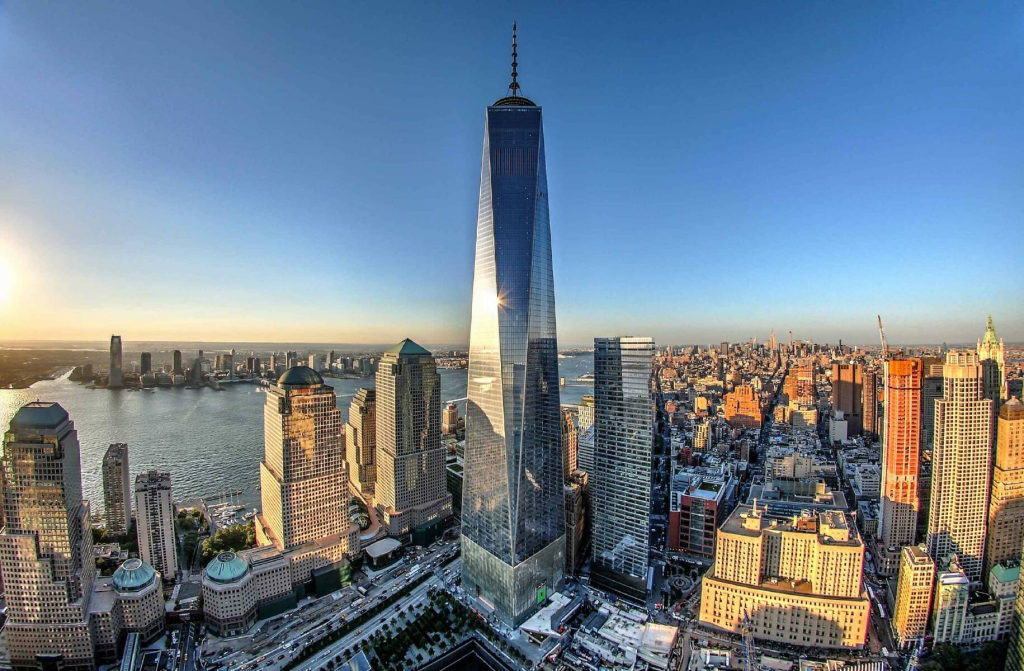
1. One World Trade Center, New York City, NY – 1,776 ft (541 m), 104 floors, completed 2014
One World Trade Center, also called the Freedom Tower, is the tallest building in the United States and the Western Hemisphere. Its height of 1,776 feet was chosen deliberately to symbolize the year of American independence. Completed in 2014, it rises as the centerpiece of the rebuilt World Trade Center site in Lower Manhattan, serving both as a modern office tower and as a memorial to resilience after the September 11 attacks.
With 104 floors, the tower houses office spaces, restaurants, broadcasting facilities, and the famous One World Observatory, which offers sweeping views of New York City and beyond. The building is also a model of sustainability, using renewable energy, rainwater recycling, and advanced air quality systems. Its design emphasizes safety, featuring a reinforced concrete core, blast-resistant materials, and upgraded evacuation systems.
Today, One World Trade Center stands as a powerful symbol of strength and renewal. It dominates the Manhattan skyline with its shimmering glass façade, reflecting both the city and the sky. Beyond being a commercial hub, it serves as a landmark of unity, endurance, and hope, embodying the spirit of New York City and the nation.
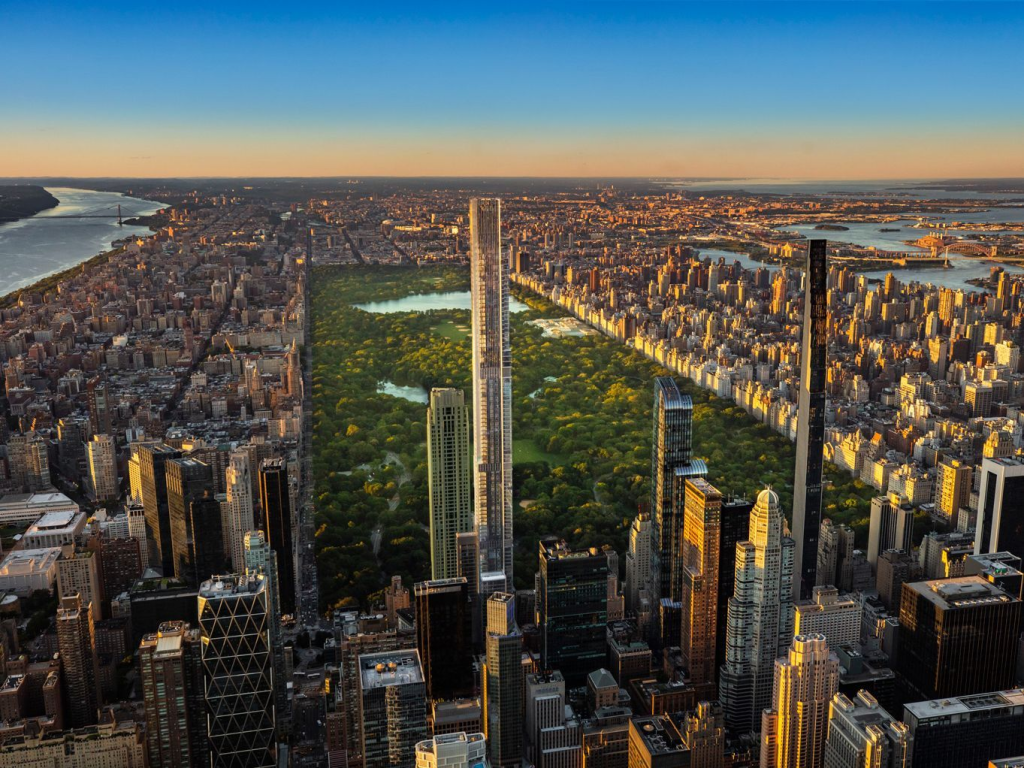
2. Central Park Tower, New York City, NY – 1,550 ft (472 m), 131 floors, completed 2021
Central Park Tower, completed in 2021, is recognized as the tallest residential building in the world. Standing at 1,550 feet, it redefines luxury living in New York City, offering ultra-exclusive condominiums with unmatched views of Central Park and the Manhattan skyline. Its sleek glass design blends modern architectural elegance with engineering innovation, making it one of the most prestigious addresses in the city.
The tower has 131 floors, featuring residences, a luxury hotel, and the private Central Park Club, which offers amenities such as swimming pools, a ballroom, a cigar lounge, and fine dining. Each unit is meticulously designed with high ceilings, floor-to-ceiling windows, and state-of-the-art finishes, appealing to the world’s wealthiest residents.
As part of “Billionaires’ Row” along 57th Street, Central Park Tower has become a symbol of wealth and exclusivity. It not only pushes architectural boundaries but also reshapes the New York skyline with its commanding height. The building reflects the growing trend of ultra-tall, ultra-luxury skyscrapers in major global cities.
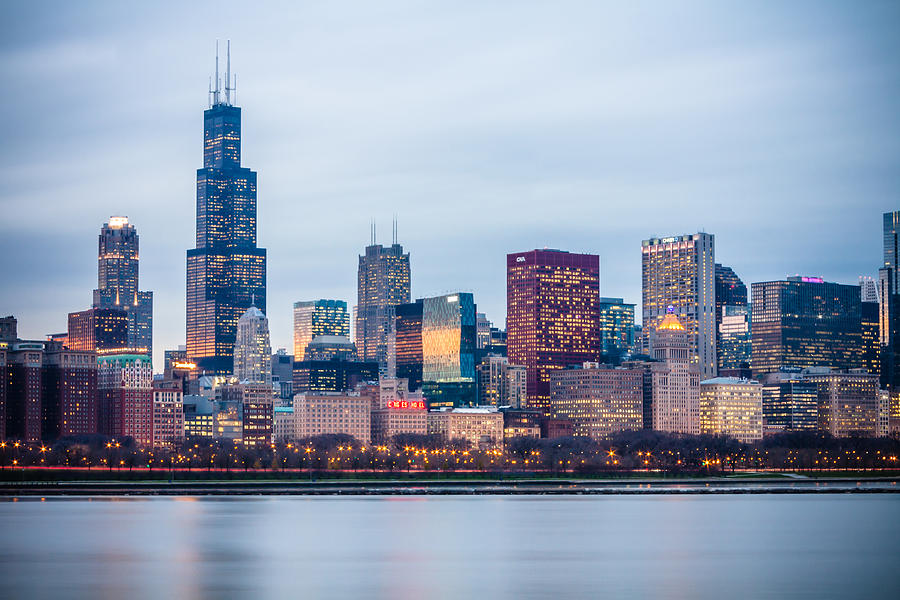
3. Willis Tower, Chicago, IL – 1,451 ft (442 m), 110 floors, completed 1973
The Willis Tower, originally known as the Sears Tower, was the tallest building in the world upon its completion in 1973, standing at 1,451 feet. Located in the heart of Chicago, it remains one of the most iconic skyscrapers in the United States and is an enduring symbol of the city’s architectural and engineering achievements. Its distinctive bundled-tube design by architect Bruce Graham and engineer Fazlur Rahman Khan allowed for an unprecedented height at the time.
The building has 110 floors, offering office spaces, retail areas, and the famous Skydeck Chicago on the 103rd floor. The Skydeck features “The Ledge,” a glass balcony that extends outside the building, giving visitors the thrilling experience of looking straight down 1,353 feet to the streets below. With millions of annual visitors, it remains one of Chicago’s top attractions.
Though no longer the tallest building in the world, the Willis Tower is still a cultural and architectural landmark. It represents Chicago’s legacy as the birthplace of the skyscraper and continues to serve as a hub for business, tourism, and innovation. Its black aluminum and bronze-tinted façade make it one of the most recognizable buildings in the global skyline.
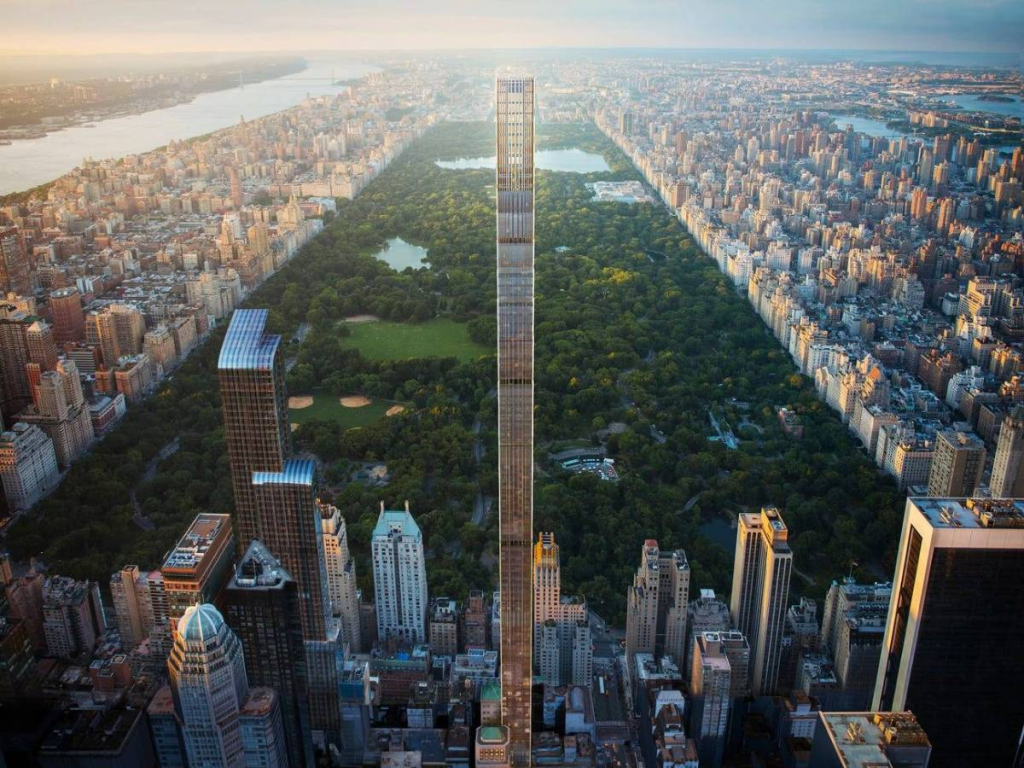
4. 111 West 57th Street, New York City, NY – 1,428 ft (435 m), 84 floors, completed 2021
Known as the “Steinway Tower,” 111 West 57th Street is the world’s skinniest skyscraper, with a slenderness ratio that is unmatched globally. Rising 1,428 feet, it combines architectural daring with luxury living, reshaping the Manhattan skyline. Completed in 2021, it is both a feat of engineering and an architectural statement in the heart of “Billionaires’ Row.”
The tower has 84 floors, housing ultra-luxury residences that feature expansive layouts, double-height ceilings, and breathtaking views of Central Park and the city. Its design pays homage to the historic Steinway Hall, which was incorporated into the project, blending classic architecture with modern vertical living.
111 West 57th Street stands as a monument to innovation and exclusivity. Its slender form, clad in terra-cotta and bronze detailing, gives it a striking aesthetic while demonstrating advancements in structural engineering. It epitomizes New York’s push toward supertall, high-end residential towers.
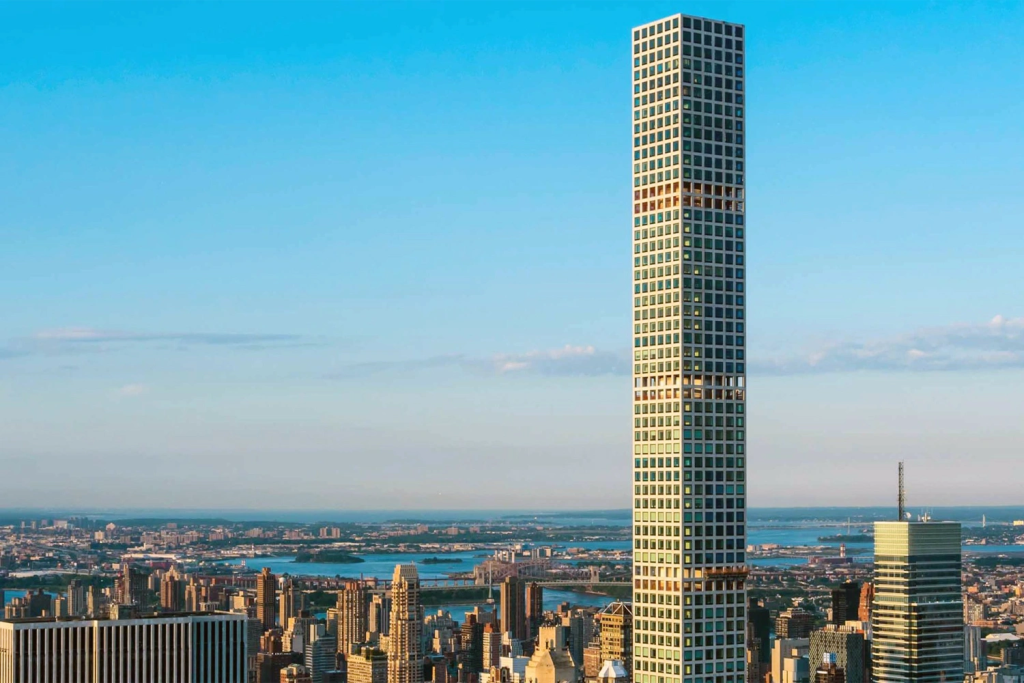
5. 432 Park Avenue, New York City, NY – 1,397 ft (426 m), 85 floors, completed 2015
432 Park Avenue, completed in 2015, is one of the most recognizable residential skyscrapers in New York City. Standing 1,397 feet tall, it was the tallest residential building in the world at the time of its completion. Its minimalist design, characterized by a grid of square windows, makes it instantly identifiable on the Manhattan skyline.
The building has 85 floors, featuring some of the most luxurious condominiums in the world. Each residence boasts soaring ceilings, custom finishes, and panoramic views of Central Park, the Hudson River, and the cityscape. Amenities include a private restaurant, fitness center, swimming pool, and even climate-controlled wine cellars.
432 Park Avenue is both admired and controversial, symbolizing the rise of super-luxury vertical living in New York. While praised for its striking modernist design and elegance, it has also sparked debates about wealth inequality and the growing dominance of Billionaires’ Row. Nonetheless, it stands as a landmark of 21st-century urban architecture.
6. Trump International Hotel & Tower, Chicago, IL – 1,388 ft (423 m), 98 floors, completed 2009
The Trump International Hotel & Tower in Chicago rises 1,388 feet along the Chicago River, making it one of the tallest buildings in the United States. Completed in 2009, its reflective glass façade complements the surrounding skyline while also mirroring the waters below. Designed by architect Adrian Smith, it was originally intended to be the world’s tallest building but was scaled back after the events of 9/11.
The tower has 98 floors, housing a mix of luxury condominiums, a five-star hotel, high-end restaurants, and retail spaces. Its design emphasizes elegance and modernity, with floor-to-ceiling windows that maximize city views. The building also features a large health club and spa, along with dining venues that overlook the Chicago River and Lake Michigan.
This skyscraper has become a key landmark of Chicago’s modern architecture. While its name has sparked political debates in recent years, the tower itself remains admired for its engineering and design excellence. It stands as a major hub for luxury living and tourism, reinforcing Chicago’s reputation as a city of architectural innovation.

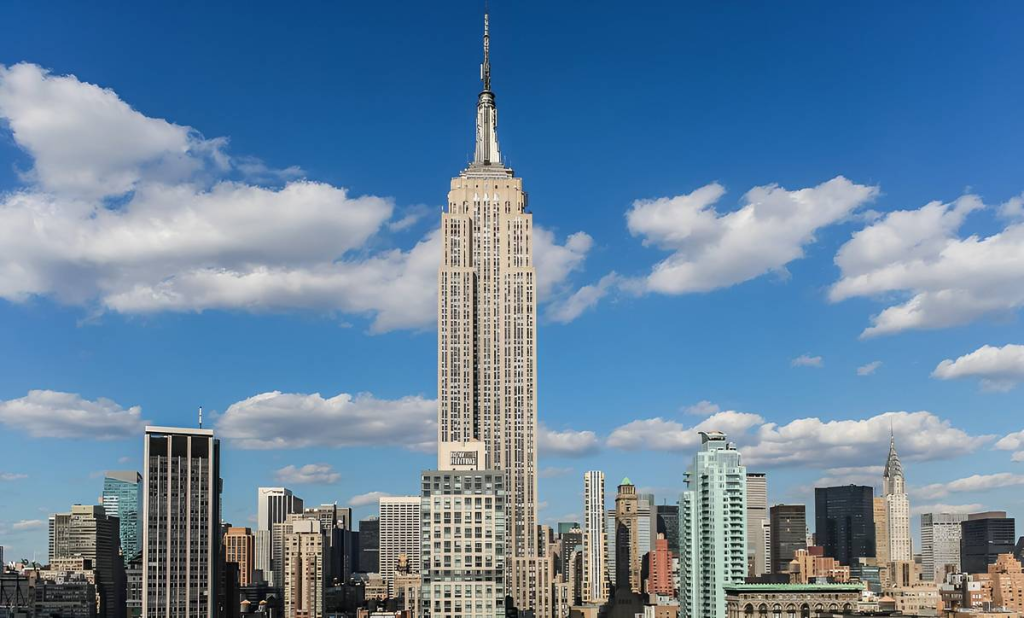
7. Empire State Building, New York City, NY – 1,250 ft (381 m), 102 floors, completed 1931
The Empire State Building is perhaps the most iconic skyscraper in the world, standing 1,250 feet tall (1,454 ft with antenna). Completed in 1931 during the Great Depression, it symbolized progress, hope, and resilience. For nearly 40 years, it held the title of the world’s tallest building, a record that made it a global icon of modern architecture.
The building has 102 floors, mainly occupied by office spaces, though its most famous feature is the observation decks on the 86th and 102nd floors. These decks have hosted millions of visitors, offering sweeping views of New York City and beyond. The Empire State Building is also known for its nightly LED light displays, which celebrate holidays, causes, and special events.
Beyond its height, the Empire State Building is a cultural symbol. Featured in countless films, including the classic King Kong (1933), it has become synonymous with New York itself. Today, it is not just a commercial hub but also a major tourist attraction and a symbol of 20th-century American achievement.
8. Bank of America Tower, New York City, NY – 1,200 ft (366 m), 55 floors, completed 2009
The Bank of America Tower, located at Bryant Park in Midtown Manhattan, stands 1,200 feet tall and is one of the greenest skyscrapers in the world. Completed in 2009, it was designed with sustainability as a core principle, using environmentally friendly materials, rainwater collection systems, and advanced air filtration. It was one of the first skyscrapers to achieve LEED Platinum certification.
With 55 floors, the tower is primarily used as office space, housing Bank of America’s corporate headquarters and other financial institutions. Its crystalline glass façade allows maximum natural light while reducing energy use. Inside, workers benefit from advanced recycling systems, abundant greenery, and improved indoor air quality, all of which promote wellness and efficiency.
This skyscraper is often celebrated as a model for sustainable urban design. While not the tallest in the city, it represents a shift toward environmentally conscious architecture in an age of climate awareness. Its presence in Midtown demonstrates how modern skyscrapers can combine height, style, and eco-friendly innovation.

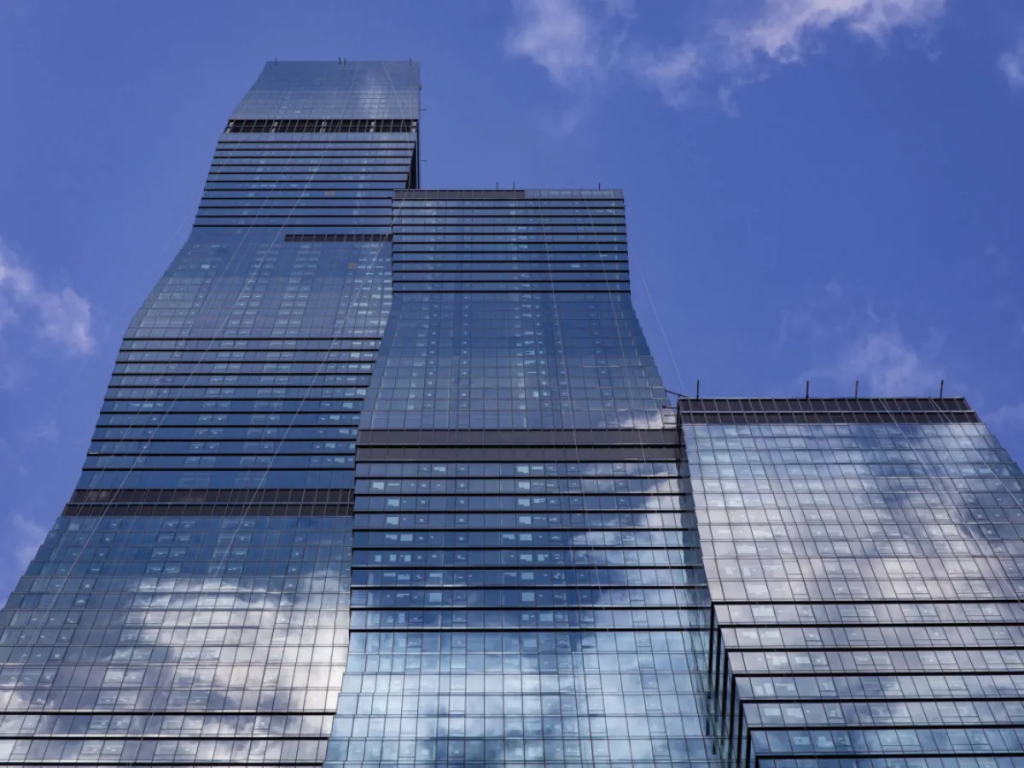
9. St. Regis Chicago (Vista Tower), Chicago, IL – 1,198 ft (365 m), 101 floors, completed 2020
The St. Regis Chicago, formerly known as the Vista Tower, is a striking 1,198-foot skyscraper completed in 2020. Designed by architect Jeanne Gang, it is the tallest building in the world designed by a woman, making it a groundbreaking achievement in architecture. Its undulating, three-tiered design was inspired by natural crystals and creates a distinctive silhouette on Chicago’s skyline.
The tower has 101 floors, combining luxury condominiums, the five-star St. Regis Hotel, restaurants, and world-class amenities. Residences boast sweeping views of the Chicago River, Lake Michigan, and Millennium Park. Amenities include indoor and outdoor pools, private lounges, a fitness center, and fine dining options tailored to residents and hotel guests alike.
The St. Regis Chicago is more than a skyscraper—it is a symbol of innovation and inclusivity in design. It redefines modern luxury living while also pushing architectural boundaries with its elegant, organic form. Its opening has further cemented Chicago’s reputation as a global leader in skyscraper design and innovation.
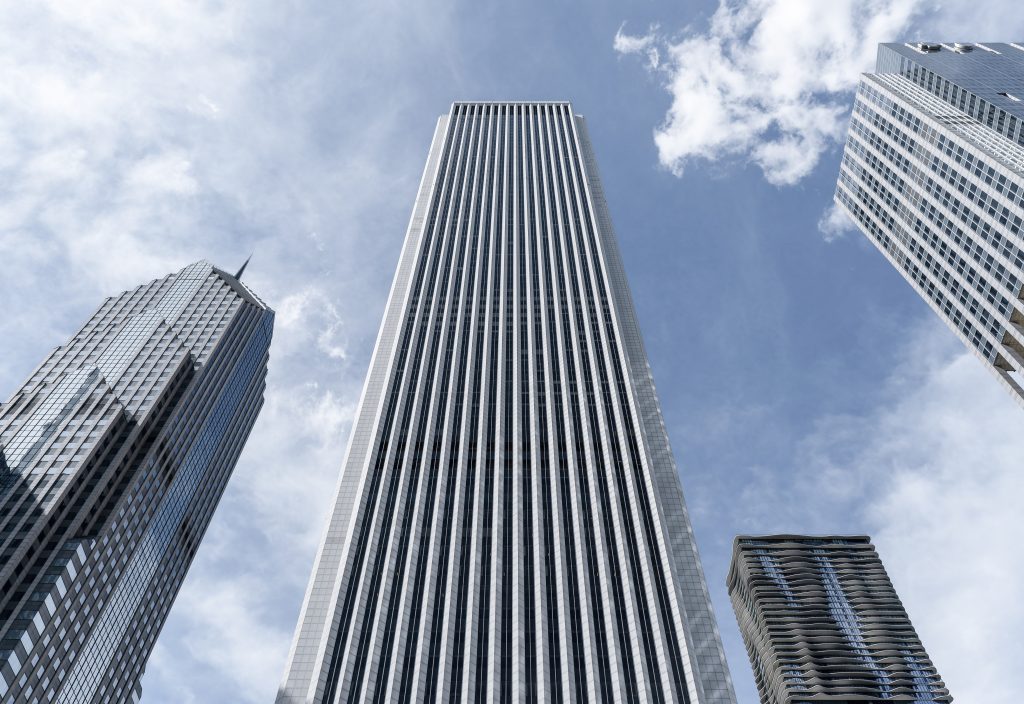
10. Aon Center, Chicago, IL – 1,136 ft (346 m), 83 floors, completed 1973
The Aon Center, completed in 1973, stands 1,136 feet tall and remains one of Chicago’s most recognizable skyscrapers. Originally clad in white Carrara marble, the building had to undergo major renovations when the marble deteriorated, and it was replaced with white granite in the 1990s. Despite this challenge, the Aon Center has maintained its status as a key part of the city’s skyline.
The building has 83 floors, primarily occupied by offices. It serves as a hub for corporate tenants, offering state-of-the-art workspaces with stunning views of Millennium Park, Lake Michigan, and the surrounding skyline. Its sleek, minimalist design reflects the modernist style of the 1970s.
As the third tallest building in Chicago, the Aon Center is a major landmark in the city’s architectural history. Its location near Millennium Park makes it especially prominent in the downtown area. Though overshadowed by newer supertall towers, it remains a testament to Chicago’s rich tradition of skyscraper innovation.
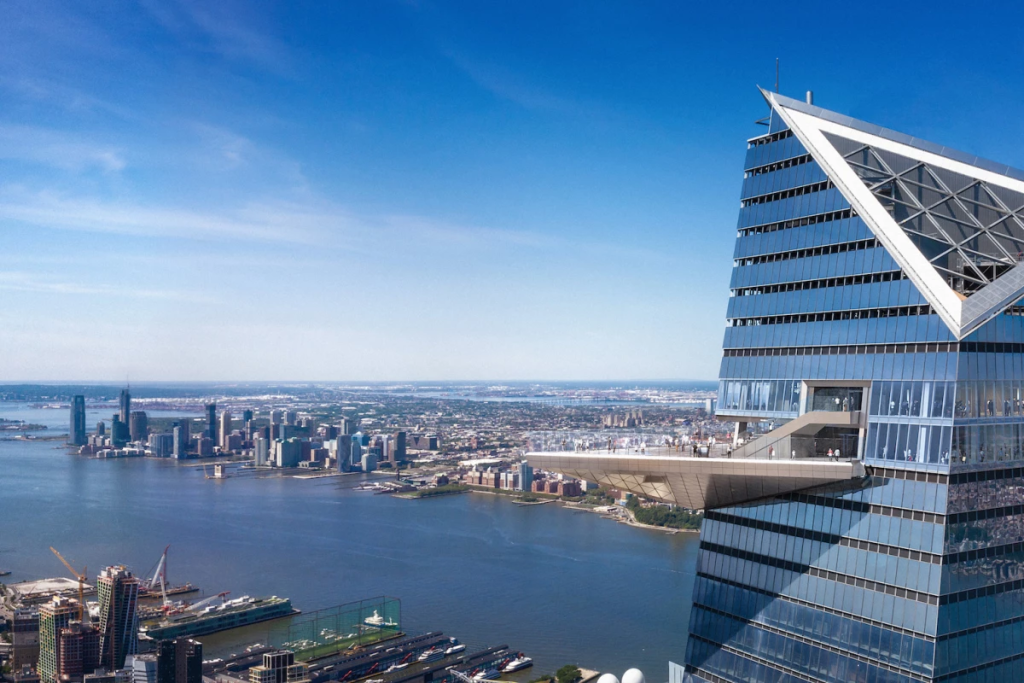
11. 30 Hudson Yards, New York City, NY – 1,268 ft (386 m), 73 floors, completed 2019
30 Hudson Yards is the tallest building in the Hudson Yards development, a $25 billion project reshaping Manhattan’s west side. Completed in 2019, the tower rises 1,268 feet and features a sharp, sloping glass façade that distinguishes it from other skyscrapers. Its design reflects the modern architectural movement that blends sleek aesthetics with functionality.
With 73 floors, the tower primarily houses corporate offices, including global firms such as Warner Bros. Discovery. Its most famous attraction is Edge, the highest outdoor sky deck in the Western Hemisphere. The platform extends outward from the building, allowing visitors to stand on glass flooring over 1,100 feet above the city streets.
30 Hudson Yards is not just an office building—it’s a landmark of New York’s urban expansion. As part of the larger Hudson Yards complex, it demonstrates the city’s ability to create entirely new neighborhoods anchored by innovative architecture, luxury retail, and public attractions.
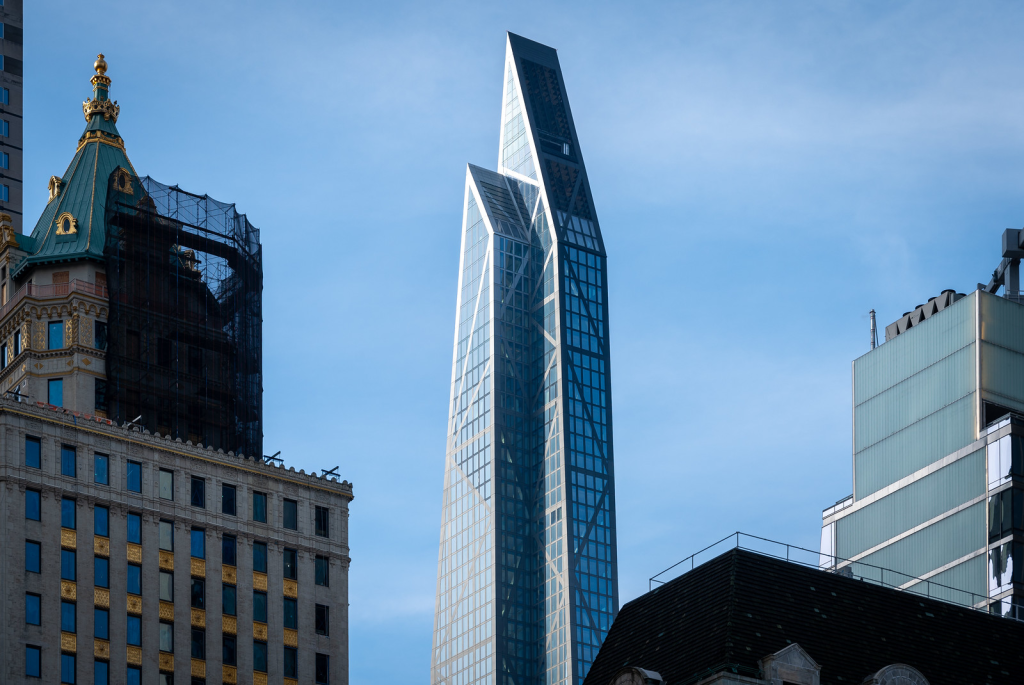
12. 53W53, New York City, NY – 1,050 ft (320 m), 77 floors, completed 2019
53W53, also known as the MoMA Tower, is a striking residential skyscraper in Midtown Manhattan. Completed in 2019, it rises 1,050 feet with a distinctive tapered silhouette and diagrid structural system designed by architect Jean Nouvel. Its bold, angular design makes it one of the most recognizable residential towers in the city.
The building has 77 floors, containing luxury condominiums that offer panoramic views of Central Park and the Manhattan skyline. Residents enjoy exclusive amenities, including private dining, wellness facilities, a wine vault, and direct access to the Museum of Modern Art (MoMA), which the tower was partially built to expand.
53W53 is considered a masterpiece of modern residential design. By blending world-class architecture with cultural integration, it stands as an example of how high-rise living in New York has evolved into a fusion of luxury, lifestyle, and artistic identity.
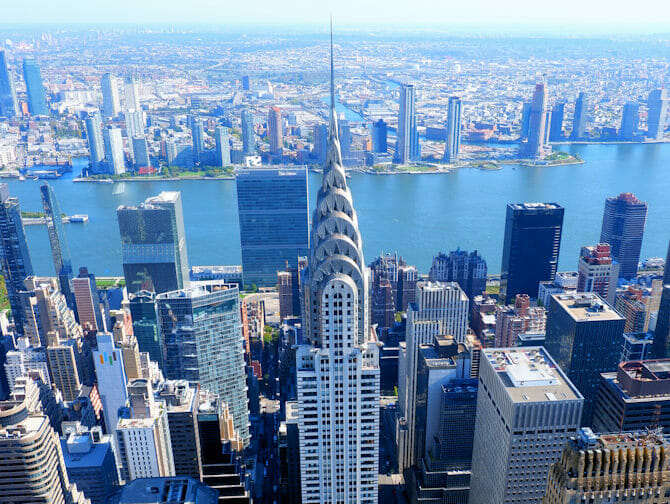
13. Chrysler Building, New York City, NY – 1,046 ft (319 m), 77 floors, completed 1930
The Chrysler Building is one of the most iconic Art Deco skyscrapers in the world. Completed in 1930, it briefly held the title of the world’s tallest building at 1,046 feet before being surpassed by the Empire State Building. Its crown, with radiating steel arches, has become one of the most celebrated architectural features in New York City.
The tower has 77 floors, originally serving as the headquarters for the Chrysler Corporation. Its lobby is equally admired, decorated with marble, murals, and geometric details that epitomize the elegance of the Art Deco era. Though it no longer serves as Chrysler’s headquarters, the building remains a premier office address.
The Chrysler Building is not just a skyscraper—it is a cultural and architectural landmark. It represents the optimism of the 20th century and continues to define the Manhattan skyline as one of the most photographed and admired structures in the world.
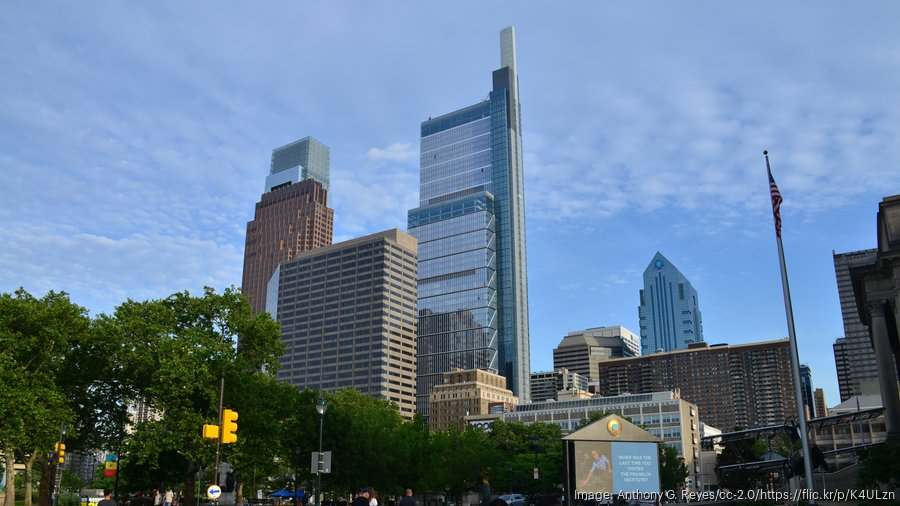
14. Comcast Technology Center, Philadelphia, PA – 1,121 ft (342 m), 60 floors, completed 2018
The Comcast Technology Center, completed in 2018, is the tallest building in Philadelphia and one of the tallest in the United States. Standing at 1,121 feet, it was designed by Foster + Partners with a sleek, glass façade that reflects modern architectural innovation. Its soaring height makes it a dominant feature of the city’s skyline.
The skyscraper has 60 floors, housing the headquarters of Comcast alongside state-of-the-art broadcast studios. It also features the Four Seasons Hotel Philadelphia, which occupies the upper floors, offering luxury accommodations, fine dining, and sweeping views of the city from some of the highest points in the region.
As both a corporate hub and a hospitality landmark, the Comcast Technology Center symbolizes Philadelphia’s economic growth and modern identity. Its blend of office, cultural, and hotel spaces makes it a dynamic structure serving both business and tourism needs.
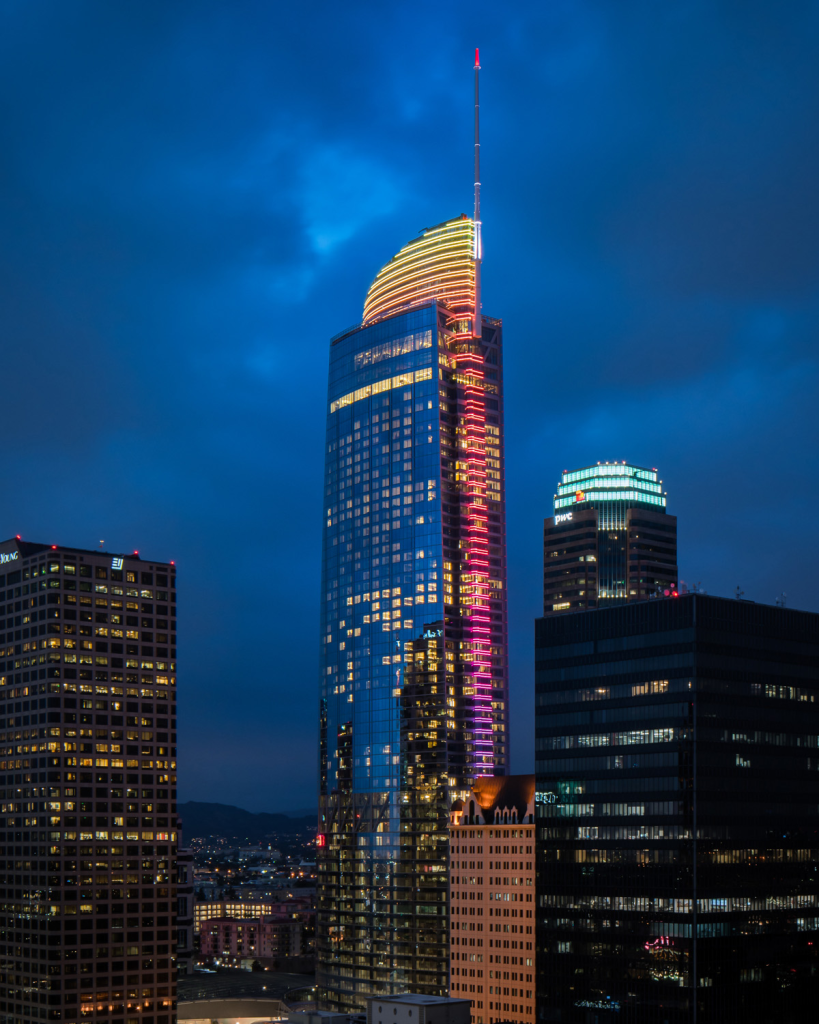
15. Wilshire Grand Center, Los Angeles, CA – 1,100 ft (335 m), 73 floors, completed 2017
The Wilshire Grand Center is the tallest building in Los Angeles and the tallest west of the Mississippi River. Completed in 2017, it rises 1,100 feet, topped with a distinctive spire that breaks away from LA’s tradition of flat-topped towers. Its sleek, curved glass façade reflects the city’s ambition to embrace modern skyscraper design.
With 73 floors, the tower houses offices, retail spaces, and the InterContinental Los Angeles Downtown Hotel. Guests enjoy luxury amenities, including one of the highest open-air rooftop bars in the world, where views stretch from the Pacific Ocean to the San Gabriel Mountains.
The Wilshire Grand Center is more than just the tallest in LA—it represents the city’s transformation into a global metropolis. Combining commercial spaces with luxury hospitality, it embodies Los Angeles’ growing status as both a business and cultural destination.
16. JPMorgan Chase Tower, Houston, TX – 1,002 ft (305 m), 75 floors, completed 1982
The JPMorgan Chase Tower is the tallest building in Texas and a defining feature of Houston’s skyline. Completed in 1982, the skyscraper rises to 1,002 feet and is constructed in a sleek, modernist style. Its reflective glass façade allows it to shimmer under the Texas sun, making it one of the most recognizable landmarks in the region.
The tower has 75 floors, primarily used for offices, and is home to JPMorgan Chase and other major firms. One of its standout features was the Sky Lobby on the 60th floor, which once offered public views of Houston, although it is no longer open to visitors. The building also integrates with the city’s extensive tunnel system, connecting workers and visitors to retail and restaurants below ground.
As the tallest building in Houston for decades, the JPMorgan Chase Tower symbolizes the city’s economic strength and corporate presence. It remains one of the tallest structures in the United States outside of New York and Chicago, showcasing Houston’s importance as a hub of finance and energy.

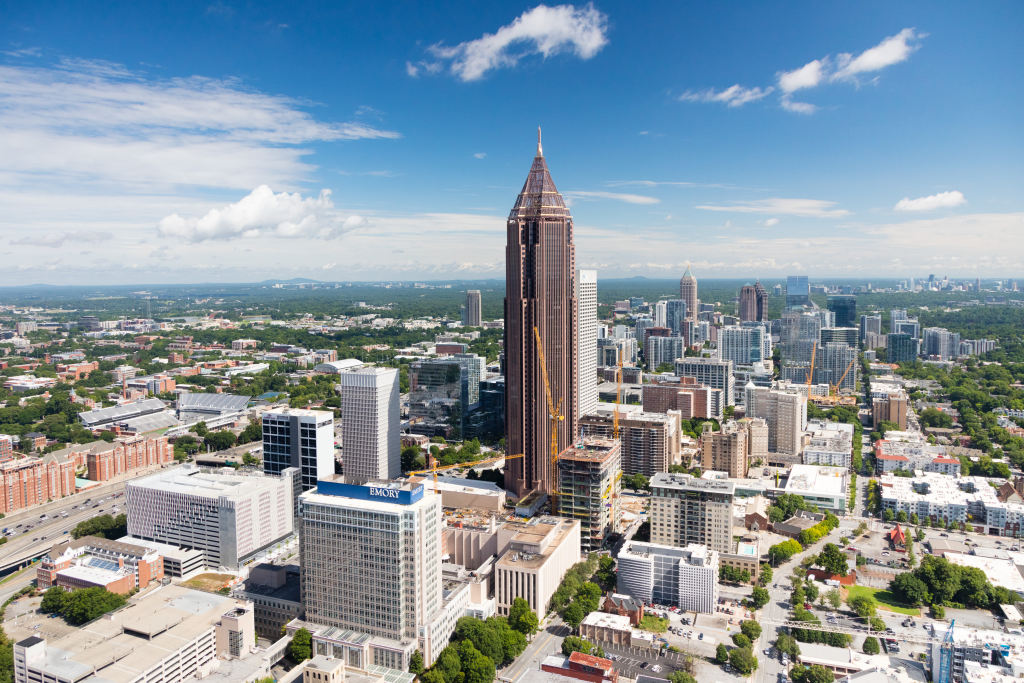
17. Bank of America Plaza, Atlanta, GA – 1,023 ft (312 m), 55 floors, completed 1992
Bank of America Plaza is the tallest building in Atlanta and the entire southeastern United States. Completed in 1992, the tower rises 1,023 feet with a postmodern design that incorporates a granite façade and a distinctive golden spire. Its illuminated crown makes it visible across the city, especially at night, when it glows against the skyline.
The skyscraper has 55 floors, serving primarily as an office building for major corporations and financial institutions. Unlike many modern towers, it features a more traditional design with granite cladding, giving it a strong and enduring architectural presence. The tower has also become a point of reference for locals, often called “the Pencil Building” due to its sharp, tapering spire.
Bank of America Plaza is not only the tallest in Atlanta but also a regional icon. It demonstrates the city’s rise as a business and transportation hub of the American South, standing as a symbol of progress and economic growth.
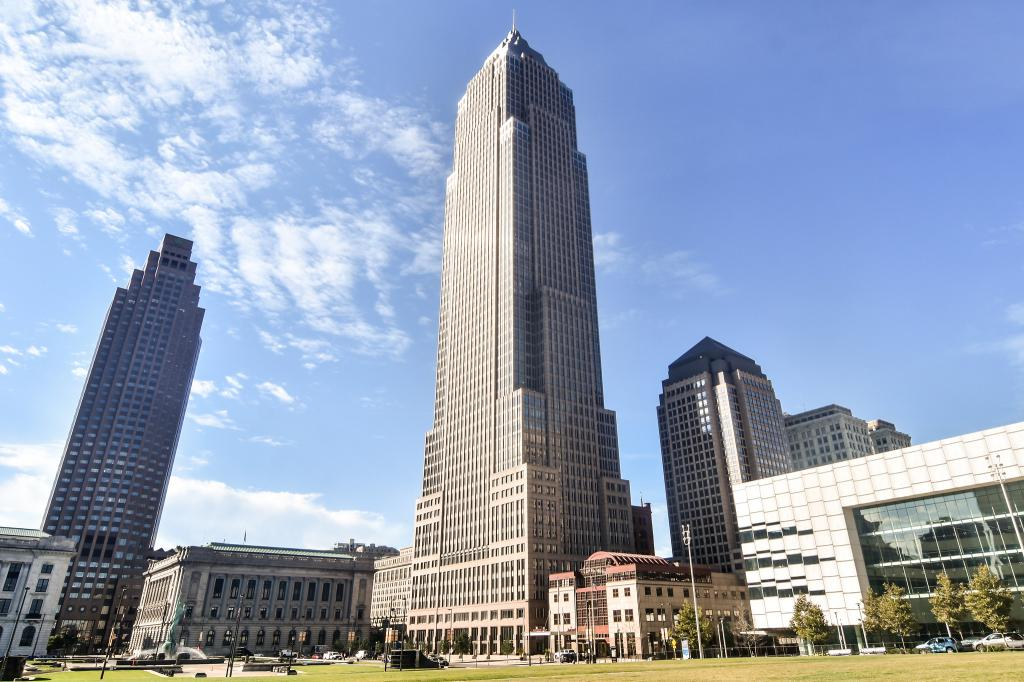
18. Key Tower, Cleveland, OH – 947 ft (289 m), 57 floors, completed 1991
Key Tower is the tallest building in Cleveland, Ohio, and the state itself. Completed in 1991, it stands 947 feet tall and reflects a modern yet timeless design by renowned architect César Pelli. Its granite façade and setback design give it a strong presence on the Cleveland skyline.
The tower has 57 floors, primarily serving as office space, with KeyCorp Bank as its main tenant. Its upper floors provide sweeping views of Lake Erie and the surrounding cityscape. The building integrates with the downtown area through a plaza and connected structures, making it a central hub for business activity.
As Cleveland’s tallest skyscraper, Key Tower has become a symbol of the city’s economic identity. It represents a period of modernization in the late 20th century and continues to anchor Cleveland’s downtown skyline today.
19. Columbia Center, Seattle, WA – 933 ft (284 m), 76 floors, completed 1985
The Columbia Center is the tallest building in Seattle and the Pacific Northwest. Completed in 1985, it reaches 933 feet with a tiered, black-glass design that gives it a commanding presence in the skyline. Its height and distinct shape make it visible from across the city and even from Puget Sound.
With 76 floors, the tower serves as a mixed-use building, housing offices, retail, and public spaces. One of its most famous features is the Sky View Observatory on the 73rd floor, which offers panoramic views of Seattle, Mount Rainier, and Elliott Bay. This makes it one of the city’s top attractions for both residents and tourists.
The Columbia Center is not just Seattle’s tallest—it is a regional landmark. Its completion marked the city’s economic boom of the 1980s, and today it continues to represent Seattle’s growth as a center of commerce, technology, and culture.

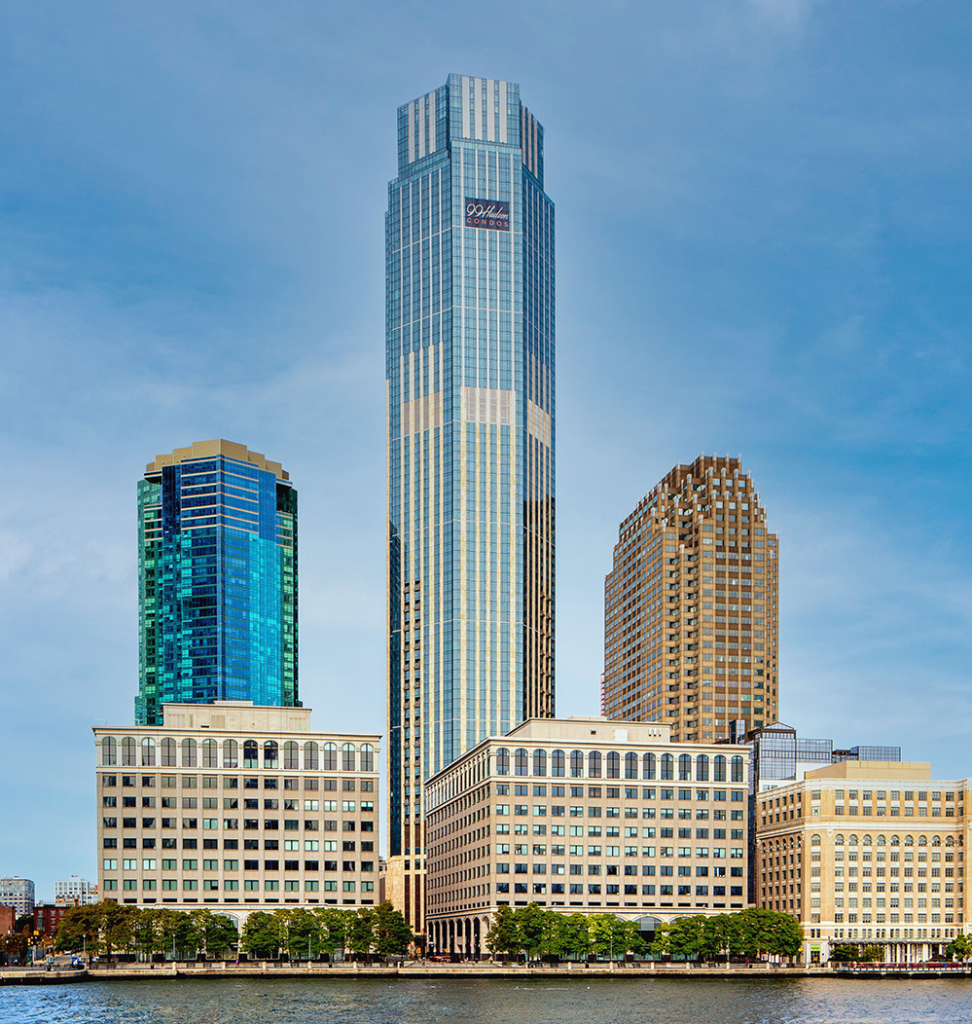
20. 99 Hudson, Jersey City, NJ – 900 ft (274 m), 79 floors, completed 2018
99 Hudson is the tallest building in New Jersey and one of the tallest residential skyscrapers in the United States. Completed in 2018, it rises 900 feet with a sleek glass façade that reflects the Hudson River and Manhattan skyline. Its modern design positions it as a luxury living destination in the New York metropolitan area.
The tower features 79 floors, almost entirely dedicated to high-end residential condominiums. Residents have access to resort-style amenities, including a rooftop pool, spa, fitness center, screening room, and landscaped outdoor spaces. Its floor-to-ceiling windows offer uninterrupted views of Lower Manhattan, making it highly desirable for urban living.
99 Hudson is a transformative addition to Jersey City’s waterfront. It not only redefines luxury living in the area but also helps shift the perception of Jersey City as a growing counterpart to Manhattan’s financial district.
21. Bank of America Corporate Center, Charlotte, NC – 871 ft (265 m), 60 floors, completed 1992
The Bank of America Corporate Center is the tallest building in Charlotte, North Carolina, and a defining feature of its skyline. Completed in 1992, it rises 871 feet with a postmodern design that combines glass and precast concrete. Its crown-shaped spire, illuminated at night, makes it one of the most recognizable buildings in the southeastern United States.
The tower has 60 floors, serving as the global headquarters for Bank of America. It contains office spaces, a trading floor, and executive facilities, making it the financial anchor of the city. At its base is Founders Hall, a retail and event space that connects the tower to surrounding buildings and offers a vibrant public area.
The Bank of America Corporate Center stands as a symbol of Charlotte’s emergence as a banking capital. Its commanding height and distinctive design reflect the city’s role as the second-largest banking hub in the U.S., only behind New York City.

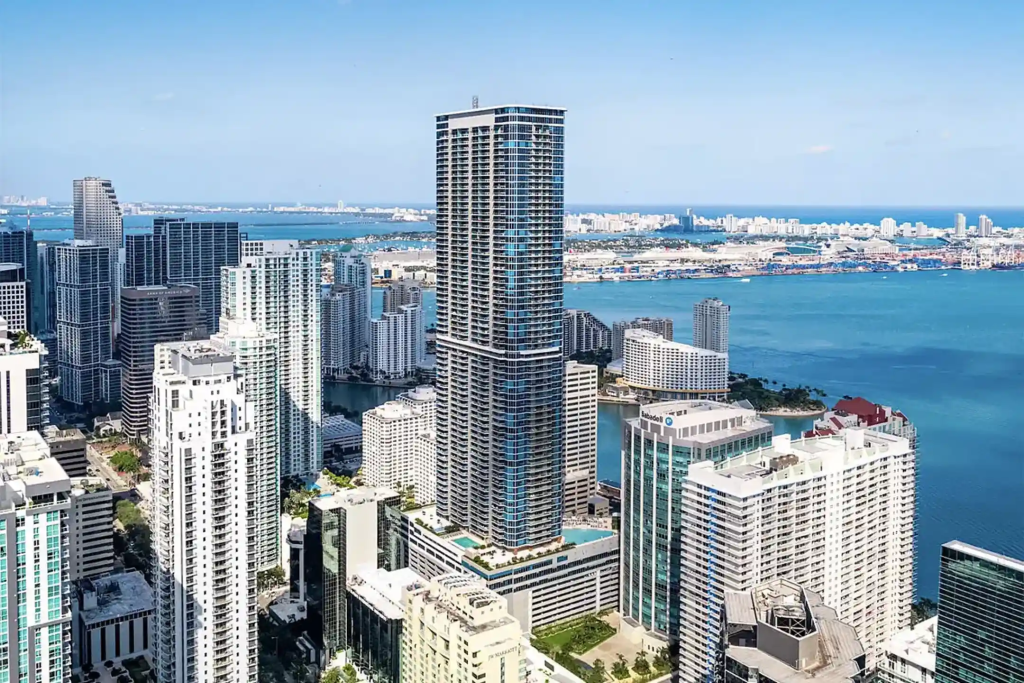
22. Panorama Tower, Miami, FL – 868 ft (265 m), 85 floors, completed 2017
Panorama Tower is the tallest building in Florida and the southeastern United States, outside of Atlanta. Completed in 2017, the skyscraper rises 868 feet and boasts a sleek, modern glass design. It was developed as a luxury mixed-use tower, reshaping Miami’s skyline with its slender and elegant presence.
The tower has 85 floors, featuring residential apartments, hotel accommodations, and commercial spaces. It includes high-end amenities such as pools, a spa, a fitness center, and dining options, catering to both residents and guests. Its waterfront location also provides sweeping views of Biscayne Bay and downtown Miami.
Panorama Tower has become a landmark of modern Miami, reflecting the city’s rapid urban growth and international appeal. It demonstrates how Miami is evolving into a global hub for business, culture, and luxury living.
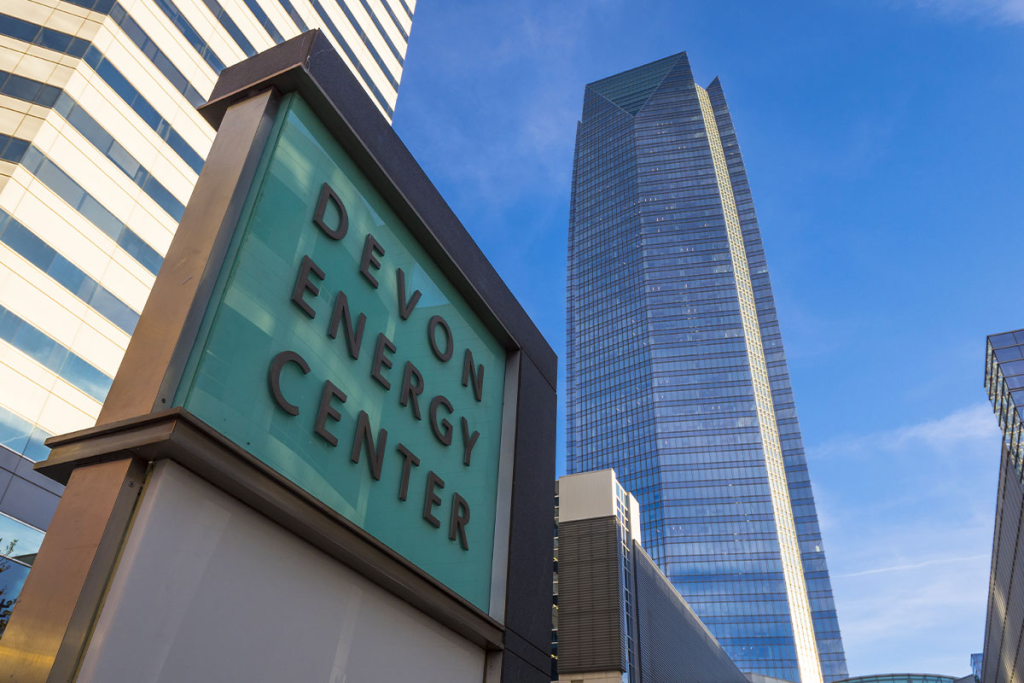
23. Devon Energy Center, Oklahoma City, OK – 850 ft (259 m), 50 floors, completed 2012
The Devon Energy Center is the tallest building in Oklahoma City and the state of Oklahoma. Completed in 2012, the tower rises 850 feet with a sleek glass façade designed by the architectural firm Pickard Chilton. Its shimmering exterior and elegant shape make it a centerpiece of Oklahoma City’s downtown skyline.
The tower has 50 floors, primarily serving as the corporate headquarters of Devon Energy, one of the nation’s leading independent oil and natural gas producers. The complex also includes a conference center, restaurants, and a public park area that integrates the building with the city’s cultural district.
The Devon Energy Center is more than just an office building—it is a symbol of Oklahoma City’s modernization and economic progress. It highlights the city’s strong ties to the energy industry while representing a commitment to contemporary architecture and urban development.
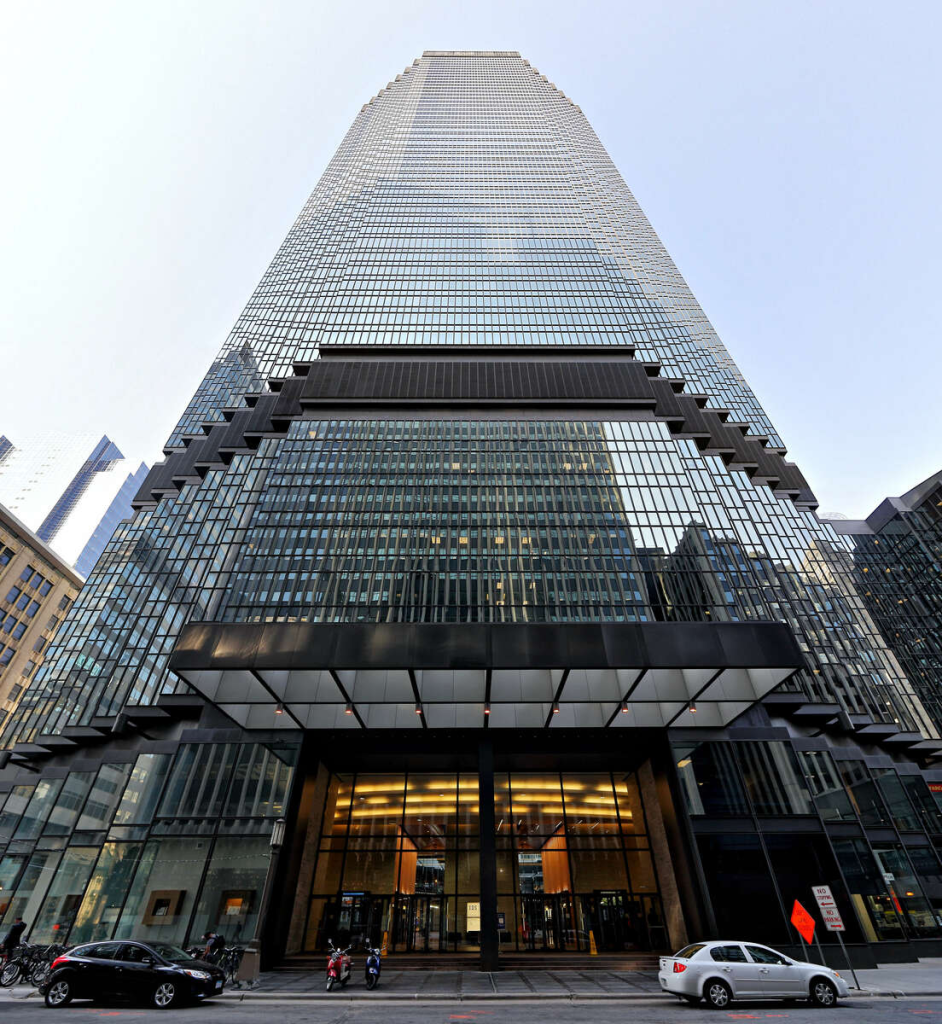
24. IDS Tower, Minneapolis, MN – 792 ft (241 m), 57 floors, completed 1972
The IDS Tower, officially known as the IDS Center, is the tallest building in Minnesota. Completed in 1972, it rises 792 feet and was designed by architect Philip Johnson in a distinctive modernist style. Its reflective glass façade and stepped form give it a timeless appearance that still dominates the Minneapolis skyline.
The tower has 57 floors, primarily used for office space, with additional retail and public areas in the Crystal Court, a glass-enclosed atrium at the base. The Crystal Court has become a popular meeting place for both workers and visitors, integrating the tower into the city’s network of skyways.
As a landmark of Minneapolis, the IDS Tower represents the city’s economic and architectural growth of the late 20th century. Even decades after its completion, it remains one of the Midwest’s most recognizable skyscrapers.
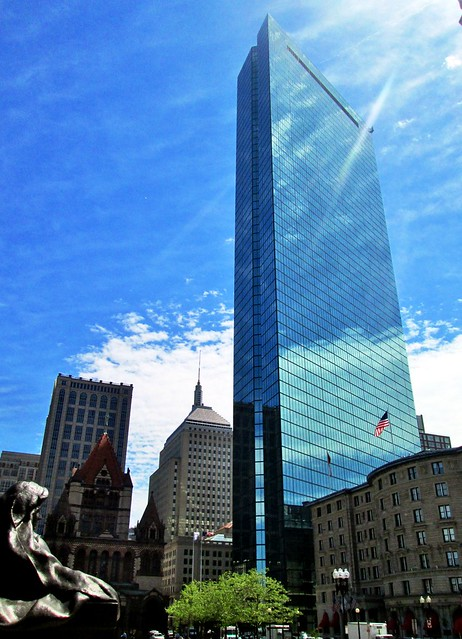
25. John Hancock Tower, Boston, MA – 790 ft (241 m), 60 floors, completed 1976
The John Hancock Tower, officially known as 200 Clarendon Street, is the tallest building in Boston and New England. Completed in 1976, the skyscraper rises 790 feet and is known for its minimalist, modernist design by architect Henry N. Cobb of I.M. Pei & Partners. Its sleek, glass-clad façade reflects the surrounding skyline, including historic landmarks like Trinity Church.
The tower has 60 floors, used primarily as office space. Its design emphasizes clean lines and uniform surfaces, with blue-tinted glass panels that allow it to blend with the sky. Despite early engineering challenges with its glass windows, the tower has since become a celebrated part of Boston’s architectural identity.
The John Hancock Tower is a symbol of modern Boston, standing as a striking contrast to the city’s historic architecture. It represents Boston’s growth as a financial and cultural hub, while remaining one of the most iconic skyscrapers in the region.
Conclusion
The tallest skyscrapers in the United States are more than just towering structures; they are bold statements of creativity, resilience, and the American spirit of innovation. Each building contributes to the nation’s architectural legacy, serving as both functional spaces and artistic masterpieces that capture the imagination of millions. From the iconic skyline of Manhattan to the growing vertical hubs of other major cities, these skyscrapers represent the fusion of design, technology, and ambition that continues to shape the country’s urban landscape.
As advancements in engineering and sustainable architecture continue, the future promises even taller and more eco-friendly skyscrapers that will redefine the limits of height and design. Yet, the Top 25 Tallest Skyscrapers in the United States will always stand as milestones of architectural brilliance — timeless symbols of a nation that dares to dream higher and build beyond the ordinary.
Other related articles
Top 25 Tallest Observation Towers in the World
Top 25 Tallest Clock Towers in the World
Top 15 Tallest Roller Coasters Ever Built
Top 25 Tallest Statues in the World
Top 20 Tallest Buildings in the World
