Asia has rapidly emerged as the global epicenter of skyscraper development, reshaping skylines with awe-inspiring vertical marvels that represent ambition, innovation, and economic power. From bustling financial hubs like Shanghai and Hong Kong to futuristic cities such as Dubai and Kuala Lumpur, Asian nations have led the race toward the sky with record-breaking structures that stand as symbols of national pride and engineering excellence. These towering skyscrapers not only serve as commercial and residential landmarks but also highlight the region’s rapid urbanization and architectural ingenuity.
In recent years, advancements in construction technology, sustainable design, and urban planning have fueled the development of some of the tallest and most iconic skyscrapers on the planet. These structures are more than just buildings—they are cultural icons, tourist attractions, and engineering masterpieces that define the modern Asian landscape. The Top 25 Tallest Skyscrapers in Asia highlights these monumental achievements, showcasing the incredible height, beauty, and innovation that continue to push the boundaries of what’s possible in architecture.
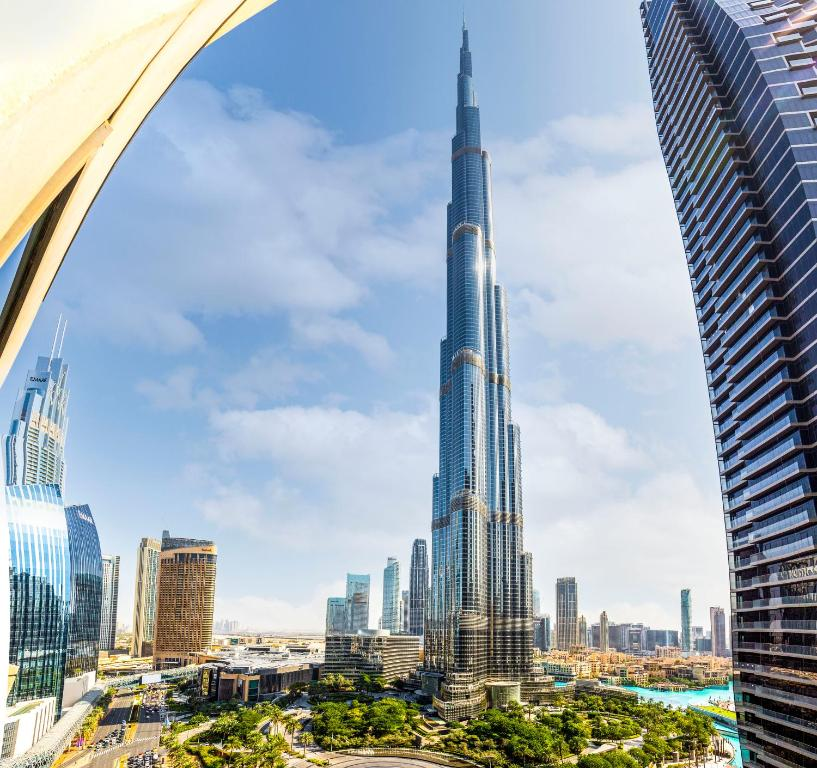
1. Burj Khalifa, Dubai, UAE – 828 m, 163 floors, completed 2010
The Burj Khalifa is the world’s tallest skyscraper, standing at a staggering 828 meters in Dubai, United Arab Emirates. Completed in 2010, it became an architectural icon that transformed the city’s skyline and positioned Dubai as a global hub for modern design and engineering. Its sleek, tapering form is inspired by the Hymenocallis desert flower, blending cultural symbolism with cutting-edge structural innovation.
The tower was developed as the centerpiece of Downtown Dubai, a mixed-use development featuring luxury residences, office spaces, the Armani Hotel, and the famous At the Top observation decks. Its design incorporates advanced technologies to withstand desert heat and strong winds, using a bundled-tube structure that provides both strength and efficiency. Beyond being a skyscraper, the Burj Khalifa functions as a vertical city, bringing together living, working, and leisure under one roof.
Globally recognized as a symbol of human ambition, the Burj Khalifa attracts millions of visitors each year who come to experience its panoramic views, fine dining, and world-class amenities. The skyscraper has become a cultural landmark, appearing in films, advertisements, and international media. Its successful construction and continued prominence highlight Dubai’s rise as a global city and showcase the potential of architectural innovation in shaping urban futures.
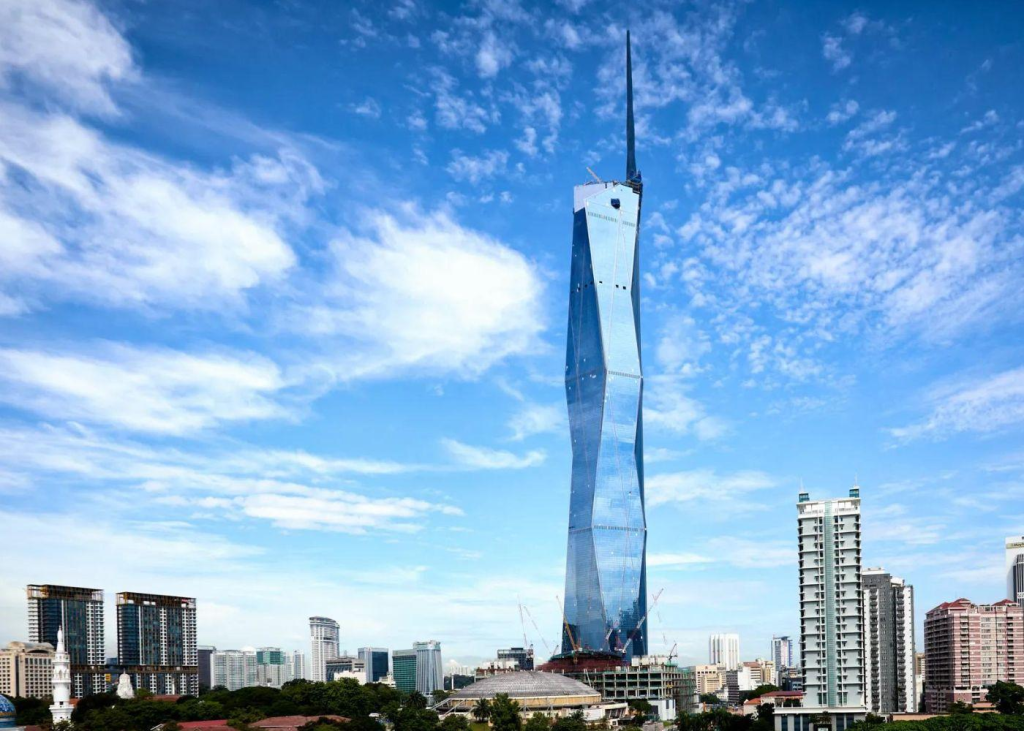
2. Merdeka 118, Kuala Lumpur, Malaysia – 679 m, 118 floors, completed 2023
Merdeka 118 is Malaysia’s newest architectural marvel, soaring to 679 meters and standing as the second tallest building in the world. Completed in 2023, the tower takes its name from “Merdeka,” which means independence, symbolizing Malaysia’s national pride. The spire-topped skyscraper dominates the Kuala Lumpur skyline, its design inspired by the gesture of Tunku Abdul Rahman proclaiming independence in 1957, making it not only a modern engineering feat but also a cultural landmark.
The building is a mixed-use development, housing premium office spaces, luxury residences, a hotel, retail zones, and Southeast Asia’s highest observation deck. Its diamond-shaped façade, featuring thousands of triangular glass panels, creates a shimmering effect that reflects the city’s vibrant growth. The structure incorporates advanced sustainability features and energy-efficient systems, establishing it as a model of modern green skyscraper design.
As a new centerpiece of Kuala Lumpur’s development, Merdeka 118 is envisioned as a hub for business, tourism, and culture. It rises near Stadium Merdeka, the historical site of Malaysia’s independence declaration, tying together the nation’s past and future in one iconic structure. With its grand scale and symbolic presence, the skyscraper is set to be a defining landmark for generations to come.
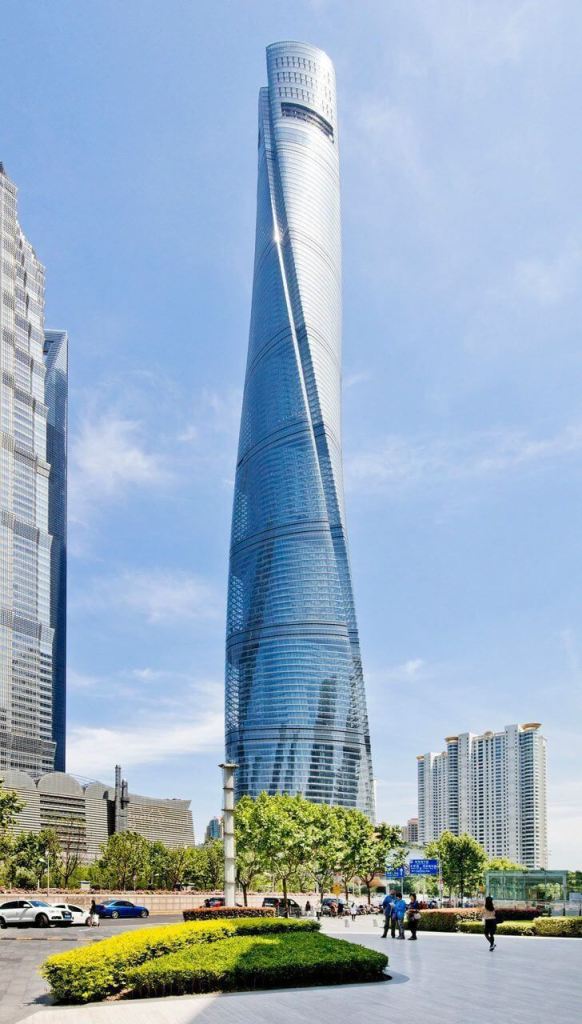
3. Shanghai Tower, Shanghai, China – 632 m, 128 floors, completed 2015
The Shanghai Tower, completed in 2015, rises to 632 meters, making it the tallest building in China and the third tallest in the world. Located in the Lujiazui financial district, it forms a trio of iconic skyscrapers alongside the Shanghai World Financial Center and Jin Mao Tower. Its spiraling, twisting form not only gives it a futuristic aesthetic but also reduces wind loads by up to 24%, a critical feature for tall structures in typhoon-prone Shanghai.
The tower is designed as a vertical city, with nine separate zones containing offices, retail areas, hotels, cultural spaces, and observation decks. Its transparent double-skin façade is one of the most advanced in the world, conserving energy by creating a buffer of naturally ventilated space while also reducing the need for artificial climate control. The tower incorporates world-leading green technologies, making it one of the most sustainable supertall buildings ever constructed.
Beyond its engineering achievements, the Shanghai Tower has become a symbol of China’s rapid modernization and ambition. Its top observation deck, among the highest in the world, offers sweeping views of the city’s skyline and the Huangpu River. For both locals and visitors, it represents not only architectural excellence but also Shanghai’s role as a global financial powerhouse.
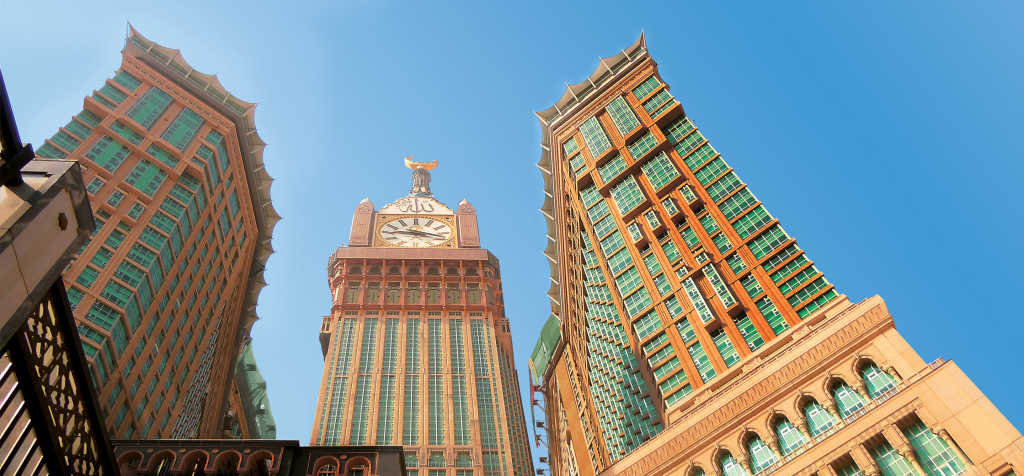
4. The Clock Towers, Mecca, Saudi Arabia – 601 m, 120 floors, completed 2012
The Clock Towers, formally known as the Abraj Al Bait Towers, rise 601 meters above Mecca and are among the most recognizable skyscrapers in the world. Completed in 2012, the complex includes several towers, with the central tower crowned by the world’s largest clock face. Located just meters from the Masjid al-Haram, it serves as a central landmark for millions of Muslim pilgrims who travel annually to the holy city.
The tower complex houses luxury hotels, shopping malls, prayer halls, and residential apartments. Its main clock tower, topped with a golden crescent, is visible from 25 kilometers away, serving as both a spiritual and practical beacon for the city. Designed to accommodate massive crowds during Hajj and Umrah seasons, the structure provides essential amenities while integrating traditional Islamic motifs with modern engineering.
As one of the tallest and most prominent buildings in the Middle East, the Clock Towers symbolize Saudi Arabia’s investment in expanding infrastructure for religious tourism. Beyond its architectural scale, the complex plays a vital cultural role, offering spaces that blend hospitality, commerce, and worship. The tower stands as both a functional facility and a religious landmark, uniting faith and modernity in one monumental design.
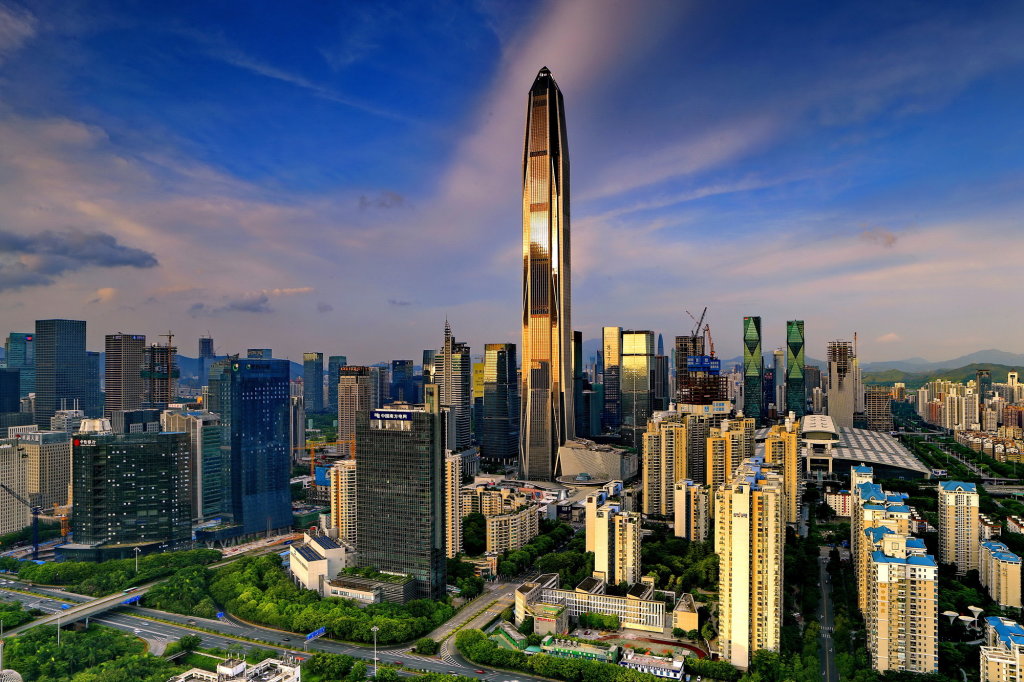
5. Ping An Finance Center, Shenzhen, China – 599 m, 115 floors, completed 2017
The Ping An Finance Center in Shenzhen stands at 599 meters, making it one of the tallest skyscrapers in Asia. Completed in 2017, it was designed by Kohn Pedersen Fox Associates and developed for the Ping An Insurance Company, one of China’s largest financial firms. The tower’s sleek design, clad in stainless steel and glass, gives it a sharp, commanding presence in Shenzhen’s booming Futian business district.
Inside, the tower serves as a hub of financial and commercial activity. It contains office spaces, retail zones, a high-end hotel, and an observation deck offering breathtaking views of the Pearl River Delta. The building’s structure was engineered to handle high wind loads and seismic activity, ensuring both safety and durability. Its vertical lines emphasize upward motion, symbolizing progress and ambition.
The Ping An Finance Center not only reflects Shenzhen’s rapid transformation into a global economic hub but also stands as a testament to China’s rise in modern architecture. As one of the tallest towers in the world, it enhances the international profile of the city and demonstrates how skyscrapers can become emblems of economic growth and global integration.
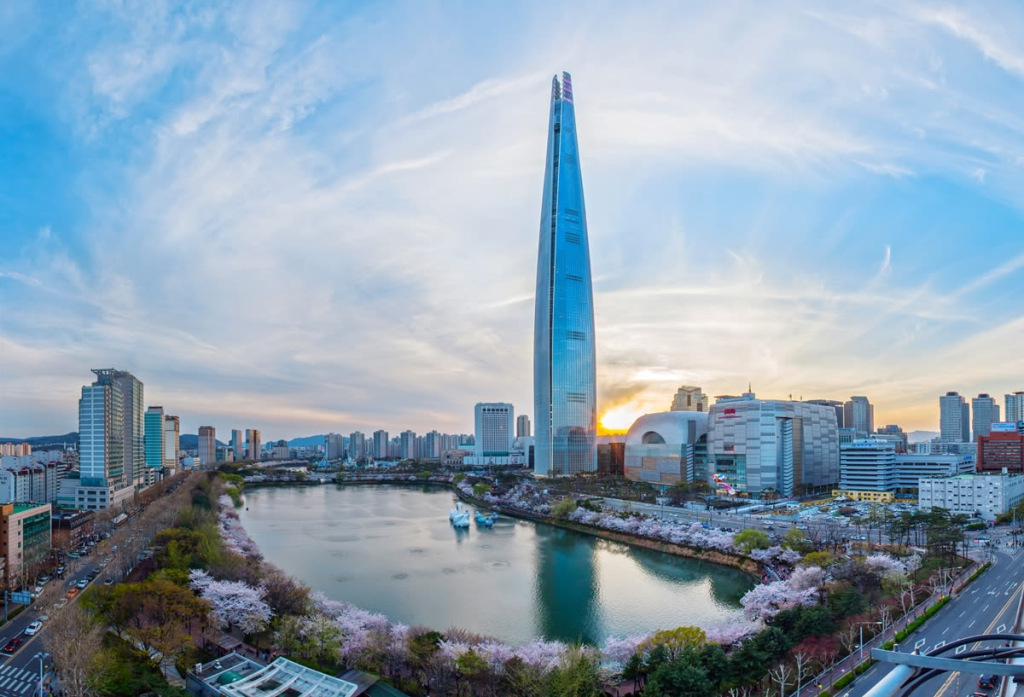
6. Lotte World Tower, Seoul, South Korea – 555 m, 123 floors, completed 2017
The Lotte World Tower is the tallest building in South Korea, reaching a height of 555 meters with 123 floors. Completed in 2017, it is a striking feature of Seoul’s skyline, with a sleek, tapered design that resembles a slender, curved cone. The structure draws inspiration from traditional Korean ceramics and brush artistry, blending cultural heritage with modern architectural sophistication.
The tower is a mixed-use development, housing luxury residences, offices, a seven-star hotel, retail spaces, and entertainment facilities. Its most notable attraction is the Seoul Sky observation deck, located between the 117th and 123rd floors, which provides panoramic views of the entire city. The glass-floored observation deck, among the highest in the world, offers visitors a thrilling perspective from more than half a kilometer above ground.
As one of the tallest skyscrapers in Asia, the Lotte World Tower represents South Korea’s global ambitions in architecture and commerce. It has become a symbol of national pride and innovation, attracting millions of tourists annually while also serving as a hub for business and leisure. The building’s mix of culture, entertainment, and commerce makes it a vertical city within Seoul’s urban fabric.
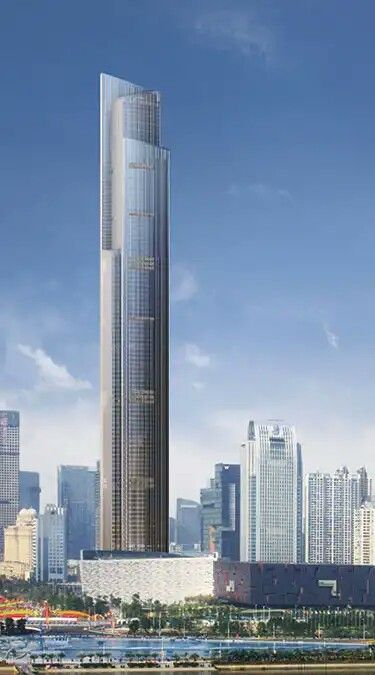
7. Guangzhou CTF Finance Centre, Guangzhou, China – 530 m, 111 floors, completed 2016
The Guangzhou CTF Finance Centre, completed in 2016, stands 530 meters tall and is among the tallest twin skyscrapers in the world alongside its counterpart in Tianjin. Located in Guangzhou’s Tianhe District, the building is part of a modern urban cluster that has turned the city into one of China’s major financial hubs. Its design features a sleek, tapering form clad in glass and terracotta, giving it both a futuristic and durable appearance.
Inside, the tower functions as a multi-purpose space with offices, a luxury hotel, serviced apartments, and one of the highest observation decks in the world. Its structure was engineered to reduce energy use, featuring high-performance insulation and energy-efficient systems. The building is also noted for its speed in construction, with major progress achieved in just a few years.
The Guangzhou CTF Finance Centre has become a symbol of Guangzhou’s rapid urban growth and modernization. Standing among other notable skyscrapers in the city’s skyline, it underscores China’s leadership in constructing supertall buildings. Its prominence as both an architectural and economic icon strengthens Guangzhou’s role as a major global metropolis.
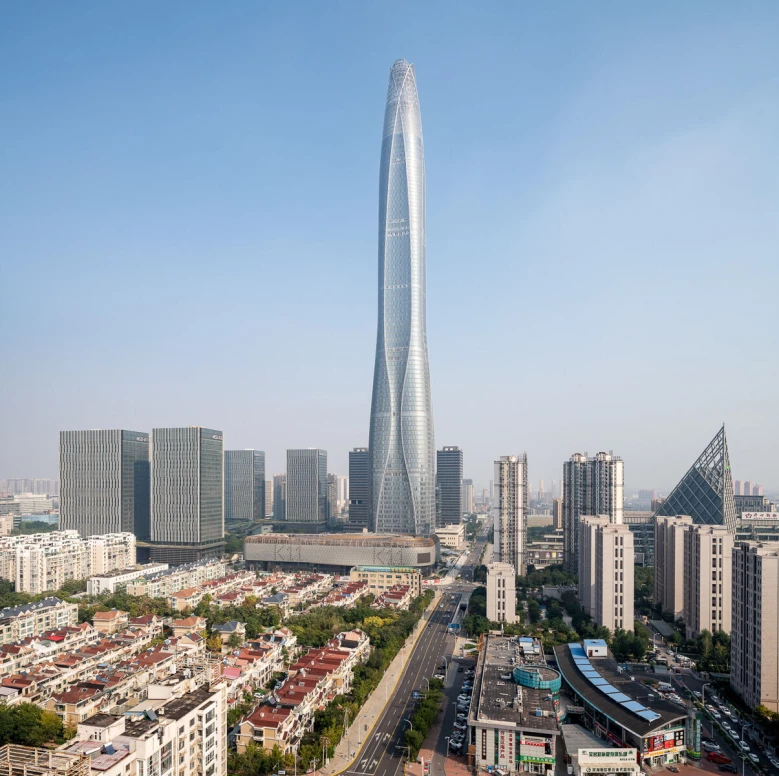
8. Tianjin CTF Finance Centre, Tianjin, China – 530 m, 97 floors, completed 2019
The Tianjin CTF Finance Centre, a twin counterpart to the Guangzhou CTF, rises to the same height of 530 meters. Completed in 2019, the tower features an elegant curved design with soft vertical lines that give it a flowing, sculptural form. This aerodynamic structure was not only built for aesthetics but also to reduce wind resistance, ensuring stability in Tianjin’s varied climate.
The building contains office spaces, luxury serviced apartments, and a hotel, making it a fully integrated vertical complex. Its glass façade reflects the city’s skyline and allows abundant natural light to flood interior spaces. The tower was constructed with sustainability in mind, incorporating energy-saving features and high-efficiency equipment to reduce its environmental footprint.
For Tianjin, the skyscraper represents its growing role as a financial and commercial hub in northern China. Standing as one of the tallest towers in the world, the Tianjin CTF Finance Centre reflects the nation’s architectural ambition and showcases the city’s modernization. It complements Guangzhou’s tower while carving out its own identity as a landmark of Tianjin’s skyline.
9. CITIC Tower, Beijing, China – 528 m, 109 floors, completed 2018
CITIC Tower, also known as China Zun, stands at 528 meters and dominates Beijing’s Central Business District. Completed in 2018, its design is inspired by a traditional Chinese ritual vessel called the “zun,” giving the tower its unique flared shape that narrows in the middle before widening at the top. This symbolic form connects China’s ancient traditions with its modern economic power.
The skyscraper contains office spaces, luxury hotels, and commercial facilities, serving as a key hub for business activity in Beijing. The building is designed with structural reinforcements to handle seismic risks, which are particularly important in northern China. Its flared crown also maximizes usable space at higher levels, creating both functionality and an iconic silhouette.
As the tallest building in Beijing, CITIC Tower has redefined the capital’s skyline and become a new symbol of China’s rise as a global power. It reflects the country’s blend of cultural heritage and futuristic development, standing as both a business landmark and an architectural statement. The tower remains one of the most recognizable structures in the city, shaping Beijing’s identity in the 21st century.
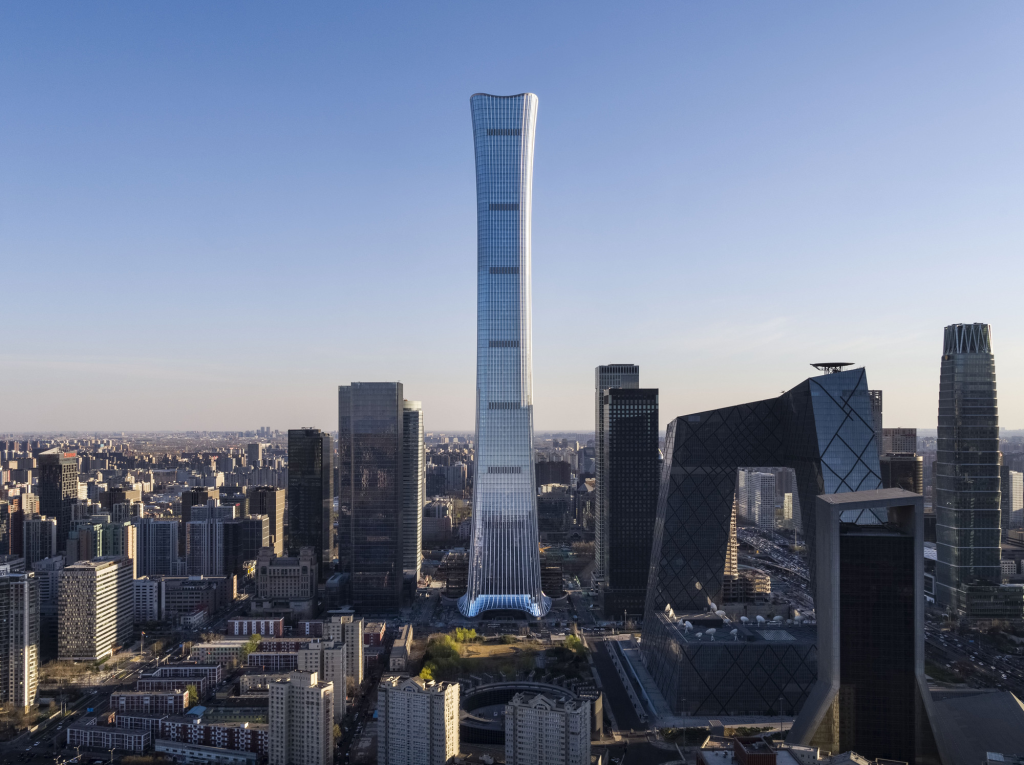
10. Taipei 101, Taipei, Taiwan – 508 m, 101 floors, completed 2004
Taipei 101 was the world’s tallest building from 2004 until the completion of the Burj Khalifa in 2010. Standing at 508 meters with 101 floors, it remains one of the most iconic skyscrapers in Asia. Its design draws heavily on traditional Chinese pagoda architecture, with its tiered, bamboo-inspired structure symbolizing strength, resilience, and growth.
The tower contains a mix of office spaces, retail malls, and observation decks, making it both a commercial hub and a major tourist attraction. Its engineering is particularly notable for its massive tuned mass damper, a 660-ton sphere suspended near the top that counteracts swaying caused by typhoons and earthquakes. This innovation has made Taipei 101 one of the safest supertall skyscrapers in the world.
Even today, Taipei 101 remains a powerful symbol of Taiwan’s modern identity. It has hosted international events such as New Year’s Eve fireworks displays, drawing global attention. The skyscraper continues to inspire both architectural admiration and cultural pride, representing Taiwan’s position on the global stage.
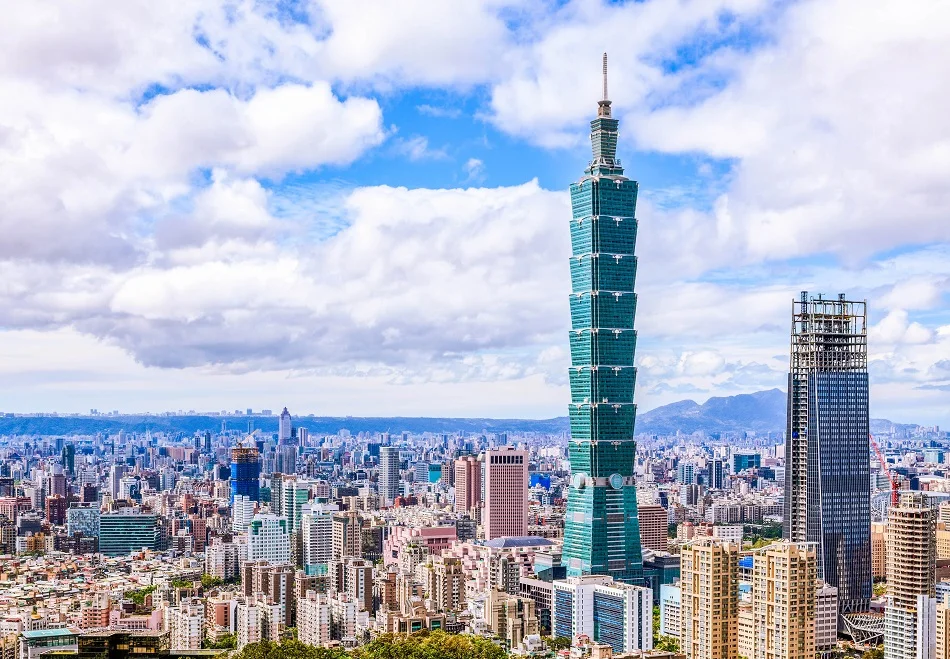
11. Shanghai World Financial Center, Shanghai, China – 492 m, 101 floors, completed 2008
The Shanghai World Financial Center, completed in 2008, reaches a height of 492 meters with 101 floors. Its most distinctive feature is the large trapezoidal opening near the top, which has earned it the nickname “the bottle opener.” Located in the Lujiazui financial district, it stands alongside the Jin Mao Tower and the Shanghai Tower, forming one of the world’s most striking clusters of skyscrapers.
The building contains offices, hotels, conference facilities, and observation decks. Its Sky Walk observatory, located at 474 meters, was once the highest in the world and still offers breathtaking views of the city and the Huangpu River. The structure was engineered with advanced safety features, making it highly resilient to wind and seismic forces.
As a landmark of modern Shanghai, the World Financial Center represents the city’s rise as a global financial hub. Its unique design has made it one of the most photographed and recognizable skyscrapers in the world. The building stands as both a symbol of economic power and an architectural masterpiece, blending functionality with bold design.
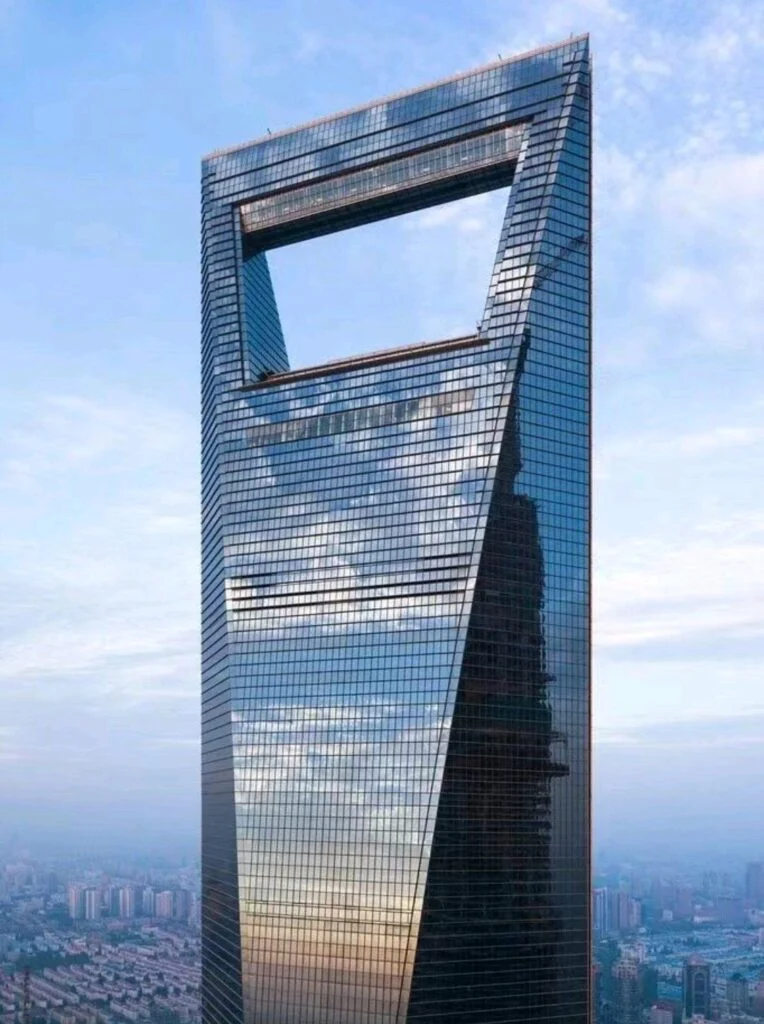
12. International Commerce Centre, Hong Kong – 484 m, 108 floors, completed 2010
The International Commerce Centre (ICC) is the tallest building in Hong Kong, rising to 484 meters with 108 floors. Completed in 2010, it stands prominently in West Kowloon and forms part of the Union Square development. The tower’s sleek and minimalistic design reflects Hong Kong’s status as a financial powerhouse and serves as a visual counterpoint to the International Finance Centre across Victoria Harbour.
The building houses a wide range of facilities, including premium office spaces, luxury residences, and the Ritz-Carlton Hotel, which occupies the upper floors. The hotel’s Sky100 observation deck is one of the highest in the world, providing visitors with breathtaking 360-degree views of Hong Kong’s skyline, Victoria Harbour, and surrounding mountains. The tower also connects seamlessly with transport hubs, making it highly accessible.
As a modern icon of Hong Kong, the ICC has become a landmark of business, luxury, and tourism. It has hosted international events and light shows that illuminate the city’s skyline. The tower symbolizes Hong Kong’s role as a global gateway and continues to stand as a statement of the city’s ambition and prosperity.
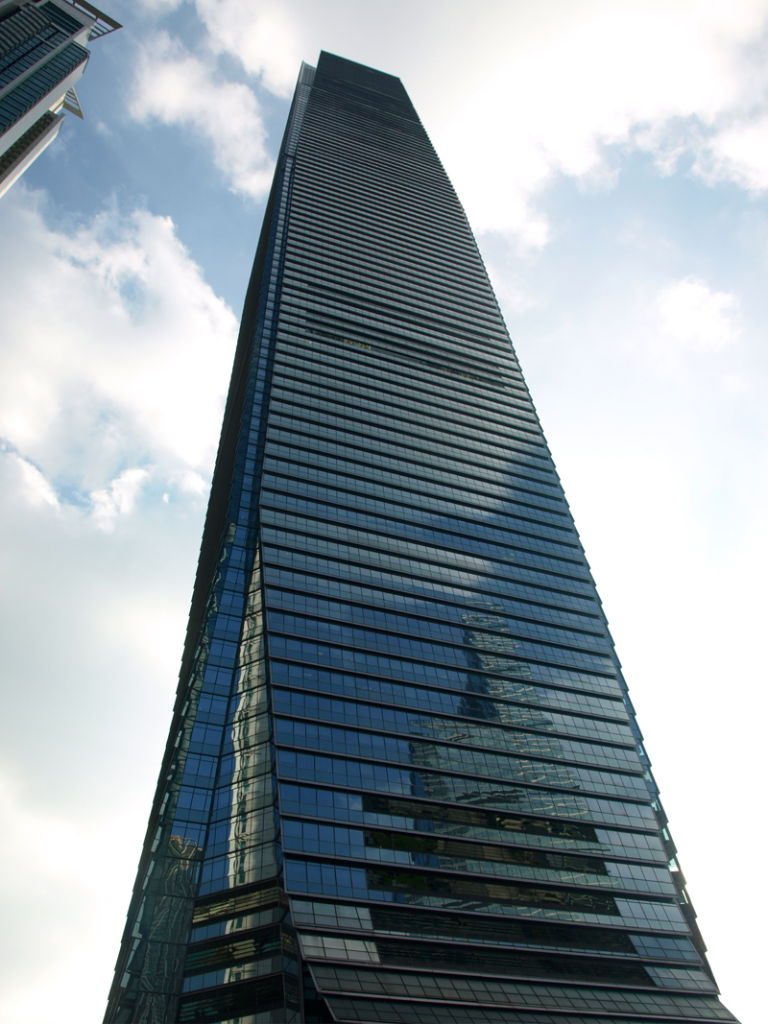
13. Wuhan Greenland Center, Wuhan, China – 476 m, 101 floors, completed 2023
The Wuhan Greenland Center stands 476 meters tall, making it one of the tallest skyscrapers in central China. Initially planned to exceed 600 meters, its height was reduced due to airspace restrictions, yet it remains a remarkable engineering accomplishment. Completed in 2023, the tower showcases Wuhan’s emergence as a modern megacity.
The building contains office spaces, luxury apartments, and a high-end hotel, creating a mixed-use vertical complex. Its smooth, curving design not only provides an elegant aesthetic but also reduces wind resistance, enhancing structural stability. Energy-efficient systems are integrated into the building, reflecting contemporary priorities in sustainability and green design.
As one of the tallest towers in inland China, the Wuhan Greenland Center has reshaped the city’s skyline. It serves as a focal point for business and leisure while also elevating Wuhan’s profile on the national stage. The skyscraper is both a symbol of urban progress and a testament to modern Chinese engineering.
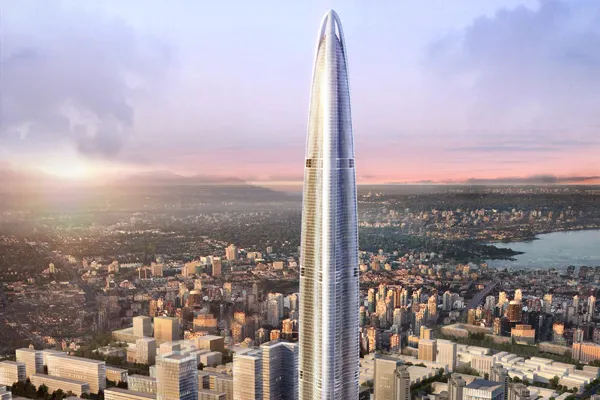
14. Landmark 81, Ho Chi Minh City, Vietnam – 461 m, 81 floors, completed 2018
Landmark 81 is the tallest building in Vietnam and one of the tallest in Southeast Asia, standing at 461 meters with 81 floors. Completed in 2018, it is located within the Vinhomes Central Park development along the Saigon River. Its sleek, modern design is inspired by bamboo, symbolizing strength and resilience, deeply tied to Vietnamese cultural heritage.
The skyscraper houses a luxury hotel, serviced apartments, retail spaces, restaurants, and an observation deck. The building’s SkyView observatory offers sweeping views of Ho Chi Minh City, making it a popular attraction for locals and tourists alike. Landmark 81 also integrates entertainment venues, fitness facilities, and high-end dining, creating a dynamic urban center.
Beyond its commercial and residential functions, Landmark 81 is a symbol of Vietnam’s rapid economic growth. It stands as a marker of the country’s modernization and ambition, representing its place on the global stage. The tower has become a new icon for Ho Chi Minh City, reshaping the skyline and setting new standards for architecture in Southeast Asia.
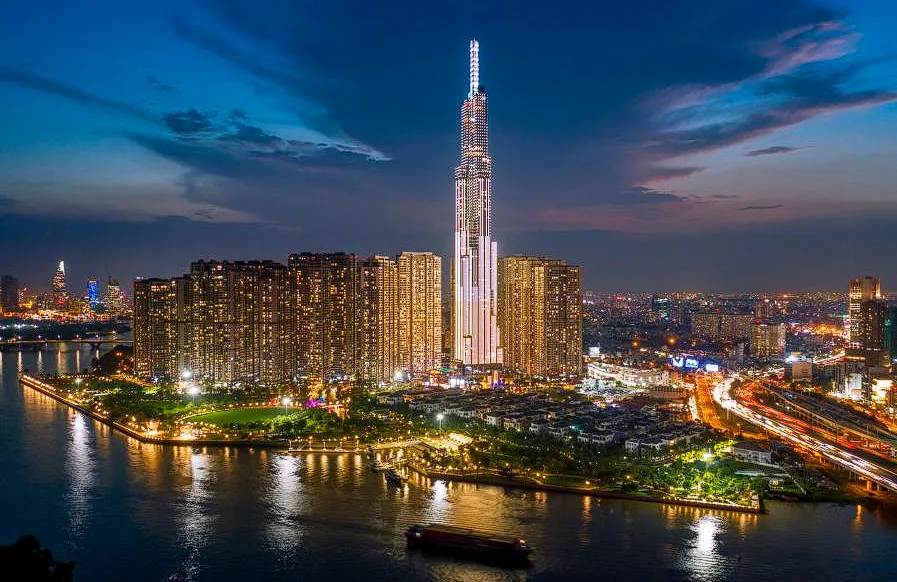
15. International Land-Sea Center, Chongqing, China – 458 m, 98 floors, expected 2025
The International Land-Sea Center, rising to 458 meters, is set to become the tallest skyscraper in Chongqing upon its completion in 2025. Located in the Liangjiang New Area, the tower is designed to highlight the city’s growing role as a major financial and logistical hub in western China. Its sleek, futuristic design integrates seamlessly into Chongqing’s fast-developing urban core.
The building will include office spaces, luxury hotels, and high-end commercial areas. An observation deck is also planned, giving visitors sweeping views of Chongqing’s dramatic landscape of rivers and mountains. Its design incorporates advanced green building technologies, reflecting China’s push toward sustainable urban development.
As one of the city’s most ambitious projects, the International Land-Sea Center will symbolize Chongqing’s economic strength and strategic importance. It is expected to attract international investment and further establish the city as a global player. The skyscraper will not only redefine the skyline but also reinforce Chongqing’s identity as a gateway between China’s interior and the world.
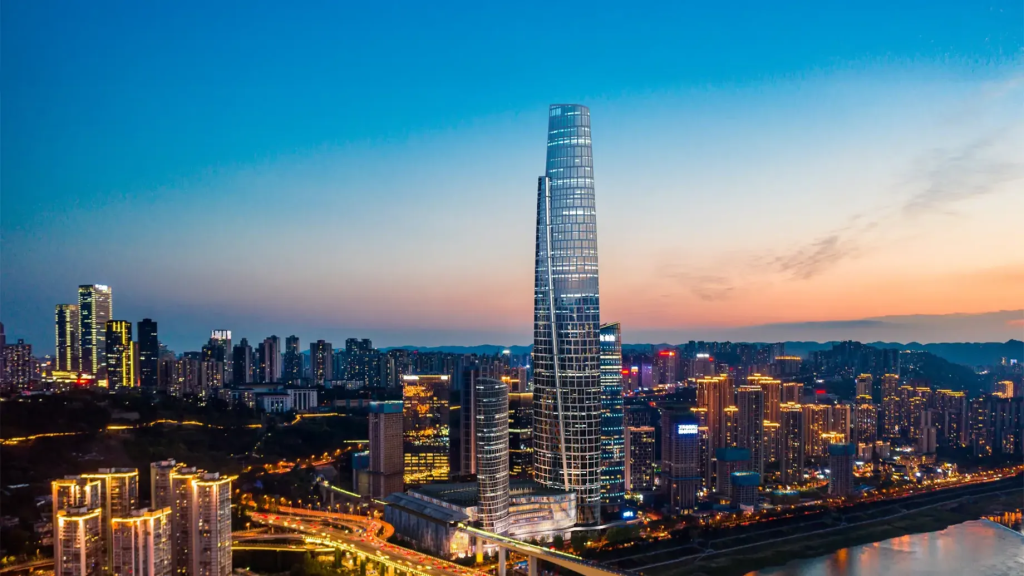
16. Changsha IFS Tower 1, Changsha, China – 452 m, 94 floors, completed 2018
Changsha IFS Tower 1 stands at 452 meters, making it the tallest building in Hunan Province and one of the tallest in central China. Completed in 2018, the tower forms part of the International Finance Square complex, which integrates retail, office, and hospitality spaces. Its sleek, modern design enhances Changsha’s growing reputation as a major urban center.
The tower includes office spaces, a luxury hotel, and a high-end shopping mall that attracts international brands and visitors. Its observation deck provides panoramic views of the city and surrounding region, offering a unique perspective of Changsha’s rapid development. The building also connects seamlessly with public transportation, making it a hub of activity.
As the city’s most prominent landmark, Changsha IFS Tower 1 represents both economic vitality and cultural progress. It reflects China’s continuing investment in regional urban growth beyond its coastal megacities. The skyscraper stands as a powerful symbol of Changsha’s modernization and ambition.
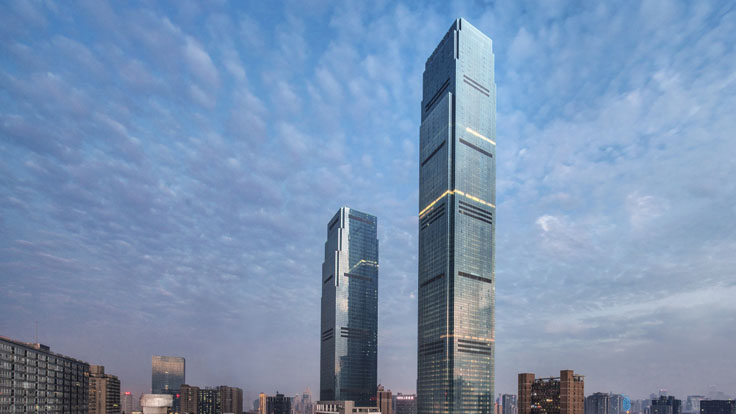
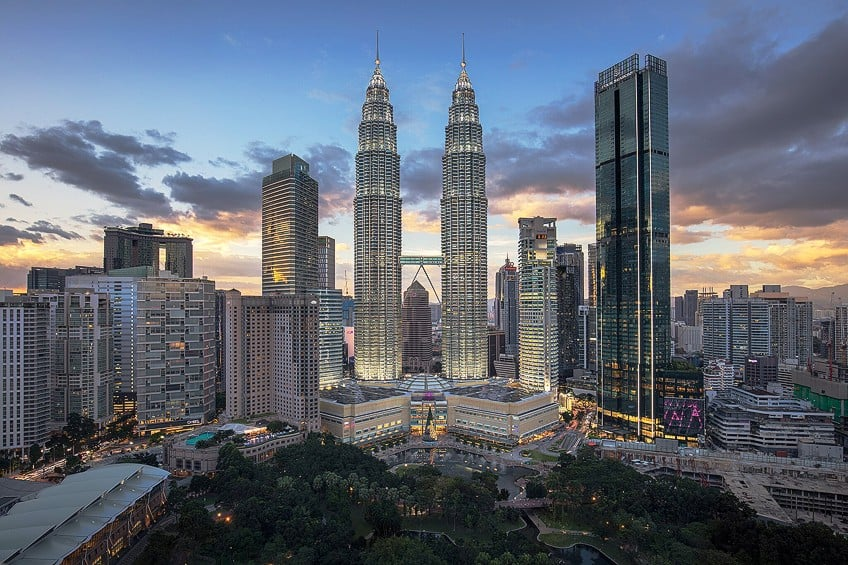
17. Petronas Towers, Kuala Lumpur, Malaysia – 452 m, 88 floors, completed 1998
The Petronas Towers, completed in 1998, are Malaysia’s most iconic architectural landmarks. Standing at 452 meters, the twin towers held the title of the world’s tallest buildings until 2004, and they remain the tallest twin towers globally. Designed by Argentine architect César Pelli, their form is based on Islamic geometric principles, reflecting Malaysia’s cultural identity while showcasing its modern aspirations.
The towers house office spaces, a shopping mall, and cultural facilities. The most famous feature is the double-decked Skybridge at the 41st and 42nd floors, which connects the two towers and serves as both an emergency exit and a public viewing platform. The observation deck on the 86th floor provides visitors with spectacular views of Kuala Lumpur’s skyline.
The Petronas Towers symbolize Malaysia’s rapid development and ambition to be a global economic player. They continue to be a source of national pride and a top tourist destination, drawing millions of visitors each year. As an architectural and cultural icon, they remain central to Kuala Lumpur’s identity on the world stage.
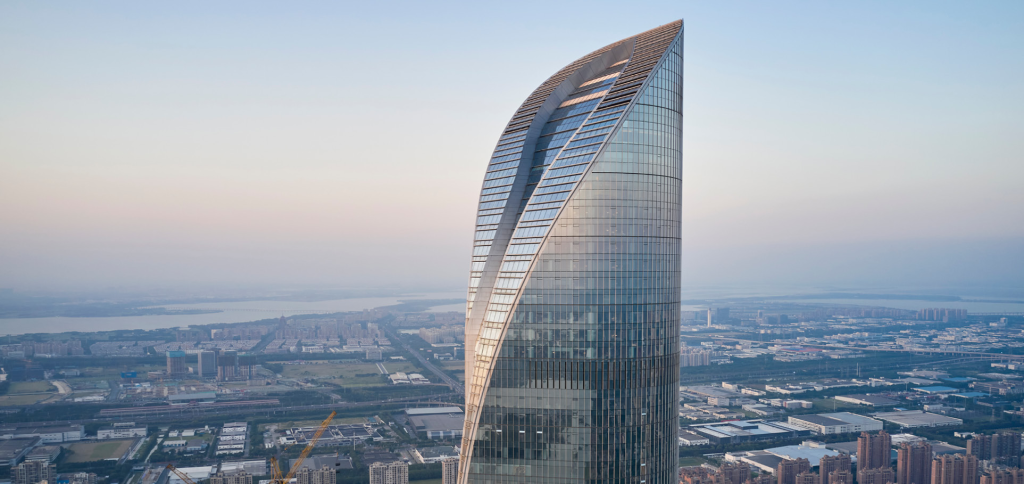
18. Suzhou IFS, Suzhou, China – 450 m, 95 floors, completed 2019
Suzhou IFS, completed in 2019, is the tallest building in Jiangsu Province, standing 450 meters tall with 95 floors. Located in the Suzhou Industrial Park near Jinji Lake, the skyscraper is designed to emphasize the city’s growing importance as a financial and commercial hub. Its sleek glass façade and modern silhouette reflect Suzhou’s blend of tradition and innovation.
The tower is a mixed-use development that includes high-end office spaces, luxury apartments, a hotel, and retail areas. It also offers observation decks that provide views of the city and the picturesque lake. The design incorporates sustainable features, including efficient energy systems, to align with China’s growing emphasis on green building standards.
As a centerpiece of Suzhou’s skyline, Suzhou IFS represents the city’s transition from a historic cultural center to a modern global city. It has become a symbol of Suzhou’s economic vitality and ambition, strengthening its role in regional and international commerce. The skyscraper’s height and elegance make it one of China’s most notable modern landmarks.
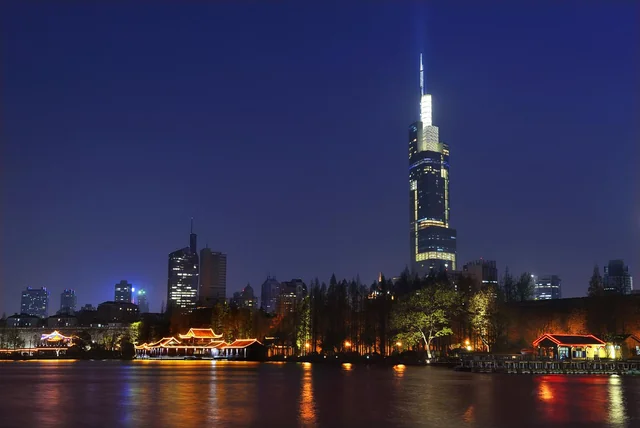
19. Zifeng Tower, Nanjing, China – 450 m, 89 floors, completed 2010
Zifeng Tower, completed in 2010, rises to 450 meters and dominates the skyline of Nanjing, one of China’s historic capitals. Its design, created by the architectural firm SOM (Skidmore, Owings & Merrill), features a sleek, tiered form that reflects both modern elegance and cultural symbolism. The tower’s profile is inspired by the city’s traditional pagodas, connecting the past with the future.
The skyscraper houses office spaces, a hotel, retail areas, and observation decks. Its Sky Lobby offers panoramic views of Nanjing and the Yangtze River, while the tower’s top floors feature restaurants and leisure facilities. The building was constructed with advanced structural systems to withstand seismic activity and ensure safety.
Zifeng Tower has become a major landmark for Nanjing, symbolizing the city’s growing economic strength and modernization. It bridges the city’s historic significance with its emerging role as a center for commerce and innovation. As one of the tallest towers in China, it continues to be a proud emblem of Nanjing’s identity.
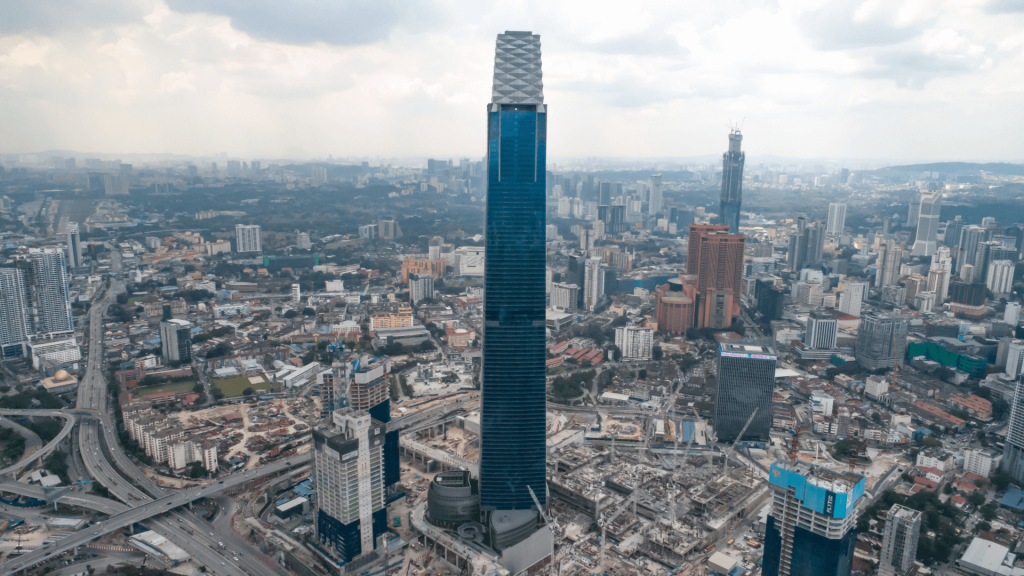
20. The Exchange 106, Kuala Lumpur, Malaysia – 445 m, 95 floors, completed 2019
The Exchange 106 is one of Malaysia’s tallest skyscrapers, standing at 445 meters with 95 floors. Completed in 2019, it serves as the centerpiece of the Tun Razak Exchange (TRX), Kuala Lumpur’s new financial district. Its sleek glass façade and illuminated crown make it one of the most distinctive additions to the city’s skyline.
The tower provides premium office spaces designed to attract multinational corporations and financial institutions. Its interiors feature large column-free floor plates, allowing flexible layouts for modern businesses. The building also integrates advanced energy-efficient systems, aligning with international green building standards.
As part of Kuala Lumpur’s growing economic hub, The Exchange 106 strengthens Malaysia’s position in global finance. It complements the city’s iconic Petronas Towers while marking a new era of development in the TRX district. The skyscraper embodies progress, ambition, and the city’s transformation into a major international financial center.
21. Wuhan Center Tower, Wuhan, China – 443 m, 88 floors, completed 2019
The Wuhan Center Tower, completed in 2019, stands 443 meters tall with 88 floors, making it one of the tallest buildings in central China. Its design is notable for its smooth, curved form, which resembles a water droplet and symbolizes fluidity and growth. Positioned in Wuhan’s CBD, the skyscraper has become a defining feature of the city’s skyline.
The tower accommodates office spaces, luxury residences, and a hotel. Its structural design incorporates systems to withstand seismic risks and high winds, ensuring long-term safety and resilience. Sustainable technologies were also included, making it one of Wuhan’s most eco-friendly supertall buildings.
As the tallest building in Wuhan at the time of its completion, the tower represents the city’s rapid modernization and growing economic role in central China. It is both a functional business hub and a symbol of Wuhan’s emergence as a major urban center. The skyscraper reflects the city’s ambition to align with China’s coastal megacities in terms of development and prestige.
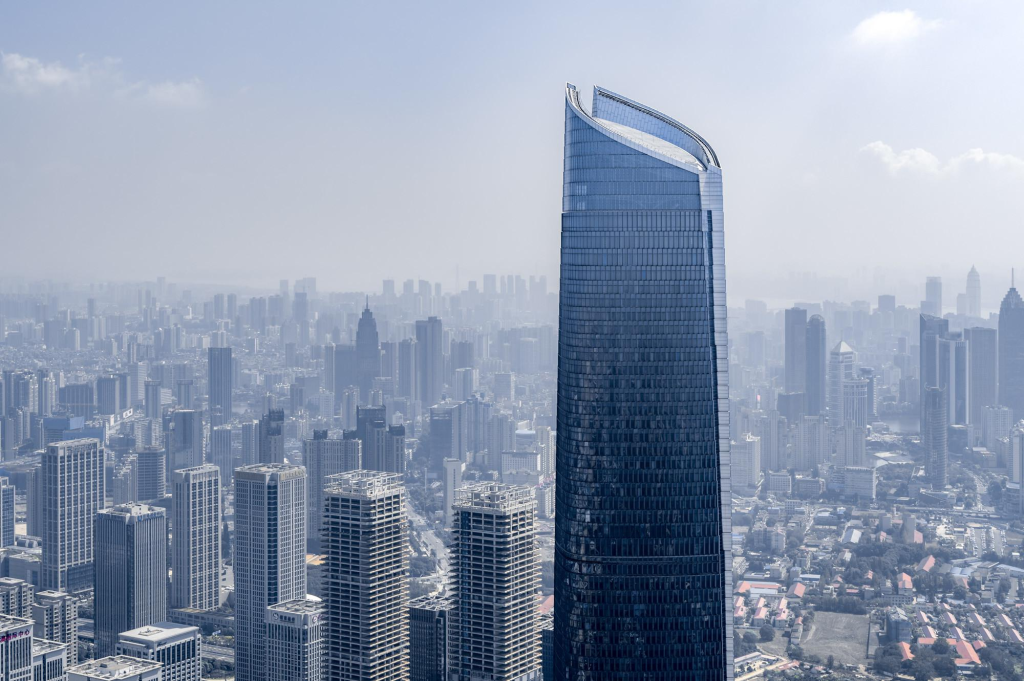
22. KK100, Shenzhen, China – 442 m, 98 floors, completed 2011
KK100, completed in 2011, is a landmark skyscraper in Shenzhen, rising 442 meters with 98 floors. Formerly known as Kingkey 100, the tower is characterized by its slender, curved profile that gives it a graceful, elegant presence in the city’s skyline. It remains one of the tallest towers in southern China and a key feature of Shenzhen’s urban identity.
The building integrates office spaces, a luxury hotel, retail zones, and leisure facilities. Its observation deck provides sweeping views of Shenzhen and nearby Hong Kong, making it a popular attraction for visitors. The tower’s design emphasizes vertical elegance while incorporating advanced engineering to handle the region’s frequent typhoons.
KK100 symbolizes Shenzhen’s transformation from a small fishing town into a global technology and financial hub. As one of the city’s tallest and most iconic skyscrapers, it represents the ambition and energy that have defined Shenzhen’s rapid rise. The tower remains a proud emblem of the city’s economic success and architectural innovation.
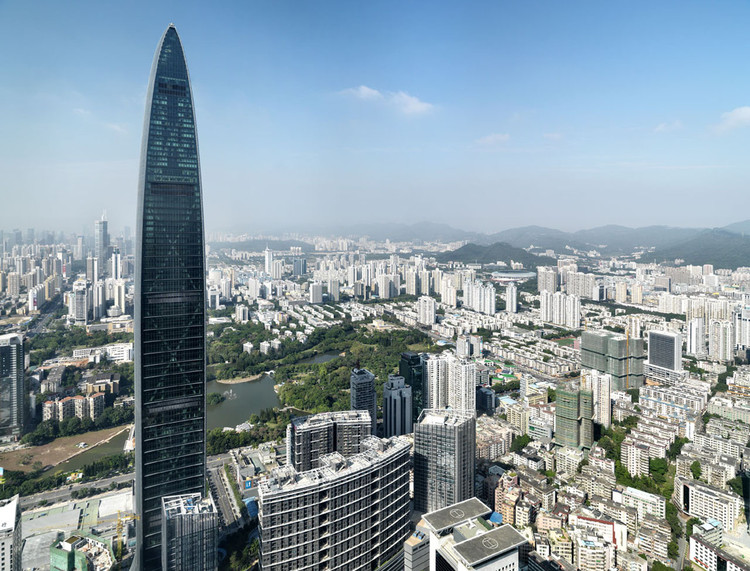
23. Guangzhou International Finance Center, Guangzhou, China – 439 m, 101 floors, completed 2010
The Guangzhou International Finance Center, also known as the West Tower, stands 439 meters tall with 101 floors. Completed in 2010, it is part of a twin-tower complex that includes the taller Guangzhou CTF Finance Centre (East Tower). Its triangular form, clad in glass and steel, gives it a distinctive modern silhouette in Guangzhou’s rapidly growing skyline.
The tower houses office spaces, a luxury hotel, and conference facilities. The Four Seasons Hotel occupies the upper floors, offering panoramic views of the city and the Pearl River. The skyscraper also contains one of the world’s highest helipads, emphasizing its status as a hub for both business and hospitality.
As one of Guangzhou’s most important landmarks, the International Finance Center symbolizes the city’s economic growth and integration into global commerce. It remains a central part of the Zhujiang New Town business district and a visual icon for modern Guangzhou. The tower helped solidify the city’s reputation as one of China’s leading metropolises.
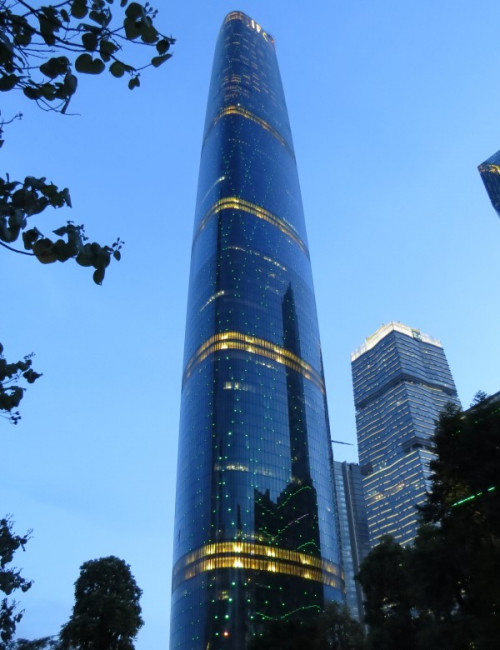
24. Greenland Shandong International Financial Center, Jinan, China – 428 m, 88 floors, expected 2025
The Greenland Shandong International Financial Center, currently under development, will rise to 428 meters with 88 floors, making it the tallest skyscraper in Jinan upon completion in 2025. The tower is designed as part of the city’s effort to expand its role as a financial hub in Shandong Province and beyond. Its sleek design integrates modern engineering with an emphasis on sustainability.
The building is planned to include office spaces, luxury residences, and high-end retail areas. Observation decks will provide sweeping views of Jinan and its surrounding landscapes, offering a new symbol of urban identity for the city. Advanced green technologies will be integrated to ensure energy efficiency and environmental performance.
As Jinan’s tallest tower, the Greenland Shandong IFC is expected to redefine the city’s skyline. It represents the city’s growing importance in regional commerce and will serve as a hub for both business and leisure. The project underscores China’s ongoing trend of constructing supertall skyscrapers even in emerging urban centers.
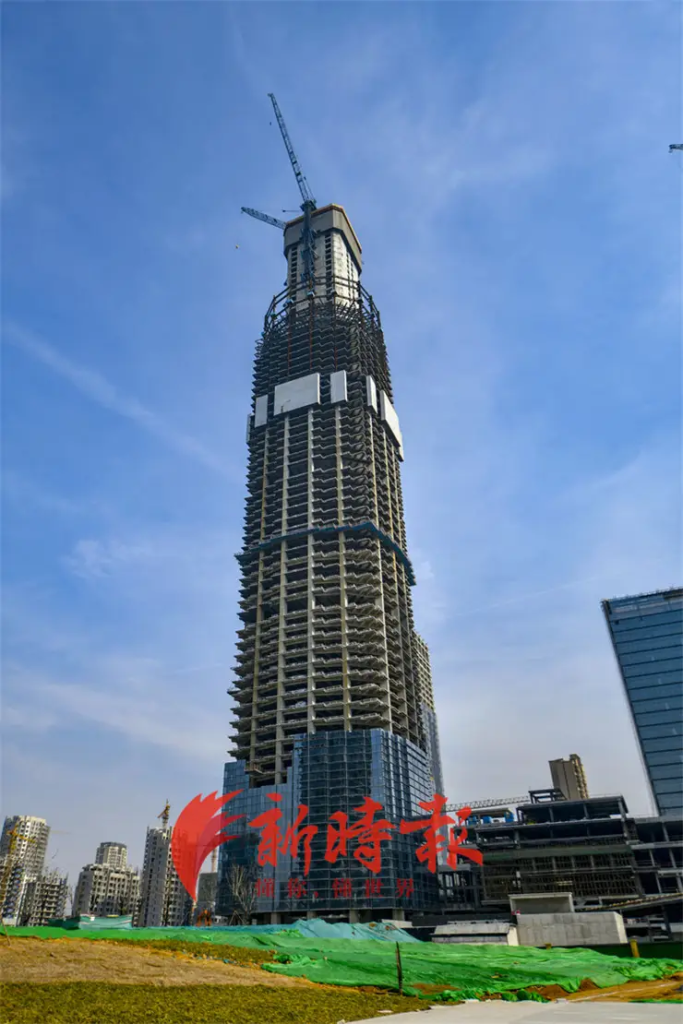
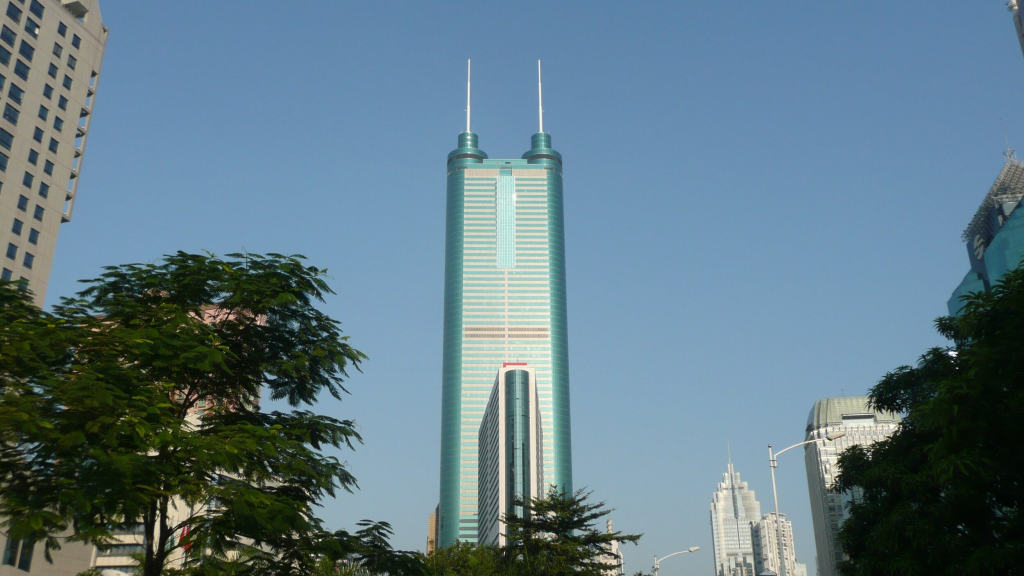
25. Shun Hing Square, Shenzhen, China – 384 m, 69 floors, completed 1996
Shun Hing Square, also known as Diwang Tower, stands 384 meters tall with 69 floors. Completed in 1996, it was one of the earliest supertall skyscrapers in China and held the title of the tallest building in the country for several years. Its completion marked a milestone in Shenzhen’s transformation into a modern metropolis.
The tower contains office spaces, residential units, and retail facilities. It also features an observation deck that offers views of Shenzhen and its rapidly expanding urban landscape. Its structural design was considered pioneering at the time, pushing the boundaries of China’s skyscraper engineering in the 1990s.
As one of the first iconic skyscrapers in Shenzhen, Shun Hing Square symbolizes the city’s rapid rise during China’s period of economic reform. Although it has since been surpassed in height by many newer towers, it remains a historic landmark and a reminder of Shenzhen’s early leap into global prominence.
Conclusion
The tallest skyscrapers in Asia are a testament to the region’s relentless pursuit of progress, blending futuristic design with cultural identity and environmental awareness. These iconic structures redefine city skylines, attract millions of visitors, and contribute to the status of their cities as global economic powerhouses. From towering observation decks to luxury mixed-use spaces, each skyscraper reflects a unique story of vision, determination, and technological mastery.
As Asia continues to dominate the world’s skyscraper rankings, the race to build higher, smarter, and greener structures shows no signs of slowing down. Future developments will likely set new global records and introduce even more groundbreaking architectural concepts. Still, the Top 25 Tallest Skyscrapers in Asia will remain powerful symbols of an era marked by extraordinary ambition and structural innovation — inspiring generations to look upward and imagine what comes next.
Other related articles
Top 20 Tallest Man-Made in Structure the World
Top 25 Tallest Twin Towers in the World
Top 25 Tallest Skyscrapers in the United States
Top 25 Tallest Bridges in the World (by structural height)
Top 25 Tallest Observation Towers in the World
