
Bridges are more than just structures that connect two points—they are engineering marvels that showcase humanity’s ability to overcome nature’s obstacles. Among the most awe-inspiring of these creations are the world’s tallest bridges, measured by their structural height from the ground or water below to the top of the bridge’s tallest element, such as towers or pylons. These giants often span deep valleys, gorges, or wide rivers, combining breathtaking views with cutting-edge engineering.
The tallest bridges stand as symbols of ambition, innovation, and progress, often pushing the limits of design and technology. They are not only practical solutions for transportation but also iconic landmarks that attract global recognition. By looking at the world’s tallest bridges, we gain insight into the scale of modern construction and the boldness of human vision in conquering natural landscapes.
1. Huajiang Grand Canyon Bridge – Guizhou, China – 625 m (2,051 ft)
The Huajiang Grand Canyon Bridge, currently under construction in Guizhou, China, is set to become the tallest bridge in the world by structural height. Soaring to 625 meters (2,051 feet), it will span the dramatic Huajiang Canyon, offering breathtaking views of the surrounding mountainous terrain. Its design incorporates advanced suspension engineering to withstand the region’s challenging geography and natural conditions.
The bridge is part of a major expressway project that aims to significantly reduce travel times across southwestern China. By connecting key economic zones in Guizhou Province, it will transform regional accessibility and boost local trade, tourism, and development. Its completion will mark a milestone in China’s rapid bridge-building achievements.
Beyond its engineering feat, the Huajiang Grand Canyon Bridge will stand as a symbol of modern infrastructure mastery, drawing global attention for both its scale and aesthetic presence. It will not only function as a vital transportation link but also as a landmark attraction for visitors seeking to witness one of the greatest marvels of contemporary bridge design.

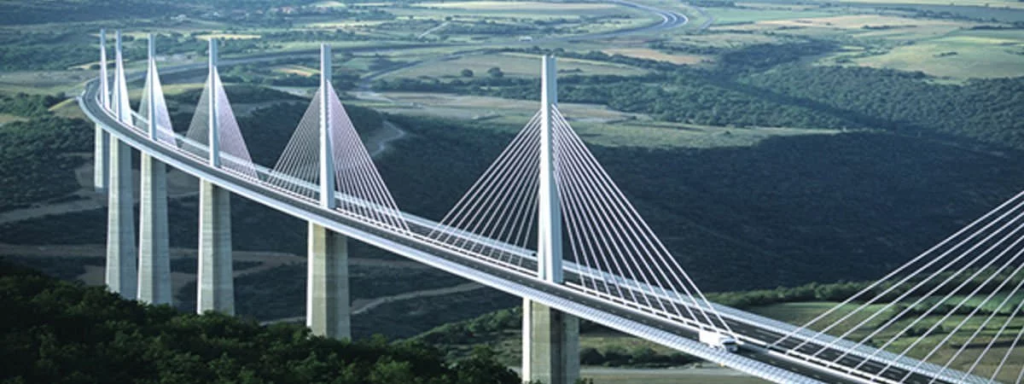
2. Millau Viaduct – Millau, France – 343 m (1,125 ft)
The Millau Viaduct is one of the most celebrated bridges in the world, admired for its graceful architecture and record-breaking height. Stretching across the Tarn Valley in southern France, it rises 343 meters (1,125 feet) at its tallest mast, making it the tallest bridge in Europe. Its sleek cable-stayed design, created by engineer Michel Virlogeux and architect Norman Foster, blends harmoniously with the scenic landscape.
Construction of the viaduct was completed in 2004, and it quickly became a French national symbol of engineering excellence. The bridge drastically shortened the travel time between Paris and the Mediterranean coast, easing congestion through the valley town of Millau. It also demonstrated how infrastructure can merge functionality with aesthetics, setting new standards in civil engineering.
Today, the Millau Viaduct attracts millions of visitors annually, not only as a transportation route but also as a tourist destination. Its soaring piers, often piercing through misty clouds, create a dramatic sight that has made it one of the most photographed bridges in the world.
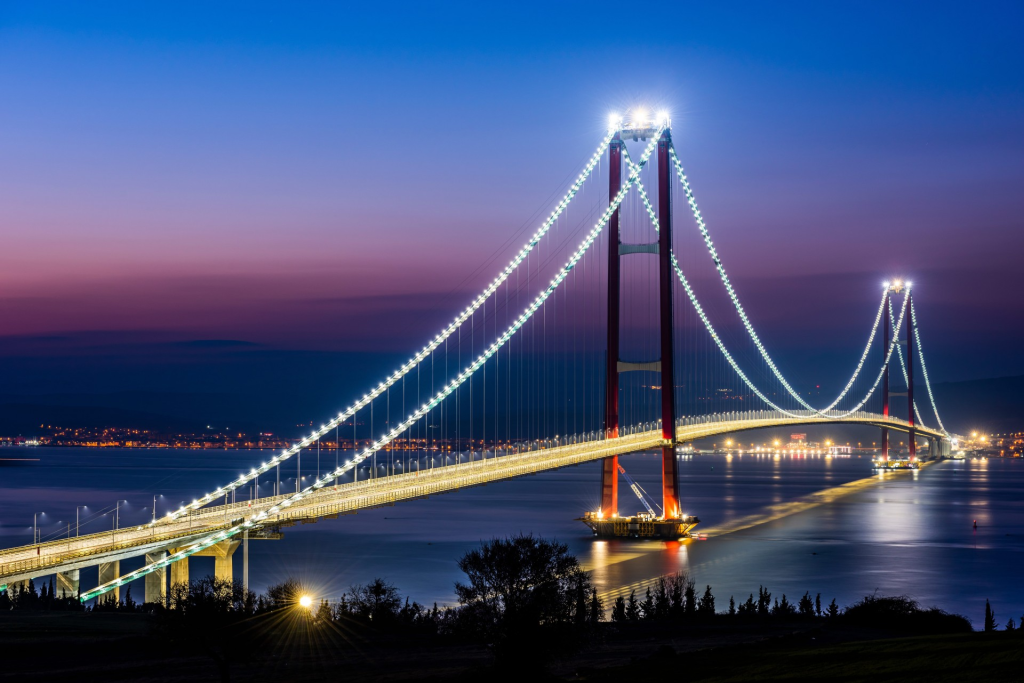
3. 1915 Çanakkale Bridge – Çanakkale, Turkey – 334 m (1,096 ft)
The 1915 Çanakkale Bridge is a monumental suspension bridge crossing the Dardanelles Strait in northwestern Turkey. With towers rising to 334 meters (1,096 feet), it is the tallest bridge in Turkey and among the tallest globally. Its name commemorates the historic World War I naval battle of 1915, symbolizing national pride and resilience.
Opened in 2022, the bridge connects the European and Asian sides of Turkey, drastically cutting travel time across the strait. Before its construction, vehicles relied on ferries, which were often subject to delays. Now, the bridge stands as a crucial link in Turkey’s highway network, facilitating trade and transport between Europe and Asia.
The bridge is also notable for its record-breaking 2,023-meter main span, the longest of any suspension bridge in the world. This combination of scale and symbolism makes the 1915 Çanakkale Bridge not only an engineering achievement but also a landmark of Turkey’s ambitions in infrastructure and global connectivity.
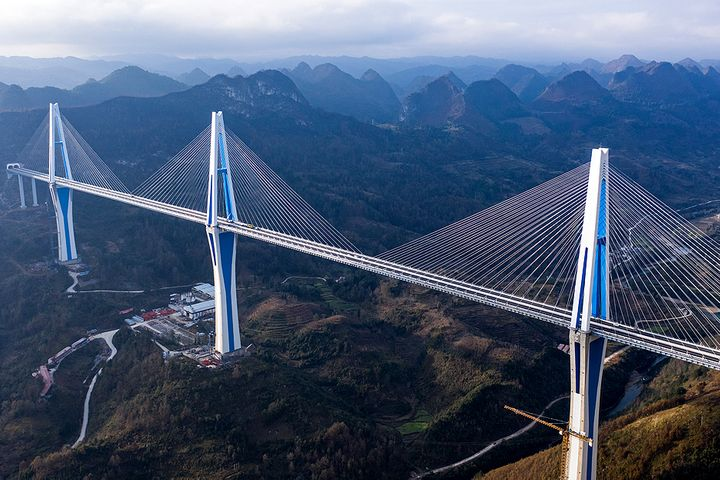
4. Pingtang Bridge – Guizhou, China – 332 m (1,089 ft)
The Pingtang Bridge in Guizhou, China, is one of the tallest cable-stayed bridges in the world, with its main towers rising to 332 meters (1,089 feet). Opened in 2019, the bridge spans the deep valley of the Caodu River, connecting the city of Pingtang with surrounding areas. Its strategic location serves as part of the expressway network that improves transportation across China’s mountainous southwest.
Built with cutting-edge engineering techniques, the bridge features a striking three-tower cable-stayed design that ensures both stability and visual elegance. The project posed immense challenges due to the region’s steep cliffs and difficult terrain, but it now stands as a testament to China’s rapid infrastructure advancements.
The Pingtang Bridge also contributes to tourism, as it is located near the world’s largest radio telescope, FAST. Visitors traveling to the area often marvel at both the scientific wonder and the engineering beauty of the bridge, making it a dual attraction in Guizhou.
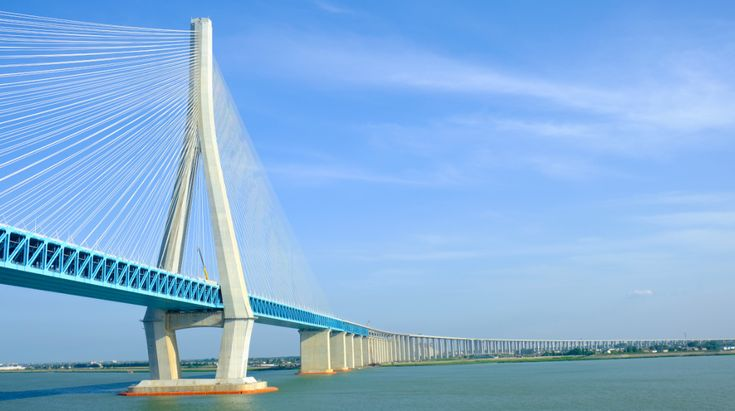
5. Husutong Yangtze River Bridge – Jiangsu, China – 325 m (1,066 ft)
The Husutong Yangtze River Bridge, located in Jiangsu Province, China, is a remarkable combined rail-and-road bridge. Its towers soar to 325 meters (1,066 feet), ranking it among the tallest bridges worldwide. It serves as a critical connection between the cities of Nantong and Suzhou across the Yangtze River.
Opened in 2020, the bridge is part of China’s broader effort to integrate transportation infrastructure across the Yangtze River Delta, one of the country’s most economically dynamic regions. Its design incorporates a cable-stayed system, built to endure heavy loads while maintaining aerodynamic stability.
The Husutong Bridge not only improves passenger travel but also strengthens freight movement, allowing both high-speed trains and vehicles to cross simultaneously. This dual functionality makes it one of the most versatile and impactful bridges in modern China.
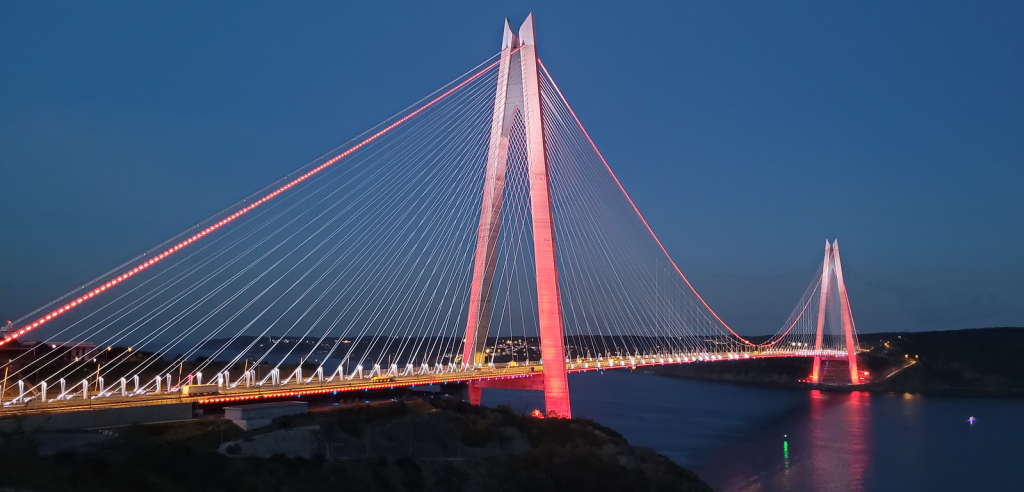
6. Yavuz Sultan Selim Bridge – Istanbul, Turkey – 322 m (1,056 ft)
The Yavuz Sultan Selim Bridge, also known as the Third Bosphorus Bridge, is one of the tallest and widest suspension bridges in the world. With towers rising 322 meters (1,056 feet), it spans the Bosphorus Strait in Istanbul, linking Europe and Asia. Opened in 2016, it is dedicated to Sultan Selim I, an Ottoman ruler, and stands as both an engineering marvel and a cultural landmark.
The bridge is unique in its design as it combines both suspension and cable-stayed systems, making it structurally efficient for handling heavy loads. It carries eight lanes of road traffic and two railway tracks, easing congestion on Istanbul’s other Bosphorus crossings. By supporting rail transit, the bridge integrates into Turkey’s broader transportation master plan.
Beyond its functionality, the Yavuz Sultan Selim Bridge symbolizes modern Turkey’s ambition and connectivity. It has become a signature structure in Istanbul’s skyline, reinforcing the city’s role as a bridge between continents while standing as one of the tallest bridges globally.
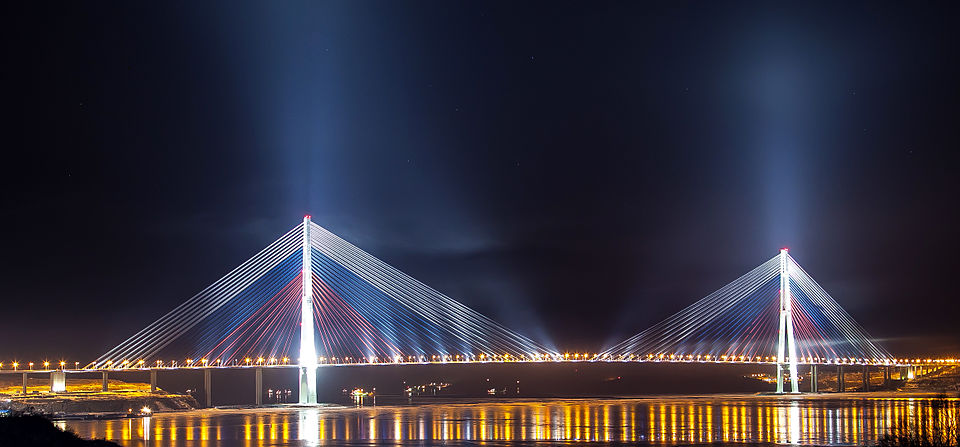
7. Russky Bridge – Vladivostok, Russia – 321 m (1,053 ft)
The Russky Bridge in Vladivostok, Russia, is one of the world’s tallest and longest cable-stayed bridges. Completed in 2012, its towers stand at 321 meters (1,053 feet), making it a dominant feature in the landscape. The bridge was built to connect the Russky Island with mainland Vladivostok, especially for the 2012 APEC Summit hosted by Russia.
The bridge is famous for its main span of 1,104 meters, the longest of any cable-stayed bridge in the world at the time of its completion. Designed to withstand the region’s harsh weather, including strong winds and ice, the Russky Bridge showcases Russia’s engineering capabilities in extreme environments.
Aside from its practical use, the Russky Bridge has become a symbol of Vladivostok’s modernization and development. It provides essential connectivity for residents and has also boosted tourism by drawing visitors to admire its record-breaking scale and stunning seaside location.
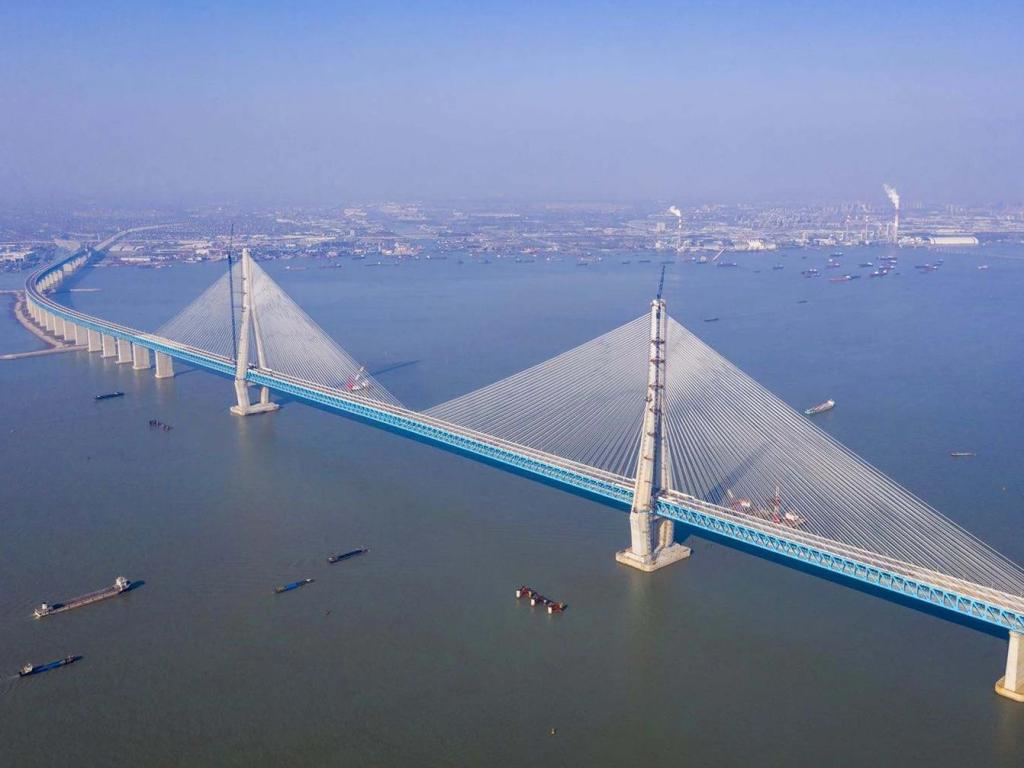
8. Sutong Yangtze River Bridge – Changshu, China – 306 m (1,004 ft)
The Sutong Yangtze River Bridge, located in Jiangsu Province, China, is a landmark cable-stayed bridge crossing the Yangtze River between Nantong and Changshu. With towers standing 306 meters (1,004 feet) tall, it was among the tallest bridges when completed in 2008. Its record-breaking main span of 1,088 meters made it the longest cable-stayed span in the world at the time.
The bridge plays a vital role in the Shanghai–Nantong Expressway, cutting travel time dramatically and integrating Nantong more closely with the booming Shanghai region. This has brought economic growth and urban expansion to areas that were previously less accessible.
Engineering-wise, the Sutong Bridge represented a breakthrough in large-scale cable-stayed bridge construction. Its ability to withstand the Yangtze’s powerful currents and typhoon-prone weather demonstrates the precision and strength of modern Chinese engineering.
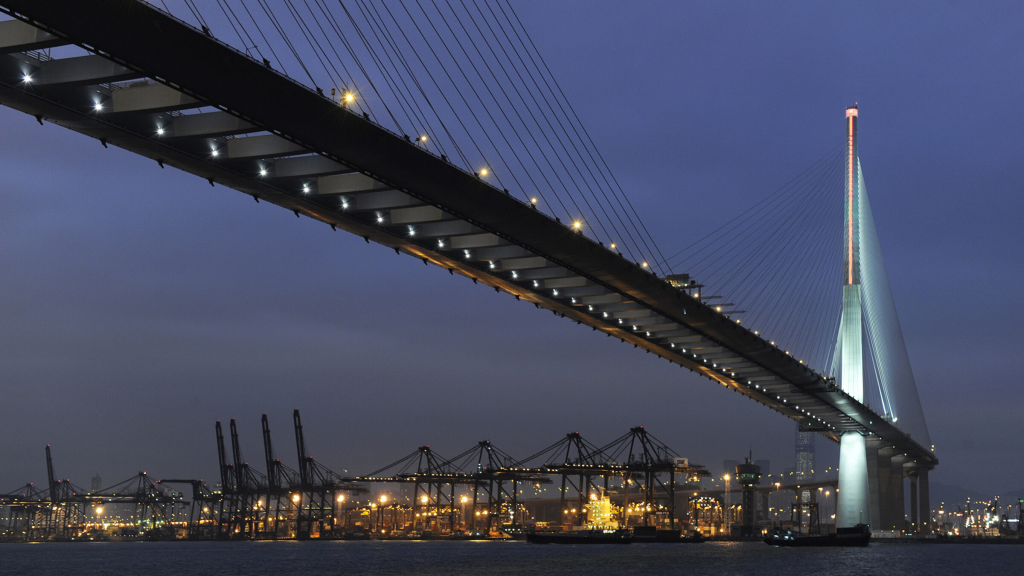
9. Stonecutters Bridge – Hong Kong – 298 m (978 ft)
The Stonecutters Bridge in Hong Kong is one of the tallest cable-stayed bridges in the world, with towers rising 298 meters (978 feet). Completed in 2009, it spans the Rambler Channel, connecting Tsing Yi Island and Stonecutters Island. Its strategic location near Hong Kong’s container port highlights its role in supporting global trade.
The bridge features a 1,018-meter main span, ranking it among the longest cable-stayed spans globally. Built to endure strong typhoon winds common in the region, its design combines durability with elegance, adding to Hong Kong’s modern skyline.
As a critical infrastructure project, the Stonecutters Bridge has improved traffic flow between Hong Kong Island, Kowloon, and the New Territories. It not only enhances logistics but also serves as an iconic landmark that underscores Hong Kong’s position as a hub of commerce and engineering innovation.
10. Chishi Bridge – Yizhang County, China – 288 m (945 ft)
The Chishi Bridge in Yizhang County, Hunan Province, China, is a towering cable-stayed bridge with piers reaching 288 meters (945 feet). Opened in 2016, it carries the G76 Xiamen–Chengdu Expressway across a deep valley, dramatically reducing travel time in this mountainous region.
The bridge has a main span of 1,100 meters, making it one of the longest cable-stayed spans in the world. Its construction was especially challenging due to the rugged terrain, but engineers successfully built a structure that blends functionality with striking aesthetics.
For travelers, the Chishi Bridge has become both a time-saver and a scenic highlight. It exemplifies China’s ambitious infrastructure drive to connect remote regions with modern highways while pushing the limits of bridge engineering.
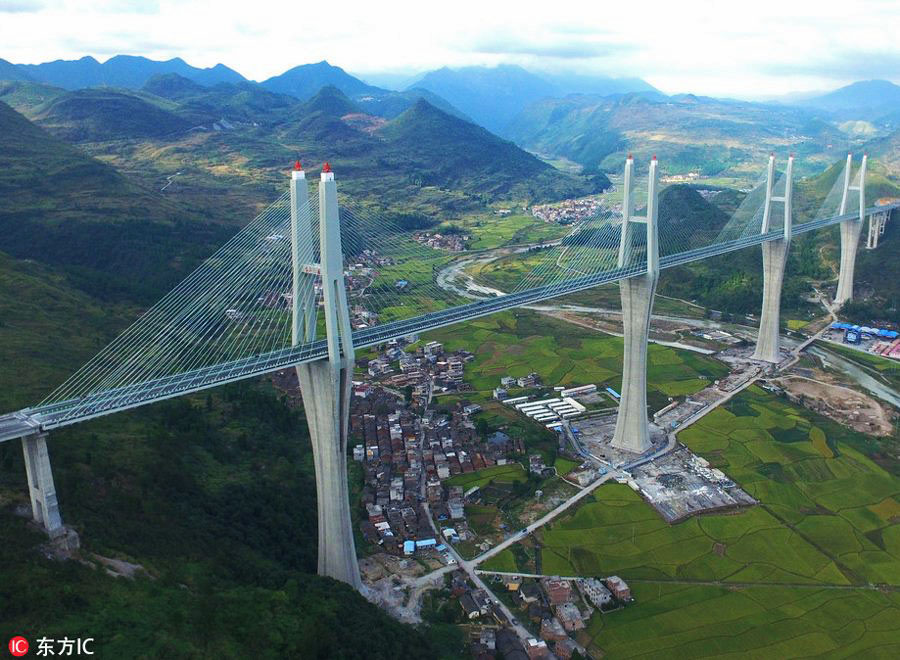
11. Xiang River Bridge – Zunyi, China – 288 m (945 ft)
The Xiang River Bridge in Zunyi, Guizhou Province, China, stands at 288 meters (945 feet), making it one of the tallest cable-stayed bridges in the world. Opened in 2009, it forms part of the Guiyang–Zunyi Expressway, improving transportation across the mountainous region of southwestern China.
The bridge spans the Xiang River Valley, an area known for steep terrain and deep gorges, where building traditional road networks posed challenges. With its tall pylons and long spans, the Xiang River Bridge is a vital piece of infrastructure that reduces travel time significantly for commuters and trade routes.
In addition to its economic function, the bridge has become a landmark in Zunyi. Its elegant structure rising above the valley is admired by locals and travelers alike, representing China’s ability to integrate engineering achievements into challenging landscapes.
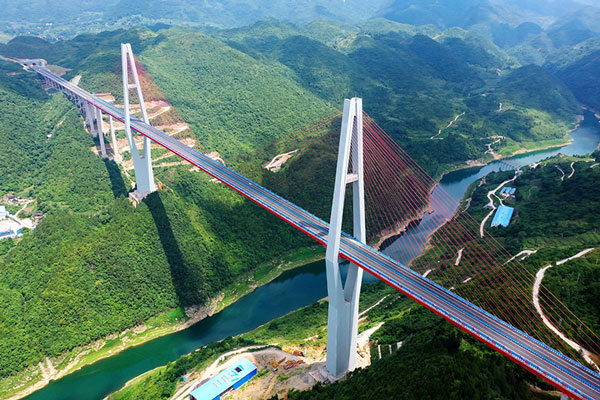
12. Qingshan Yangtze River Bridge – Wuhan, China – 283.5 m (930 ft)
The Qingshan Yangtze River Bridge, located in Wuhan, Hubei Province, China, is a striking cable-stayed bridge with towers rising to 283.5 meters (930 feet). Opened in 2000, it was one of the early large-scale modern bridges across the Yangtze River, playing a crucial role in Wuhan’s growing transportation network.
Its main span of 458 meters is supported by a sleek cable arrangement, which was considered advanced at the time of construction. The bridge provides an essential link for the Wuhan Fourth Ring Road, reducing congestion and enhancing connectivity across the Yangtze.
As Wuhan continues to expand as a central hub in China, the Qingshan Bridge remains a key artery for urban mobility. It stands as both a practical structure and a reminder of the early 2000s wave of Chinese bridge-building that set global benchmarks.
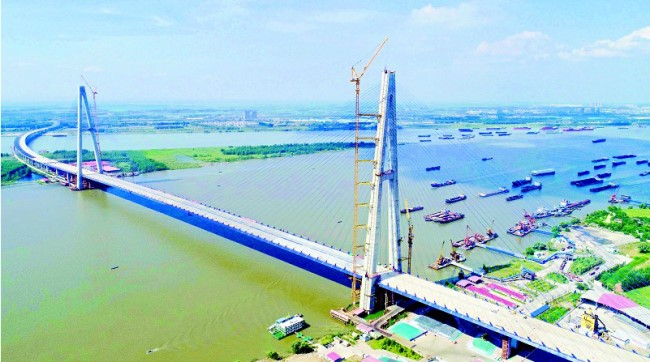
13. Akashi Kaikyō Bridge – Kobe, Japan – 282.8 m (928 ft)
The Akashi Kaikyō Bridge, also known as the Pearl Bridge, is one of Japan’s greatest engineering achievements. Its towers rise 282.8 meters (928 feet), supporting the world’s longest suspension bridge main span at 1,991 meters. Opened in 1998, it connects Kobe on Honshu Island to Awaji Island, crossing the Akashi Strait.
This bridge was designed to withstand earthquakes and typhoons, making it one of the most resilient long-span bridges in the world. It was built after the tragic sinking of ferries in the strait, highlighting the need for a safe and permanent crossing. Engineers incorporated cutting-edge seismic resistance, ensuring its durability in Japan’s earthquake-prone environment.
Today, the Akashi Kaikyō Bridge is a global icon of civil engineering. Its scale and elegance draw tourists, while its functionality provides vital connectivity between Honshu and Shikoku, strengthening Japan’s national highway network.

14. Wuxue Yangtze River Bridge – Wuxue, China – 275 m (902 ft)
The Wuxue Yangtze River Bridge in Hubei Province, China, features towers standing at 275 meters (902 feet). Completed in 2017, this cable-stayed bridge is a significant part of the G50 Huyu Expressway, connecting Shanghai to Chongqing through central China.
The bridge’s design accommodates heavy expressway traffic, easing transportation across the Yangtze River in Wuxue. It has improved logistics, shortened travel times, and provided new economic opportunities for the region. Its tall pylons and strong cables symbolize the continuous wave of modern infrastructure transforming central China.
Apart from its role in transportation, the Wuxue Bridge has become a striking landmark over the Yangtze. Its towering structure is a visual highlight for travelers passing through, showcasing China’s dedication to connecting cities and regions with state-of-the-art engineering.
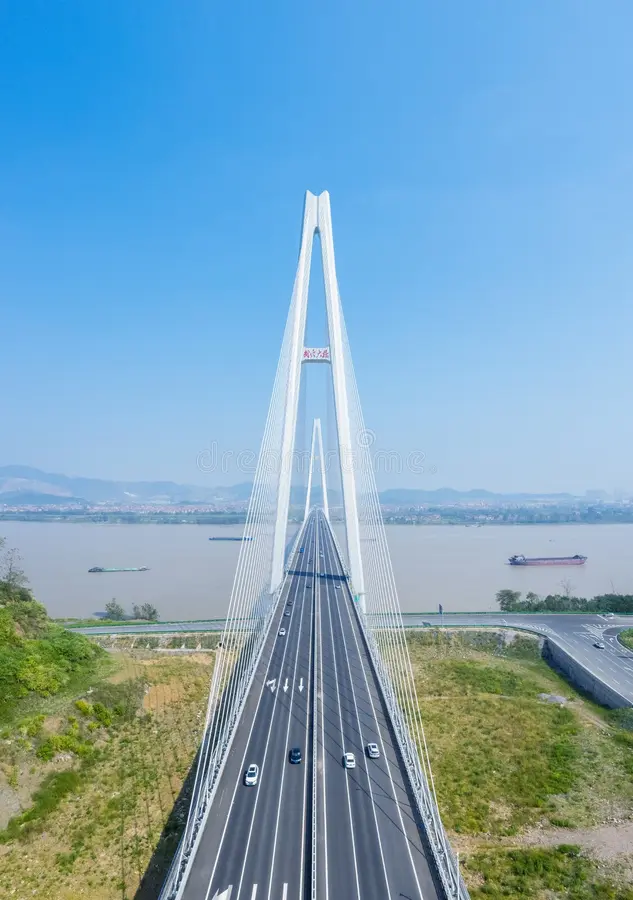
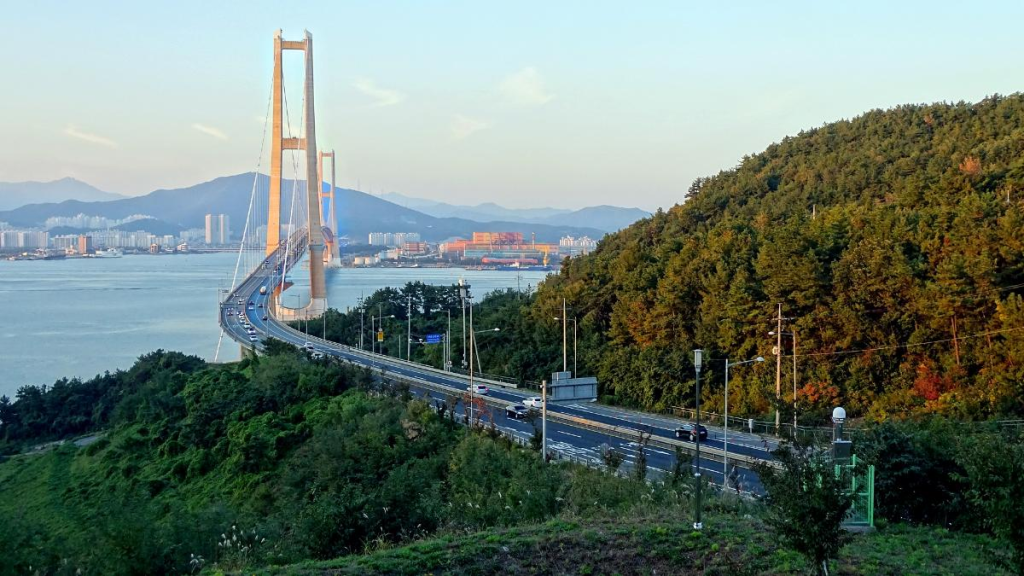
15. Yi Sun-sin Bridge – Yeosu, South Korea – 270 m (890 ft)
The Yi Sun-sin Bridge in Yeosu, South Korea, is a suspension bridge with towers rising 270 meters (890 feet). Opened in 2012, it was named after Admiral Yi Sun-sin, a national hero celebrated for his naval victories against Japan during the 16th century.
The bridge spans 1,545 meters, making it one of the world’s longest suspension bridges. It connects Gwangyang with Yeosu, significantly improving logistics and regional trade in South Jeolla Province. Built to handle strong winds and heavy marine traffic below, the bridge demonstrates South Korea’s advanced engineering capabilities.
Today, the Yi Sun-sin Bridge serves as both a vital transportation link and a national symbol. Its majestic towers and sweeping cables have made it a popular tourist attraction, offering panoramic views of the sea while honoring a historic figure.
16. Duge Bridge – Guizhou, China – 269 m (883 ft)
The Duge Bridge, also known as the Beipanjiang Bridge, is one of the highest bridges in the world, with towers rising 269 meters (883 feet). Located in Guizhou Province, it crosses the deep Beipan River Gorge, an area known for rugged mountains and dramatic landscapes.
Completed in 2016, the bridge carries the G56 Hangzhou–Ruili Expressway, drastically cutting travel time between Liupanshui and Qujing from five hours to just one. Its construction required pioneering engineering, including massive pylons anchored deep into mountain cliffs and a suspension system that spans across the gorge.
Beyond its utility, the Duge Bridge has become a symbol of modern Chinese engineering. Tourists often stop to admire the breathtaking views from its deck, making it both a transportation lifeline and a scenic attraction in Guizhou’s mountainous terrain.
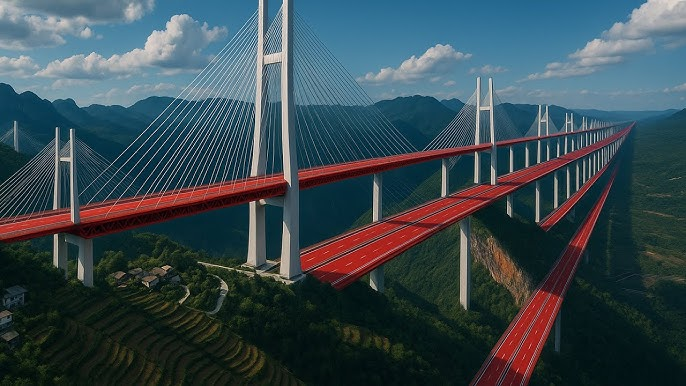
17. Nansha Bridge (East Span) – Dongguan, China – 267 m (876 ft)
The Nansha Bridge (East Span), with towers reaching 267 meters (876 feet), is part of a massive twin-span cable-stayed system across the Pearl River. Opened in 2019, it plays a vital role in linking Dongguan and Guangzhou, two of the most important cities in the Guangdong–Hong Kong–Macao Greater Bay Area.
The East Span supports six lanes of traffic in each direction, easing congestion on other Pearl River crossings. Its large pylons and sleek cable arrangement represent the advanced design used in modern Chinese mega-bridges. The twin spans together form one of the largest bridge projects in the Pearl River Delta.
Functionally, the Nansha Bridge enhances regional integration, facilitating the flow of goods and people in southern China’s economic hub. It stands as a landmark of connectivity in one of the busiest urban regions in the world.
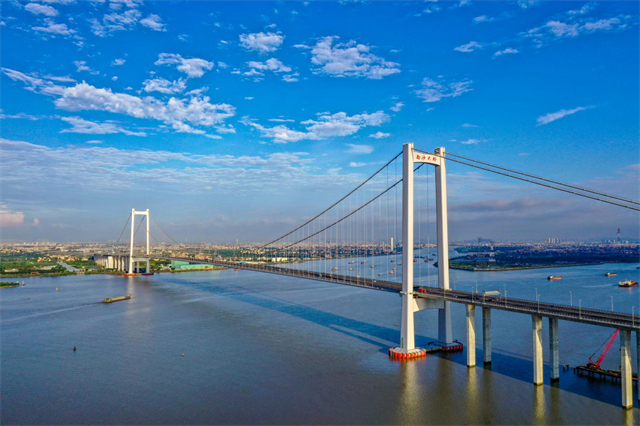
18. Jingyue Bridge – Jingzhou, China – 265 m (869 ft)
The Jingyue Bridge, spanning the Yangtze River in Hubei Province, is a cable-stayed bridge with towers rising 265 meters (869 feet). Completed in 2010, it carries the G55 Erenhot–Guangzhou Expressway, improving travel efficiency in central China.
The bridge’s main span of 816 meters is supported by two towering pylons and a network of steel cables, making it one of the longest cable-stayed spans over the Yangtze. It was designed to withstand the heavy traffic and environmental challenges of China’s busiest river.
Since its opening, the Jingyue Bridge has served as a vital transport link, strengthening Jingzhou’s role as a key city along the Yangtze corridor. It is also admired for its graceful design, with slender towers rising elegantly above the water.
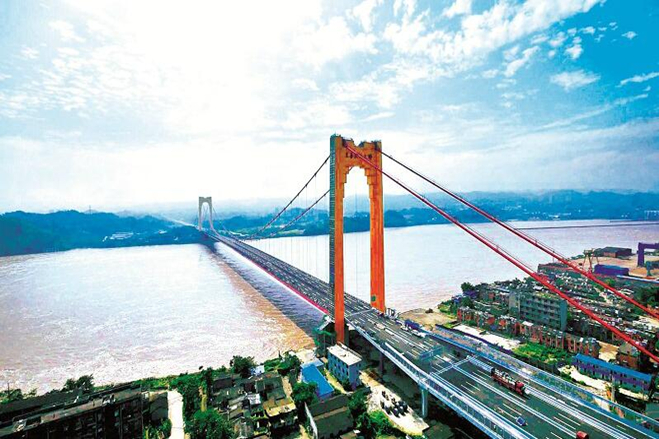
19. Second Wuhu Yangtze River Bridge – Wuhu, China – 262.48 m (861 ft)
The Second Wuhu Yangtze River Bridge in Anhui Province features pylons that stand 262.48 meters (861 feet) tall. Opened in 2013, this cable-stayed bridge supplements the original Wuhu Bridge, responding to increasing traffic demand in the growing city of Wuhu.
The bridge carries the Nanluo Expressway, easing congestion and boosting connectivity across the Yangtze. Its main span of 806 meters is supported by tall towers and a fan-shaped cable system, ensuring both strength and visual balance.
As part of China’s broader Yangtze River development, the Second Wuhu Bridge is both a transportation necessity and an architectural landmark. It enhances regional logistics while giving the city a striking modern gateway over the river.
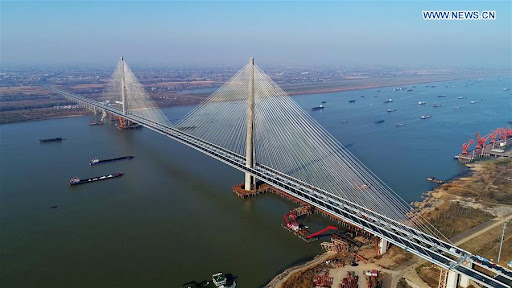
20. Nizhou Waterway Bridge – Dongguan & Guangzhou, China – 260 m (850 ft)
The Nizhou Waterway Bridge, located between Dongguan and Guangzhou, features towers rising 260 meters (850 feet). Completed in 2020, it is a major cable-stayed crossing in the Pearl River Delta, one of the most economically dynamic regions of China.
The bridge is part of the Guangzhou–Shenzhen Riverside Expressway, a crucial corridor that reduces travel times between two of China’s largest cities. Its design includes a 1,688-meter main span, making it one of the longest cable-stayed spans in the region.
By facilitating trade and urban expansion, the Nizhou Waterway Bridge plays a strategic role in the Greater Bay Area. Its towering pylons and innovative design have also made it a recognizable landmark on the busy waterway.
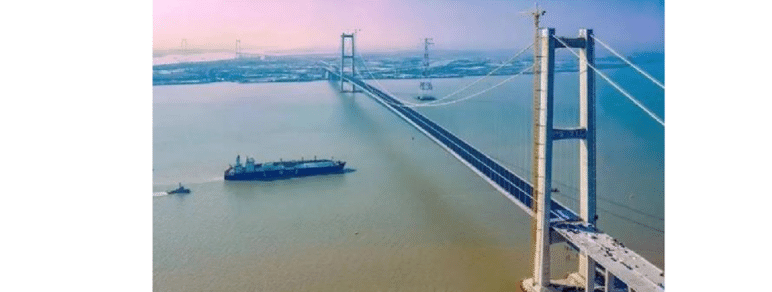
21. Yachi River Bridge – Guizhou, China – 258.2 m (847 ft)
The Yachi River Bridge, located in Guizhou Province, stands with towers rising 258.2 meters (847 feet). Opened in 2016, it carries the Guiyang–Qingzhen Expressway and crosses the deep Yachi River gorge, an area of dramatic karst landscapes.
The bridge features a main span of 800 meters, supported by tall cable-stayed towers and an efficient suspension system. Its construction was part of China’s large-scale effort to improve transportation infrastructure in mountainous southwestern provinces.
Today, the Yachi River Bridge reduces travel times significantly while also serving as a popular scenic spot. Its height and elegant design make it a landmark engineering achievement in the region.
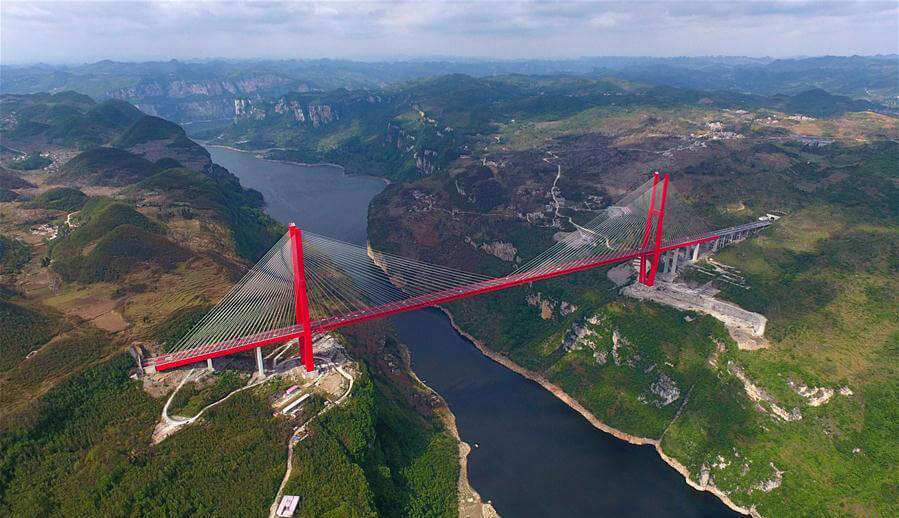
22. Jiayu Yangtze River Bridge – Jiayu, China – 255 m (837 ft)
The Jiayu Yangtze River Bridge, completed in 2010, rises 255 meters (837 feet) over the mighty Yangtze River in Hubei Province. It is an essential crossing for the G70 Fuzhou–Yinchuan Expressway, connecting key economic areas in central China.
The bridge’s design is cable-stayed, featuring pylons that soar above the river and support a span of 818 meters. Built to handle heavy traffic, it was constructed to improve the flow of goods and people across one of China’s busiest waterways.
In addition to its transportation role, the Jiayu Bridge adds modern architectural beauty to the Yangtze corridor. Its clean lines and towering pylons create a striking silhouette, especially when illuminated at night.
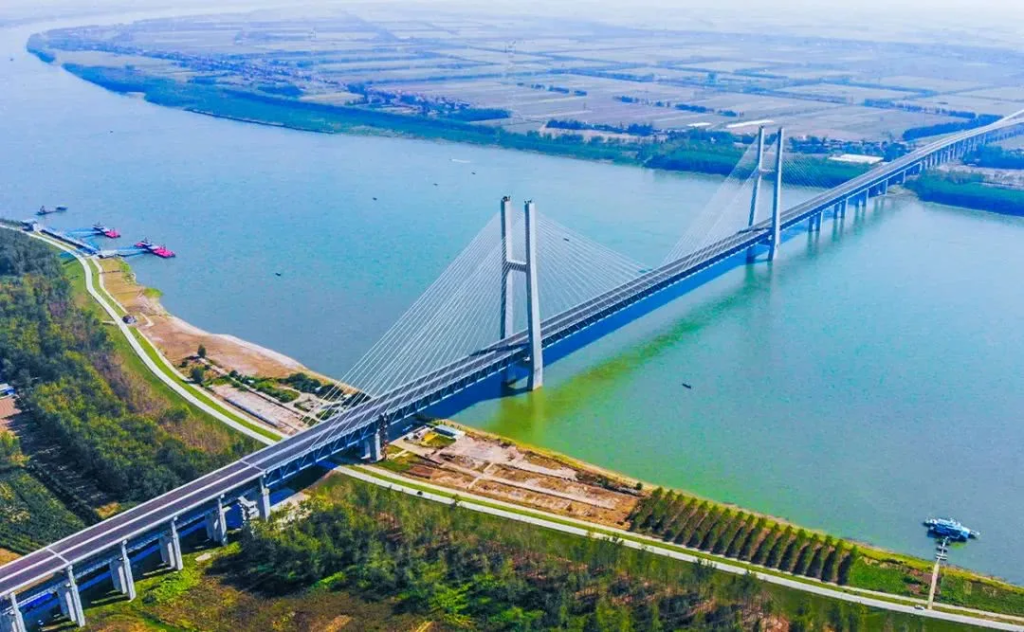
23. Yangsigang Yangtze River Bridge – Wuhan, China – 254.9 m (836 ft)
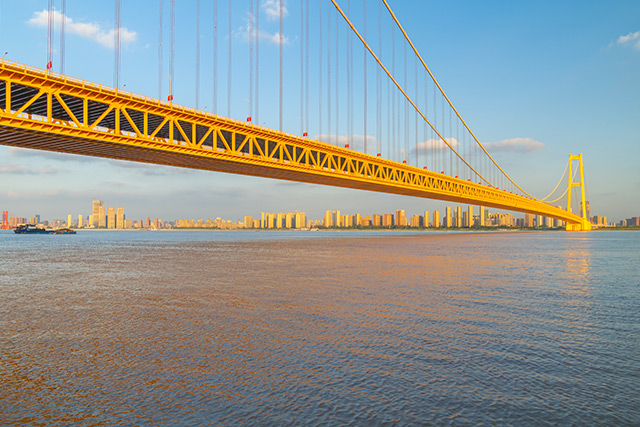
The Yangsigang Yangtze River Bridge in Wuhan has towers reaching 254.9 meters (836 feet), making it one of the tallest suspension bridges in the world. Opened in 2019, it is part of the city’s massive infrastructure expansion along the Yangtze.
It features a main span of 1,700 meters, making it one of the longest suspension spans globally. The bridge carries 16 lanes of traffic across two decks, accommodating both vehicles and pedestrians, a rare design in modern suspension bridges.
As Wuhan continues to grow as a central hub in China, the Yangsigang Bridge plays a vital role in easing congestion and improving mobility. Its size and engineering excellence have made it a showcase of Chinese bridge-building capabilities.
24. Great Belt East Bridge – Korsør, Denmark – 254 m (833 ft)
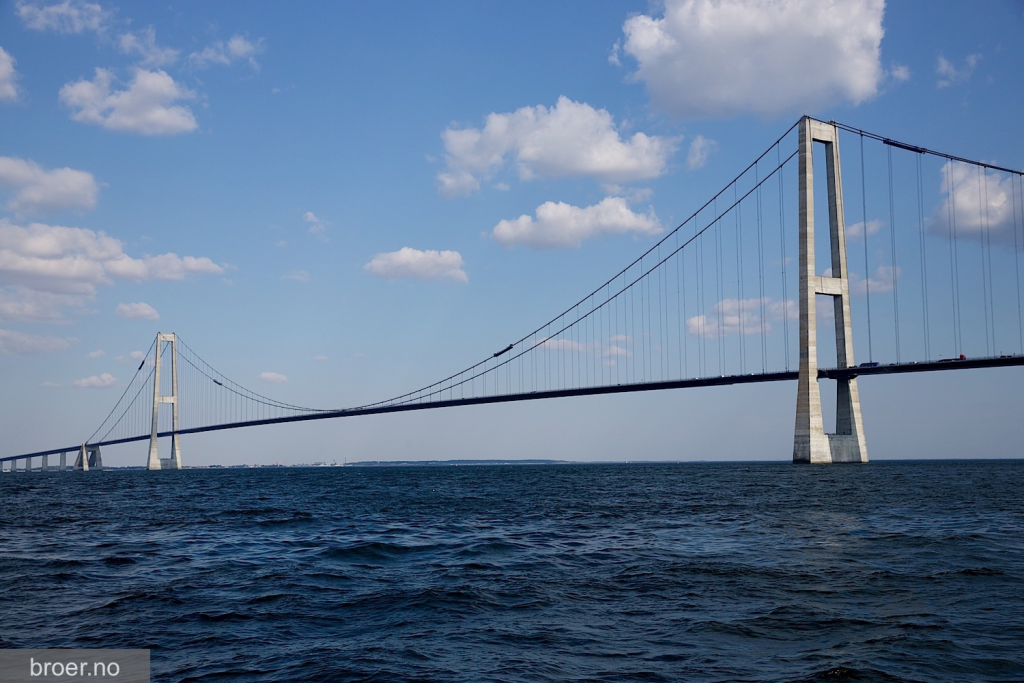
The Great Belt East Bridge, located in Denmark, is a suspension bridge with towers standing 254 meters (833 feet). Opened in 1998, it forms the eastern section of the Great Belt Fixed Link, which connects the Danish islands of Zealand and Funen.
With a main span of 1,624 meters, it was once the second-longest suspension span in the world and remains one of Europe’s greatest engineering achievements. The bridge is a critical part of Denmark’s transportation system, carrying both road and rail traffic across the Great Belt strait.
Beyond functionality, the Great Belt Bridge has become a national symbol of connectivity, linking regions and fostering economic growth. Its elegant silhouette across the sea makes it one of Denmark’s most iconic landmarks.
25. Liuguanghe Xiqian Expressway Bridge – Guizhou, China – 248 m (814 ft)
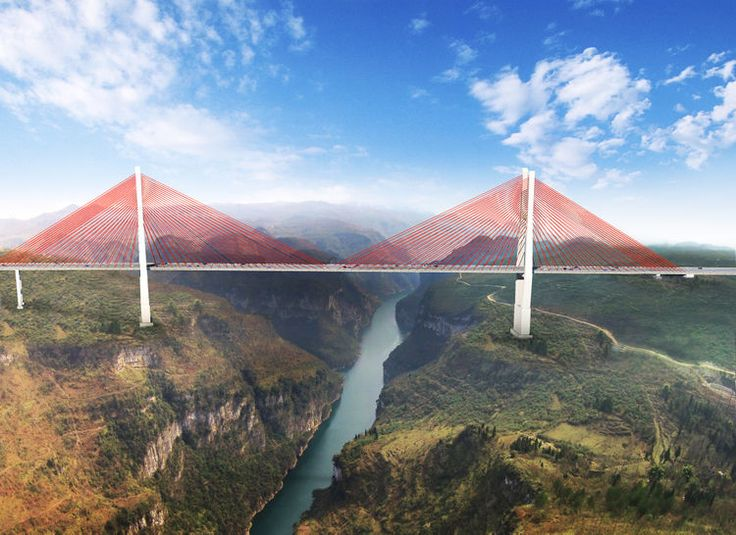
The Liuguanghe Xiqian Expressway Bridge in Guizhou Province stands 248 meters (814 feet) tall, forming part of the Xiqian Expressway that runs through mountainous southwestern China. It is another example of the province’s reliance on tall bridges to connect remote areas.
The bridge is a cable-stayed design, with long spans supported by soaring pylons. It was built to cross deep valleys and rugged terrain, helping to drastically reduce travel times and improve access across Guizhou.
Though less internationally known than some of China’s mega-bridges, the Liuguanghe Xiqian Bridge represents how infrastructure can transform isolated landscapes. It combines utility with striking visual presence in one of the country’s most mountainous provinces.
Conclusion
The tallest bridges in the world remind us that infrastructure can be both functional and monumental. Their towering structures dominate the landscapes they inhabit, offering proof of what can be achieved when engineering expertise meets visionary design. Beyond serving as vital transportation links, they also inspire admiration and pride, drawing travelers who marvel at their scale and elegance.
As engineering continues to advance, we can expect even taller and more ambitious bridges to emerge, redefining what is possible in structural design. For now, the world’s tallest bridges stand as enduring testaments to human ingenuity, connecting not just places, but also cultures, economies, and people across vast distances.
Other related Articles
Top 25 Tallest Clock Towers in the World
Top 15 Tallest Roller Coasters Ever Built
Top 25 Tallest Statues in the World
Top 20 Tallest Buildings in the World
