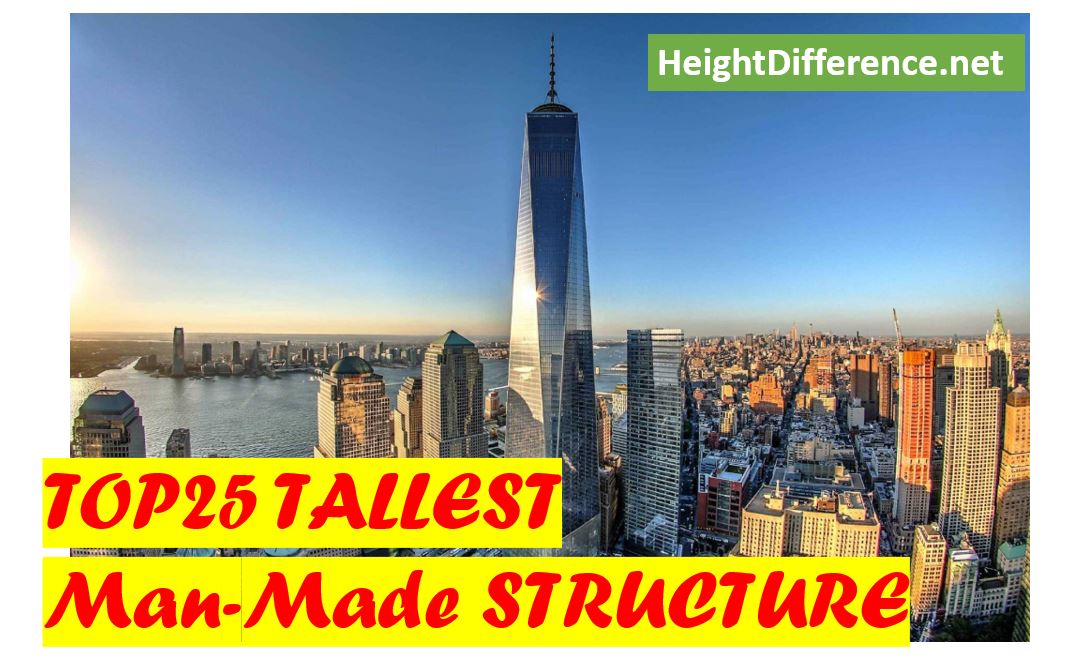
Throughout history, humanity has pushed the boundaries of architecture and engineering to build taller, stronger, and more awe-inspiring structures. From ancient wonders like the Pyramids of Giza to today’s record-breaking skyscrapers and towers, man-made structures have always served as symbols of ambition, technological progress, and cultural pride. These massive creations not only reshape city skylines but also stand as testaments to human ingenuity and determination.
In the modern era, the race to the skies has produced some of the tallest structures ever conceived, reaching incredible heights that once seemed impossible. These engineering marvels include observation towers, broadcast masts, and skyscrapers that dominate their surroundings, attracting millions of visitors and becoming global icons. The Top 20 Tallest Man-Made Structures in the World showcases the finest examples of human achievement, celebrating both their scale and the innovation that made them possible.
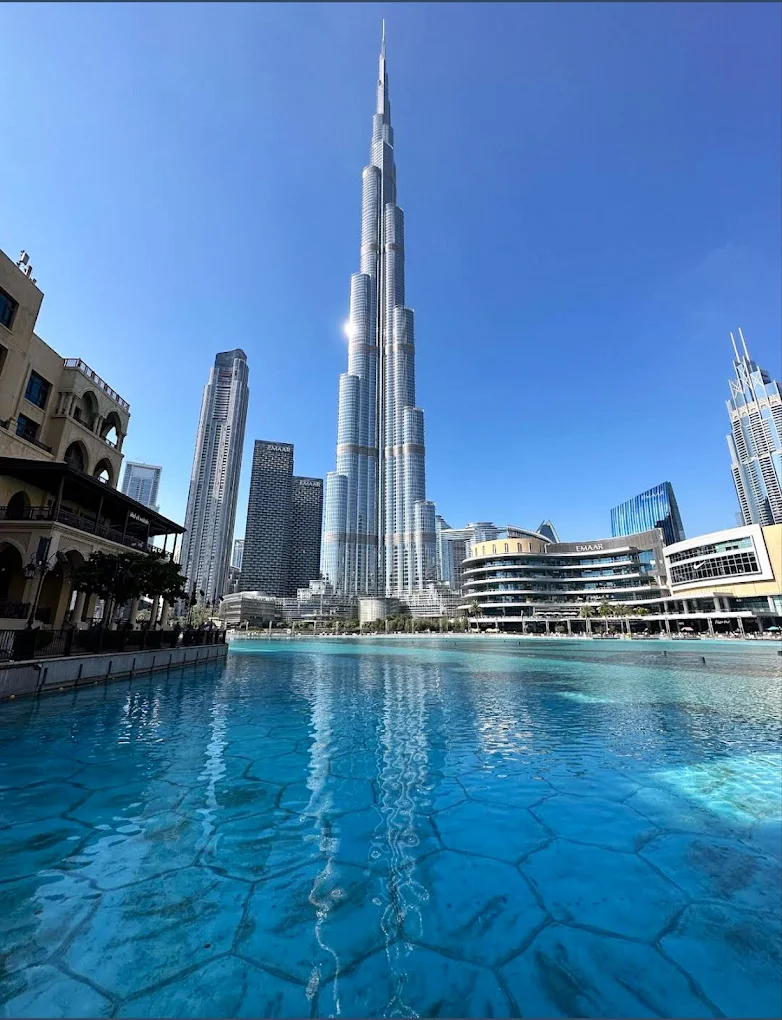
1. Burj Khalifa (Dubai, UAE – 828 m)
The Burj Khalifa, completed in 2010, holds the record as the tallest man-made structure in the world. Designed by Adrian Smith of Skidmore, Owings & Merrill, the tower’s construction was a centerpiece of Dubai’s rapid transformation into a global city. Its design draws inspiration from Islamic architecture and the Hymenocallis flower, which gives the building its distinctive triple-lobed footprint.
Structurally, the tower uses a “buttressed core” system that allows it to withstand strong desert winds and seismic forces. Made primarily of reinforced concrete and clad in reflective glass, aluminum, and textured stainless steel panels, the Burj Khalifa demonstrates remarkable engineering feats. Construction required over 22 million man-hours, 330,000 cubic meters of concrete, and 39,000 tons of steel reinforcement.
Beyond being a marvel of architecture, the Burj Khalifa is a symbol of Dubai’s ambition and vision. It houses luxury residences, offices, the Armani Hotel, and observation decks that attract millions of tourists each year. More than just a skyscraper, it has become a cultural icon and a representation of human capability to push engineering boundaries.
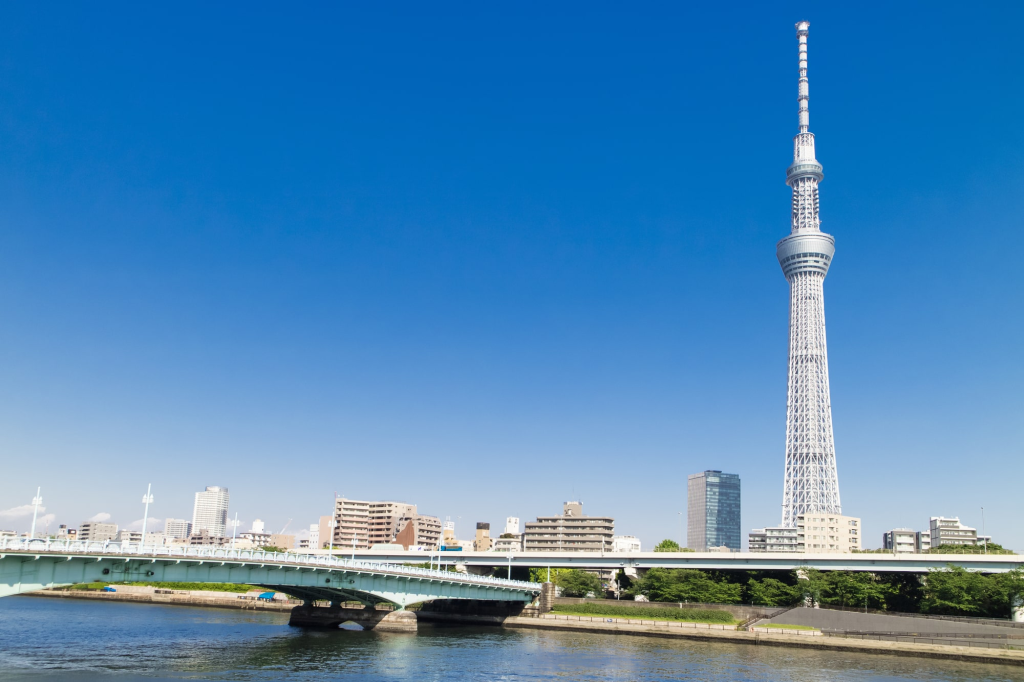
2. Tokyo Skytree (Tokyo, Japan – 634 m)
Completed in 2012, the Tokyo Skytree is the tallest tower in the world and the second-tallest man-made structure after Burj Khalifa. Built as a broadcasting, restaurant, and observation tower, it replaced the Tokyo Tower, which had become too short for modern digital broadcasting. The height of 634 meters was deliberately chosen because in Japanese, the numbers 6 (mu), 3 (sa), and 4 (shi) together form “Musashi,” an old name for the Tokyo region.
The design blends futuristic architecture with traditional Japanese aesthetics. The base is shaped like a tripod that gradually morphs into a cylindrical tower as it rises. Engineers incorporated earthquake-resistant technology, including a central reinforced concrete shaft that acts like a traditional pagoda’s “shinbashira,” absorbing seismic shocks to protect the structure.
Today, the Skytree is not only a hub for broadcasting but also a major tourist attraction. Its observation decks provide breathtaking views of Tokyo, especially Mount Fuji on clear days. The tower symbolizes Japan’s blend of tradition and innovation, standing as a landmark of resilience in one of the most earthquake-prone nations in the world.
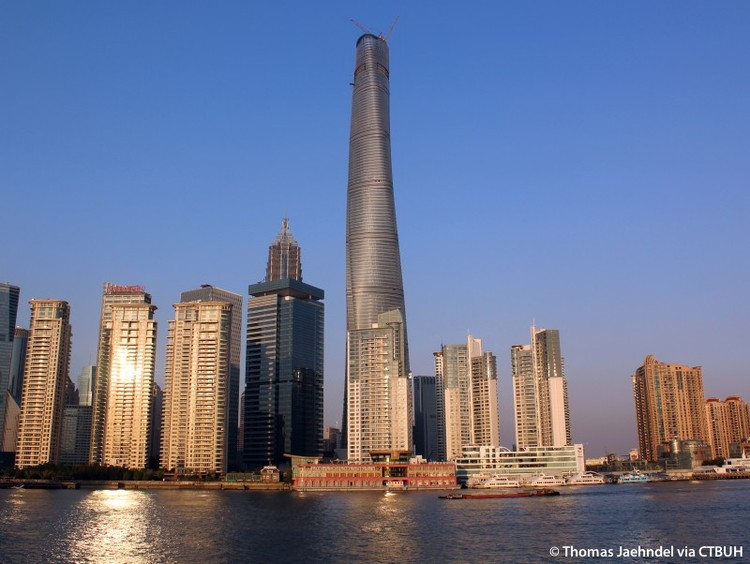
3. Shanghai Tower (Shanghai, China – 632 m)
Shanghai Tower, completed in 2015, is the tallest building in China and the third tallest in the world. Located in Shanghai’s Pudong district, it forms part of a trio of landmark skyscrapers alongside the Jin Mao Tower and the Shanghai World Financial Center. Its twisting, spiral design reduces wind loads by 24%, making it both visually striking and structurally efficient.
The building features nine vertical zones, each functioning as a separate “sky neighborhood” with retail, office, hotel, and cultural spaces. Its double-skin façade helps with natural insulation, reducing energy consumption. The tower also has some of the world’s fastest elevators, reaching speeds of up to 20.5 m/s (74 km/h).
Shanghai Tower represents China’s rapid urbanization and its ambition to set global standards in sustainable skyscraper design. It integrates eco-friendly systems such as wind turbines and rainwater collection, embodying a shift toward green urban development. As both a functional building and a national symbol, it reflects Shanghai’s role as a global financial hub.
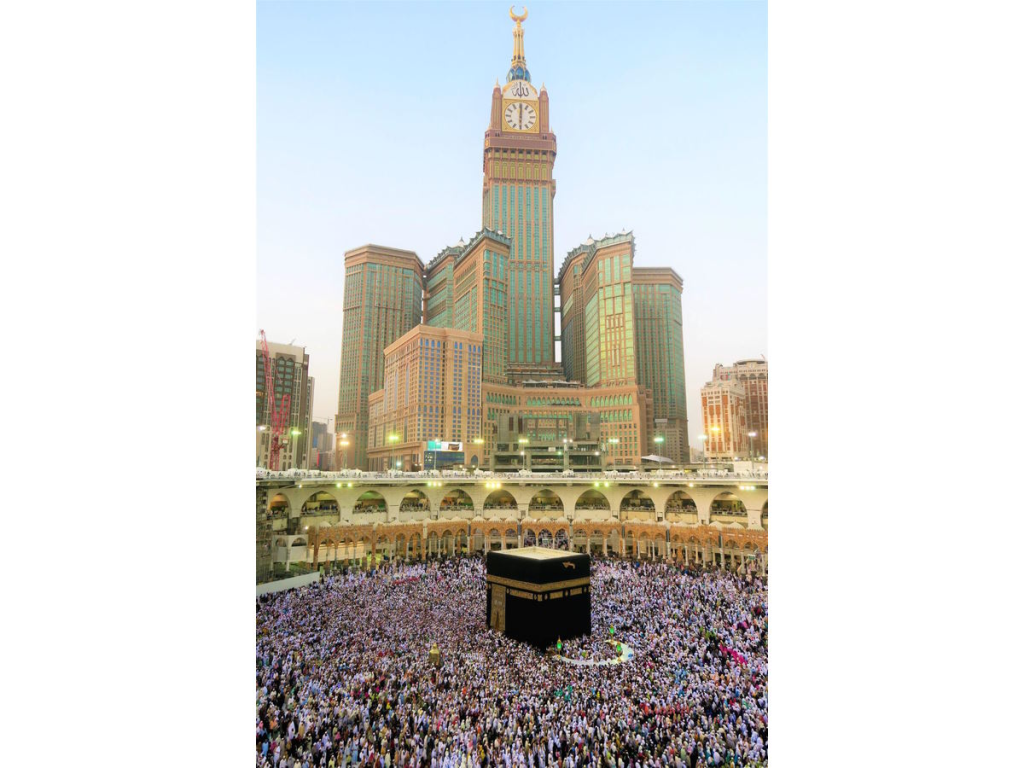
4. Abraj Al-Bait Clock Tower (Mecca, Saudi Arabia – 601 m)
The Abraj Al-Bait Clock Tower, completed in 2012, is part of a government-owned complex overlooking Islam’s holiest site, the Masjid al-Haram. Built to accommodate the millions of pilgrims who visit Mecca each year, the tower is one of the most massive buildings in terms of floor area. Its iconic clock is visible from up to 25 kilometers away, making it one of the largest and highest clocks in the world.
Structurally, the tower uses a reinforced concrete core and steel spire, with Islamic-inspired design elements throughout. The clock face is adorned with millions of LED lights and intricate calligraphy, while the building houses luxury hotels, shopping centers, and prayer halls. Its size and prominence make it a dominant feature in the Mecca skyline.
Culturally, the tower represents Saudi Arabia’s effort to provide facilities for pilgrims while also showcasing the country’s wealth and modernization. While controversial for overshadowing historical religious sites, it serves as both a functional hospitality hub and a symbol of the kingdom’s architectural ambition.
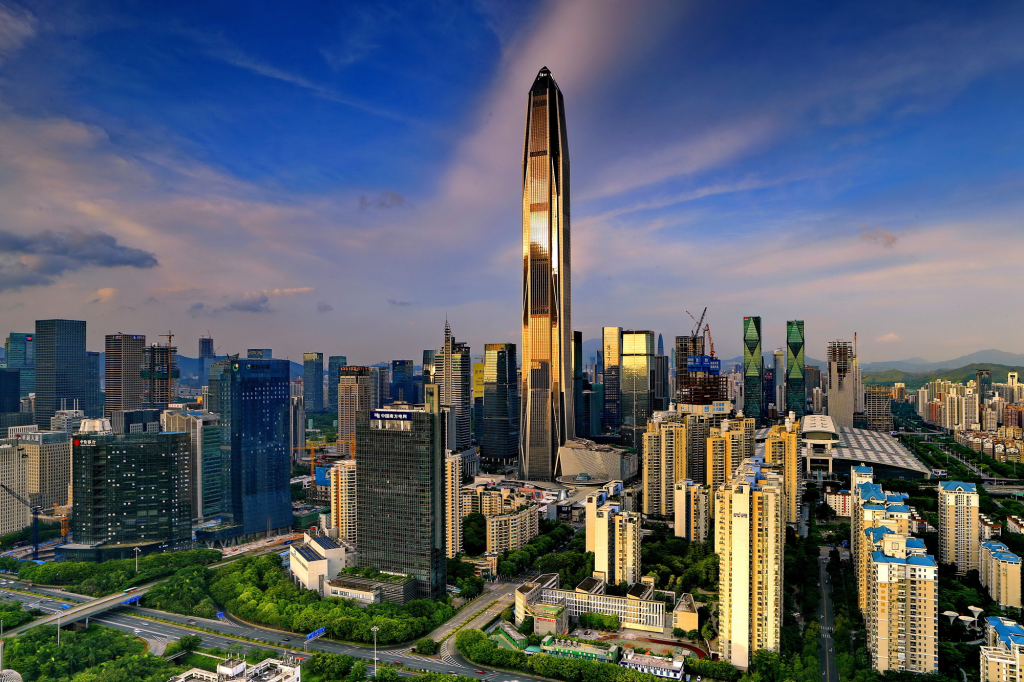
5. Ping An Finance Center (Shenzhen, China – 599 m)
Completed in 2017, the Ping An Finance Center is the second tallest building in China and the fifth tallest in the world. Designed by the American firm Kohn Pedersen Fox Associates, it was commissioned by Ping An Insurance, one of China’s largest financial companies. The skyscraper serves as a corporate headquarters and houses offices, retail spaces, and a conference center.
The building’s design emphasizes strength and stability, with a tapered, crystalline form clad in stainless steel and glass. Its exterior was engineered to resist wind and corrosion, crucial for Shenzhen’s humid coastal climate. Initially planned to reach 660 meters, the height was reduced due to airspace restrictions.
As a landmark of Shenzhen’s skyline, the Ping An Finance Center reflects the city’s rapid rise as a global financial and technology hub. Its presence demonstrates China’s growing influence in architecture and urban development, while also serving as a powerful corporate symbol for Ping An.
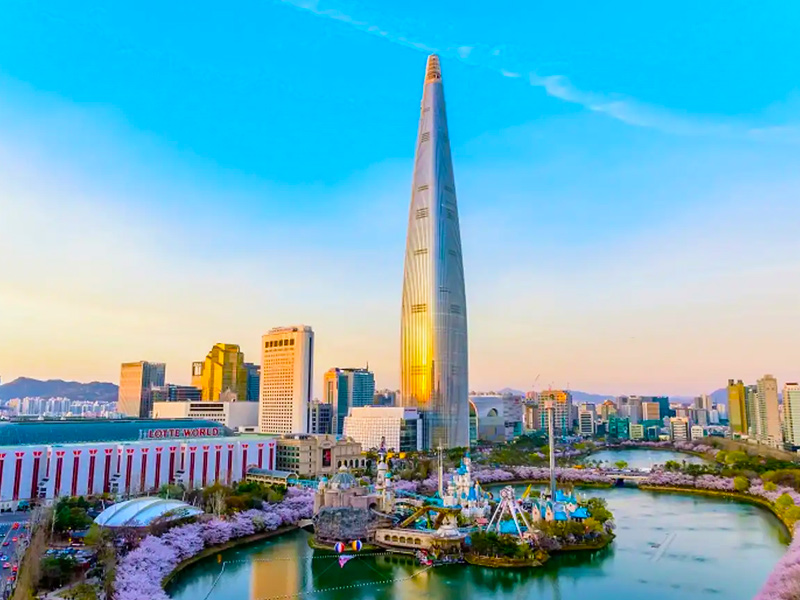
6. Lotte World Tower (Seoul, South Korea – 555 m)
Completed in 2017, the Lotte World Tower is South Korea’s tallest building and ranks among the top ten tallest skyscrapers in the world. Rising gracefully above Seoul, its sleek tapered design was inspired by traditional Korean ceramics and calligraphy brushes, blending modern engineering with cultural symbolism. The tower contains luxury retail spaces, offices, residences, a hotel, and one of the world’s highest observation decks.
Structurally, it was engineered to withstand earthquakes up to magnitude 9 and strong winds that frequently affect the Korean Peninsula. The tower’s glass façade incorporates both functionality and beauty, designed to reflect light in a way that complements Seoul’s skyline. Its base integrates with the Han River landscape and the adjacent Lotte World amusement complex.
Beyond being an architectural achievement, Lotte World Tower has become a national symbol of progress and resilience for South Korea. It represents the nation’s rapid economic growth and technological strength, while also serving as a cultural and tourist hub attracting millions of visitors annually.
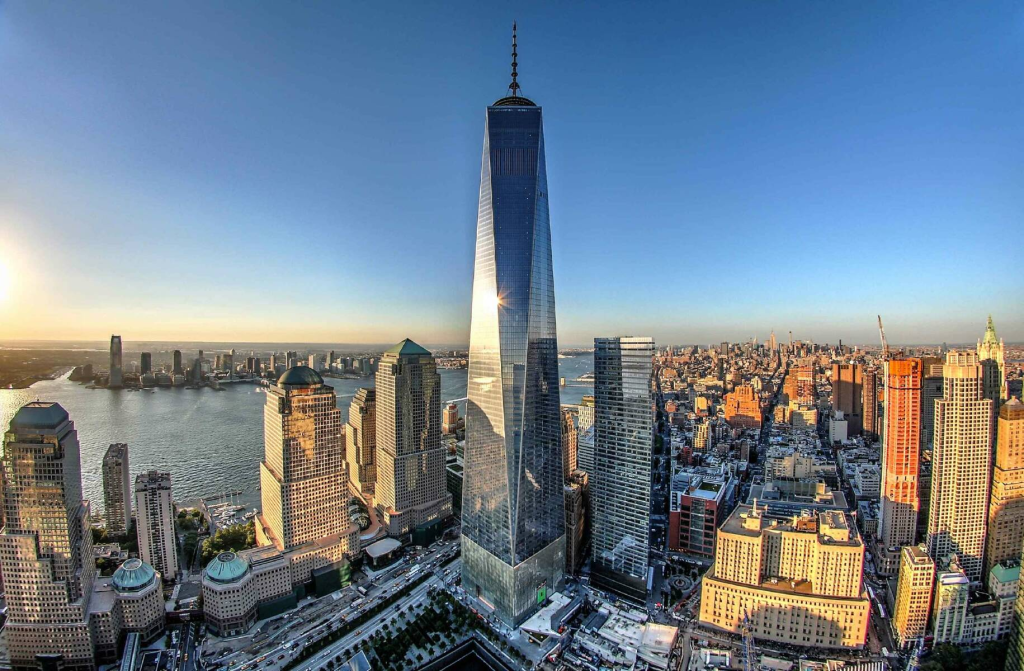
7. One World Trade Center (New York City, USA – 541 m)
One World Trade Center, completed in 2014, stands as the tallest building in the United States and the Western Hemisphere. Built on the site of the original World Trade Center destroyed during the September 11 attacks, it carries deep symbolic significance. Its height of 1,776 feet (541 meters) was chosen to represent the year of American independence, making it both a national monument and a functional office tower.
The building’s design prioritizes safety, with a heavily reinforced concrete core, wider stairwells, and state-of-the-art fireproofing. Its glass façade creates a striking prism-like effect, while its spire enhances its symbolic and visual presence in the New York City skyline. The tower also integrates environmentally friendly features, earning LEED Gold certification.
More than an office building, One World Trade Center stands as a global symbol of resilience, remembrance, and hope. It is part of the larger World Trade Center complex that includes memorials and museums dedicated to the events of 9/11. For many, it represents not only architectural triumph but also the enduring spirit of New York and the United States.
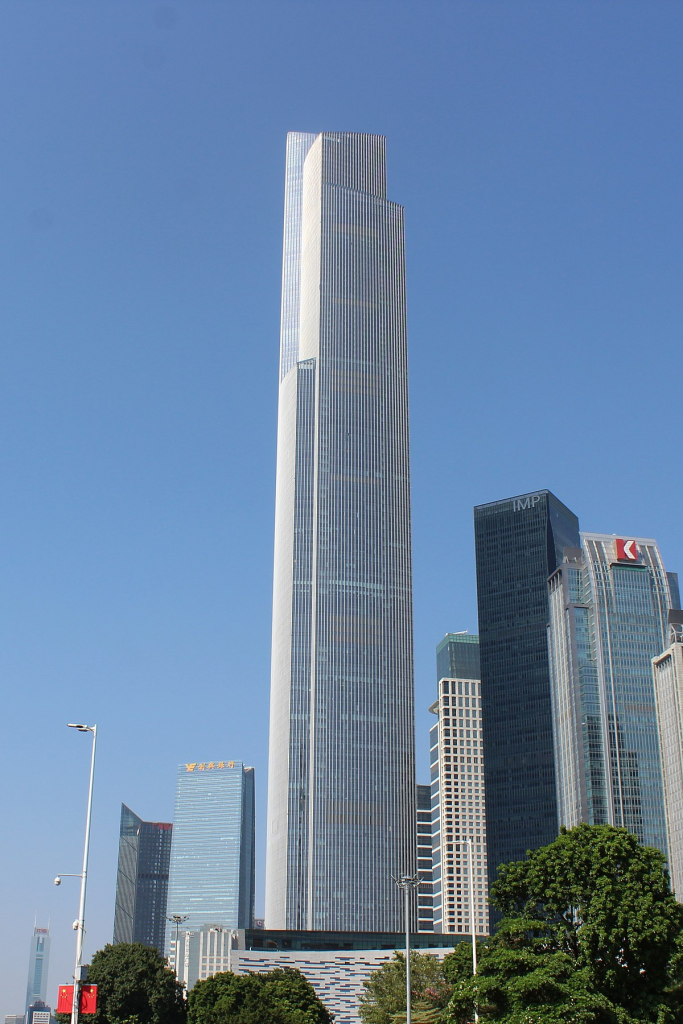
8. Guangzhou CTF Finance Centre (Guangzhou, China – 530 m)
Completed in 2016, the Guangzhou CTF Finance Centre is one of two nearly identical towers in China known as the CTF (Chow Tai Fook) Finance Centres. It rises 530 meters, making it one of the tallest mixed-use buildings in the world. The skyscraper contains offices, luxury residences, a hotel, and one of the world’s fastest elevators, capable of reaching speeds of 20 meters per second.
The building’s design incorporates terracotta cladding, which provides a unique texture and helps reduce solar gain in Guangzhou’s hot and humid climate. Structurally, its reinforced concrete core ensures stability, while the tapered design reduces wind load and enhances aerodynamics. These features make it not only visually striking but also energy efficient.
As a symbol of Guangzhou’s modernization, the tower represents the city’s importance as a financial and commercial hub in southern China. It stands alongside other mega-skyscrapers in the region, reinforcing the Pearl River Delta’s reputation as one of the fastest-developing metropolitan areas in the world.
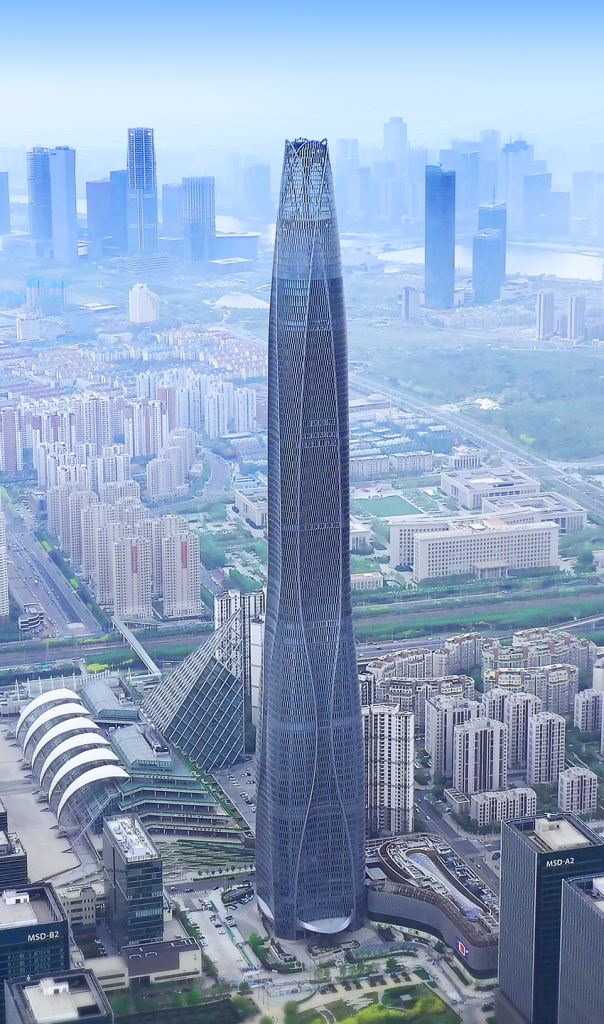
9. Tianjin CTF Finance Centre (Tianjin, China – 530 m)
Completed in 2019, the Tianjin CTF Finance Centre mirrors the Guangzhou CTF in many ways, with both sharing similar heights and functions. Located in northern China, it stands as the tallest building in Tianjin, reflecting the city’s growing role as a financial and commercial gateway. Like its counterpart, it features a combination of offices, residences, and hotel spaces.
The skyscraper is notable for its gently curving glass façade, which gives it a fluid, elegant appearance. The aerodynamic form helps reduce wind resistance and improves structural efficiency. Its glass and steel cladding also enhance its reflective beauty, making it a defining feature of Tianjin’s skyline.
Beyond its physical presence, the Tianjin CTF Finance Centre is a marker of China’s urban transformation, showing how second-tier cities are rapidly catching up with megacities like Beijing and Shanghai. It demonstrates the country’s commitment to balanced development, spreading economic growth beyond its most famous urban centers.
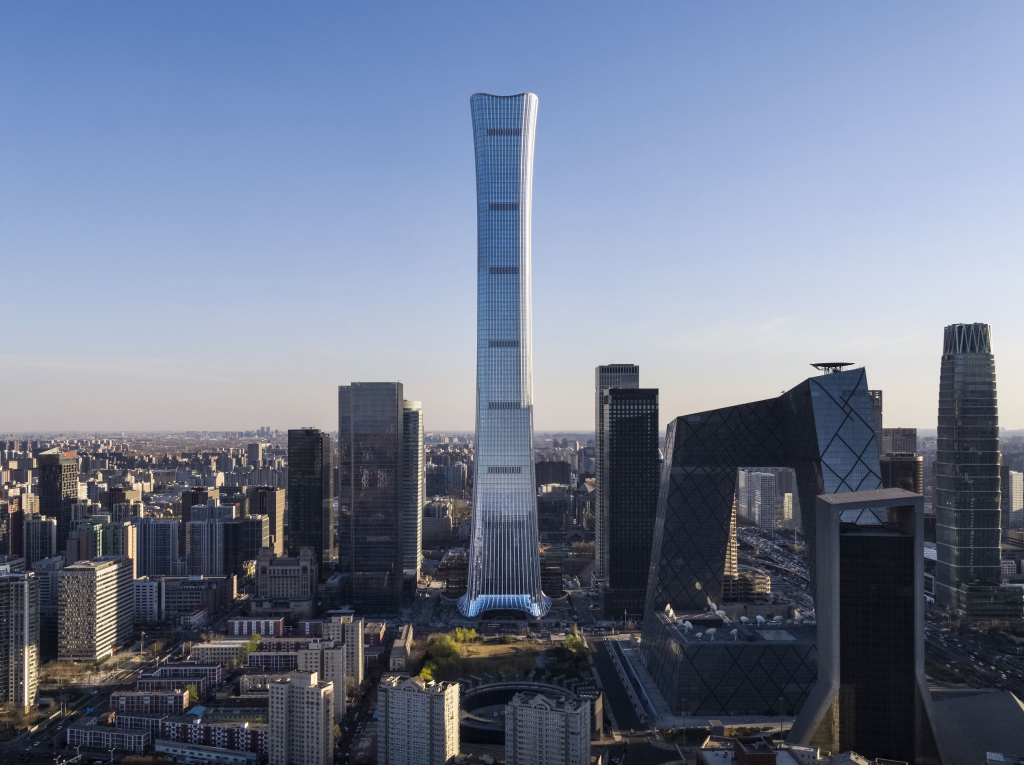
10. CITIC Tower (China Zun, Beijing, China – 528 m)
CITIC Tower, commonly referred to as “China Zun,” is the tallest building in Beijing, completed in 2018. Its design is inspired by an ancient Chinese ritual vessel called the zun, giving it a graceful, flared silhouette that stands out in the capital’s skyline. As the headquarters for CITIC Group, it also houses offices, hotels, and retail facilities.
The structure uses a reinforced concrete core and steel frame, designed to handle seismic risks common to the Beijing area. Its sleek glass façade and distinctive curved shape make it not only functional but also an architectural landmark that harmonizes tradition with modernity. Its design prioritizes both energy efficiency and durability.
As the tallest building in China’s capital city, CITIC Tower carries symbolic weight, representing the nation’s blend of cultural heritage and modern ambition. Standing in Beijing’s central business district, it embodies the country’s role as a global power while preserving links to its historical roots.
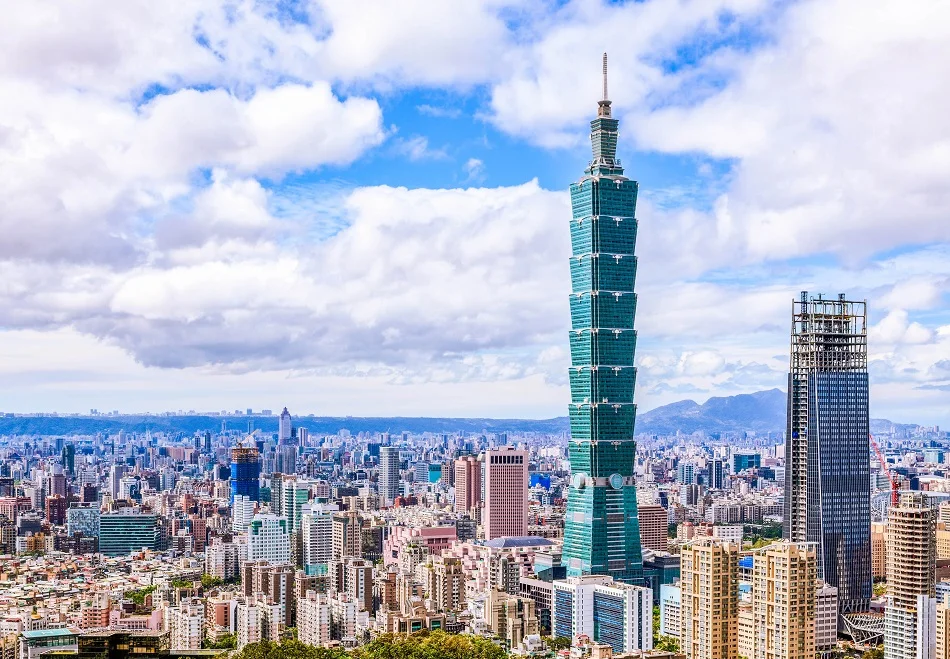
11. Taipei 101 (Taipei, Taiwan – 508 m)
Completed in 2004, Taipei 101 was the world’s tallest building until the Burj Khalifa surpassed it in 2010. Its design incorporates traditional Asian symbolism and modern engineering, with its stacked pagoda-like shape representing prosperity and strength. The number “101” also symbolizes renewal and perfection in Taiwanese culture.
Structurally, Taipei 101 is an engineering marvel built to withstand typhoons and earthquakes, both of which are common in Taiwan. One of its most famous features is the massive tuned mass damper—a giant pendulum weighing 660 tons—that stabilizes the building during strong winds and seismic events. Its green-tinted glass façade reflects both modernity and environmental consciousness.
Beyond its engineering achievements, Taipei 101 is a symbol of Taiwan’s progress and resilience. It houses offices, retail spaces, and one of the world’s highest outdoor observation decks, attracting millions of tourists every year. To this day, it remains one of the most recognizable skyscrapers in Asia.
12. Shanghai World Financial Center (Shanghai, China – 492 m)
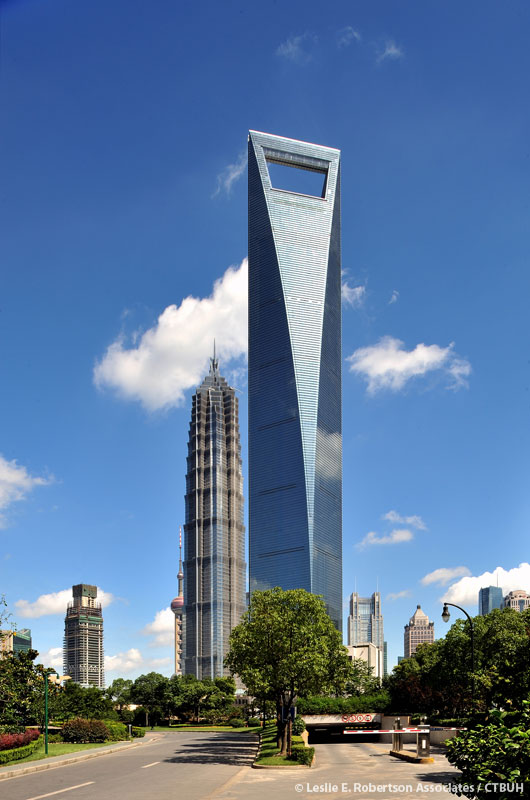
Completed in 2008, the Shanghai World Financial Center is famous for its distinctive trapezoid aperture near the top, which earned it the nickname “the bottle opener.” Located in the Lujiazui area of Shanghai’s Pudong district, it stands alongside the Jin Mao Tower and Shanghai Tower, forming one of the most iconic skylines in the world.
The building was designed by Kohn Pedersen Fox and incorporates innovative engineering to handle Shanghai’s high winds and seismic risks. Its observation deck at 474 meters was the highest in the world at the time of completion. The trapezoid design not only reduces wind pressure but also creates a unique architectural identity.
As a financial hub, the skyscraper symbolizes Shanghai’s role as an international center of commerce. It houses offices, hotels, and retail spaces, and continues to be one of the city’s premier landmarks, reflecting China’s global ambitions.
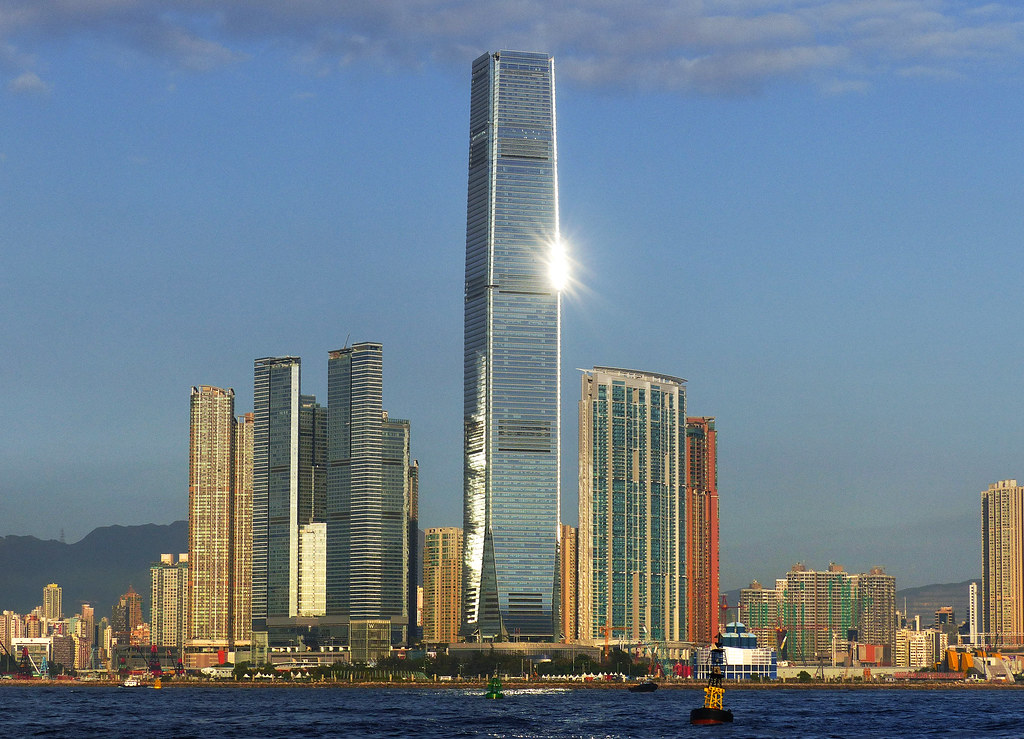
13. International Commerce Centre (Hong Kong – 484 m)
Completed in 2010, the International Commerce Centre (ICC) is the tallest building in Hong Kong and one of the tallest in the world. Developed by Sun Hung Kai Properties, it is part of the Union Square project and serves as a commercial and financial hub. Its location on the Kowloon waterfront gives it prominence in the city’s iconic skyline.
The tower’s design emphasizes verticality and simplicity, with a sleek glass façade that reflects Hong Kong’s urban vibrancy. It includes offices, retail spaces, and the Ritz-Carlton Hotel, which occupies the upper floors and boasts one of the world’s highest swimming pools and bars.
As a symbol of Hong Kong’s status as a global financial powerhouse, the ICC represents both economic strength and architectural innovation. It complements the Bank of China Tower and Two International Finance Centre across Victoria Harbour, cementing Hong Kong’s reputation for stunning skyscrapers.
14. Central Park Tower (New York City, USA – 472 m)
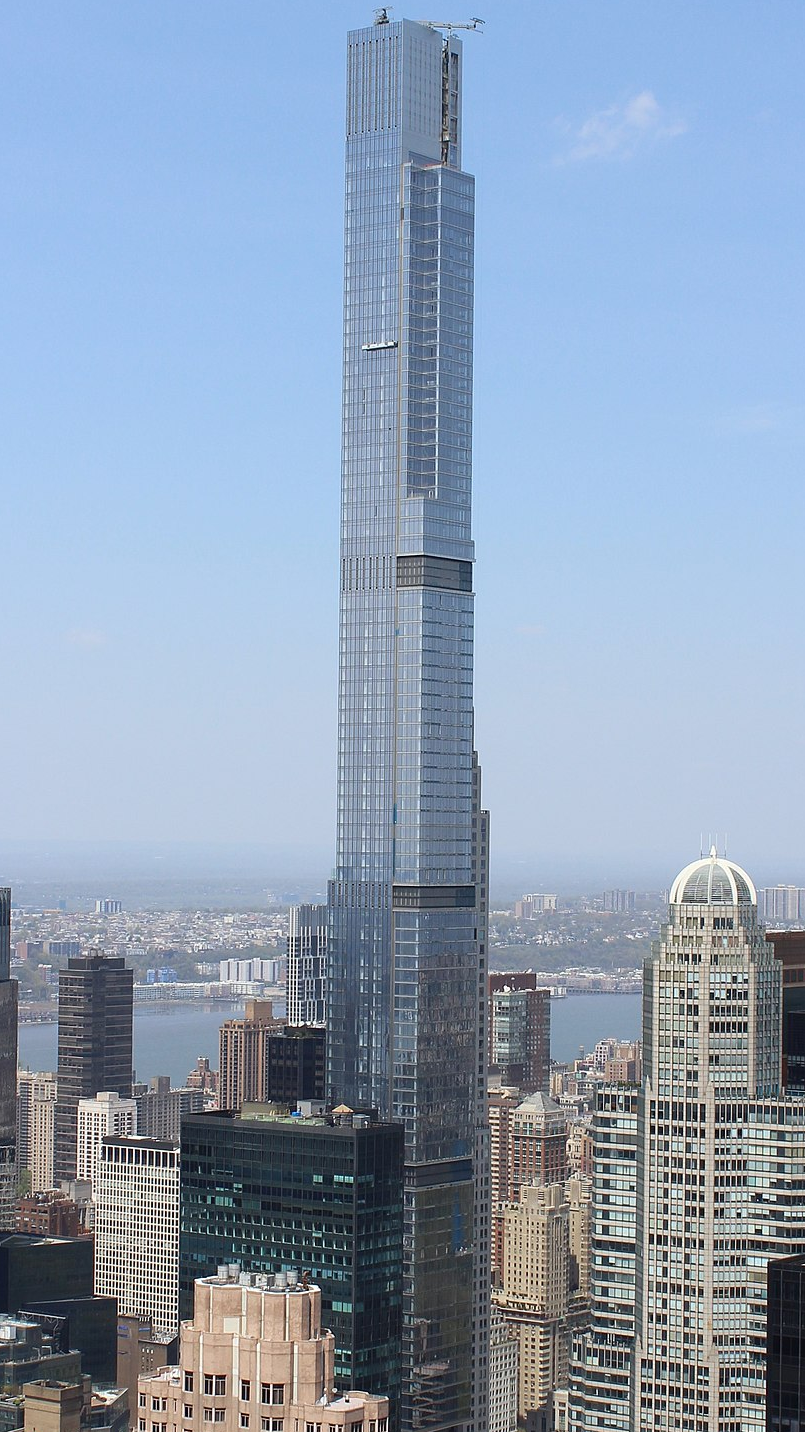
Completed in 2020, Central Park Tower is the tallest residential building in the world and one of the most luxurious skyscrapers ever built. Located along Manhattan’s Billionaires’ Row, it offers unmatched views of Central Park and the New York City skyline. Developed by Extell, the tower caters to the world’s wealthiest individuals.
Architecturally, Central Park Tower was designed by Adrian Smith + Gordon Gill Architecture. Its sleek glass façade and minimalist vertical lines highlight elegance and modernity. Structurally, the building uses high-strength concrete and advanced engineering to balance slenderness with stability.
As a residential icon, the tower symbolizes New York’s enduring status as a global hub for luxury real estate. It reflects both the aspirations and controversies surrounding wealth and exclusivity in modern urban centers, making it as much a social statement as an architectural one.
15. Lakhta Center (St. Petersburg, Russia – 462 m)
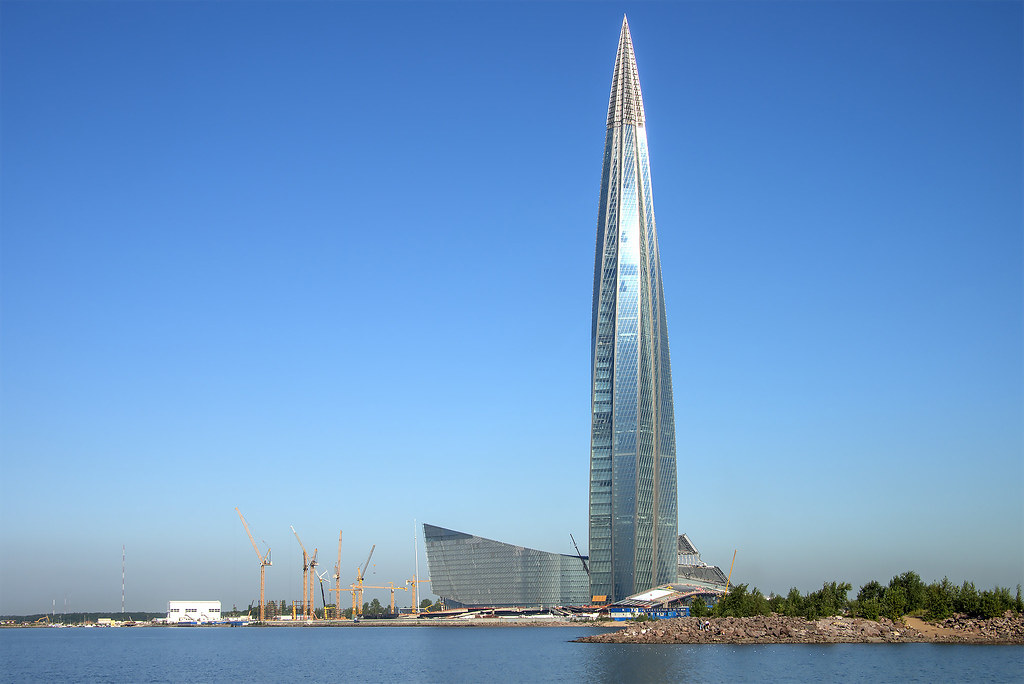
Completed in 2019, the Lakhta Center is the tallest building in Russia and Europe. Rising above the Gulf of Finland, it serves as the headquarters for the Russian energy company Gazprom. Its twisting form symbolizes energy in motion, making it both functional and symbolic of the company’s global reach.
The building features state-of-the-art energy-saving technologies, including double-glass façades, automatic climate control, and systems for reducing energy consumption. Its unique twisting design not only reduces wind load but also gives it a futuristic appearance that stands out in the St. Petersburg skyline.
Culturally, the Lakhta Center reflects Russia’s desire to showcase modern engineering and architectural ambition. It has also become a point of pride, drawing attention to St. Petersburg as more than just a historic city but also a modern business hub.
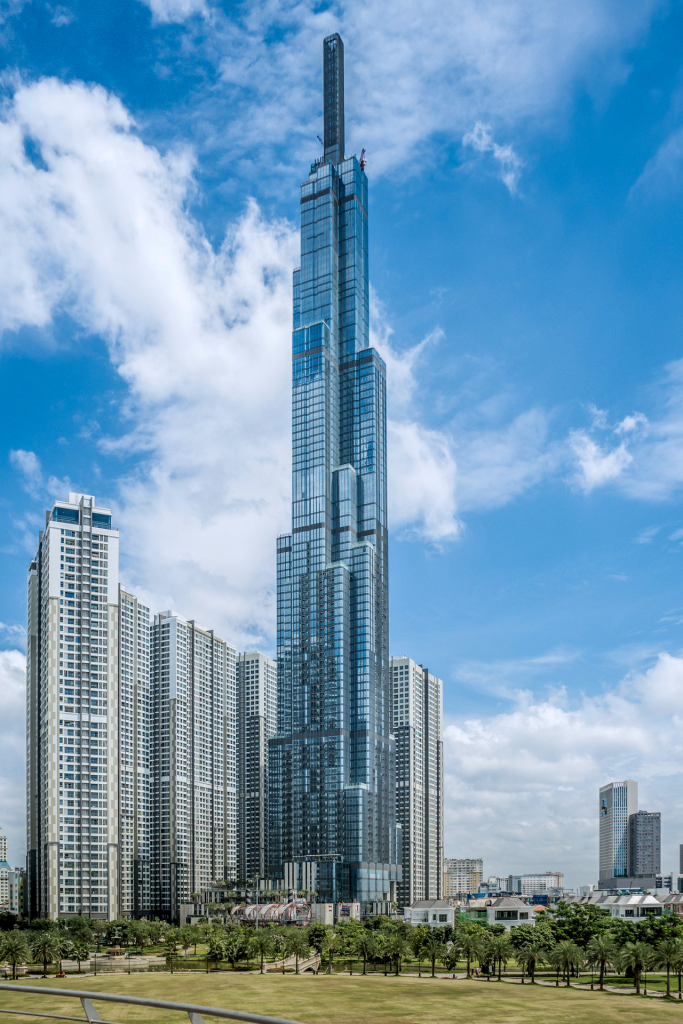
16. Landmark 81 (Ho Chi Minh City, Vietnam – 461 m)
Completed in 2018, Landmark 81 is the tallest building in Vietnam and Southeast Asia (until Merdeka 118 surpassed it in 2023). Developed by Vinhomes, it is the centerpiece of a large urban development project along the Saigon River. Its design reflects a bundle of bamboo, symbolizing strength, unity, and growth in Vietnamese culture.
The skyscraper includes luxury residences, a hotel, retail spaces, and an observation deck offering sweeping views of Ho Chi Minh City. Structurally, it incorporates reinforced concrete and a sleek glass façade that emphasizes modernity and verticality. Its design also ensures stability against the region’s monsoon winds.
Landmark 81 represents Vietnam’s economic progress and aspiration to join the ranks of Asia’s rapidly modernizing nations. It stands as a proud symbol of the country’s architectural ambition and serves as a major attraction for both residents and international visitors.
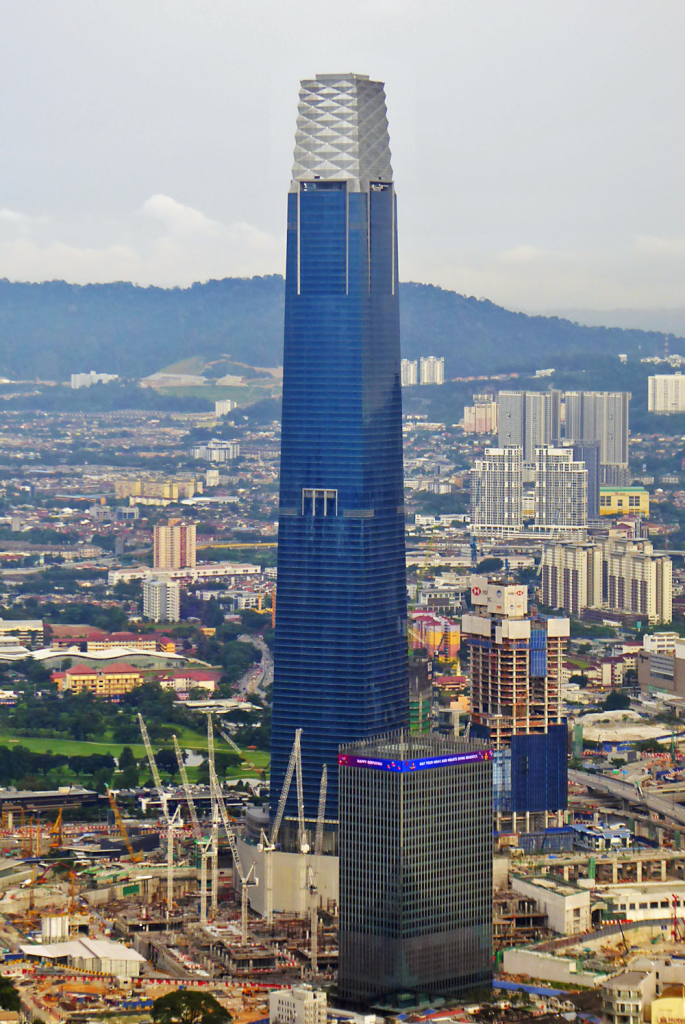
17. The Exchange 106 (Kuala Lumpur, Malaysia – 454 m)
Completed in 2019, The Exchange 106 is one of the tallest skyscrapers in Malaysia and Southeast Asia. Located in the Tun Razak Exchange (TRX) financial district, it was designed to be a centerpiece of Malaysia’s goal to develop a world-class financial hub. Its sheer size and sleek glass façade make it a striking addition to Kuala Lumpur’s skyline.
The tower’s design emphasizes modernity and efficiency, with open-plan office spaces and advanced energy-saving systems. It uses high-strength materials to ensure durability and incorporates intelligent building technologies to enhance sustainability. The building is topped with a 48-meter illuminated crown that lights up the night sky.
Symbolically, The Exchange 106 represents Malaysia’s drive toward economic growth and financial leadership in the region. It complements the iconic Petronas Towers, standing as part of Kuala Lumpur’s new generation of landmark skyscrapers.
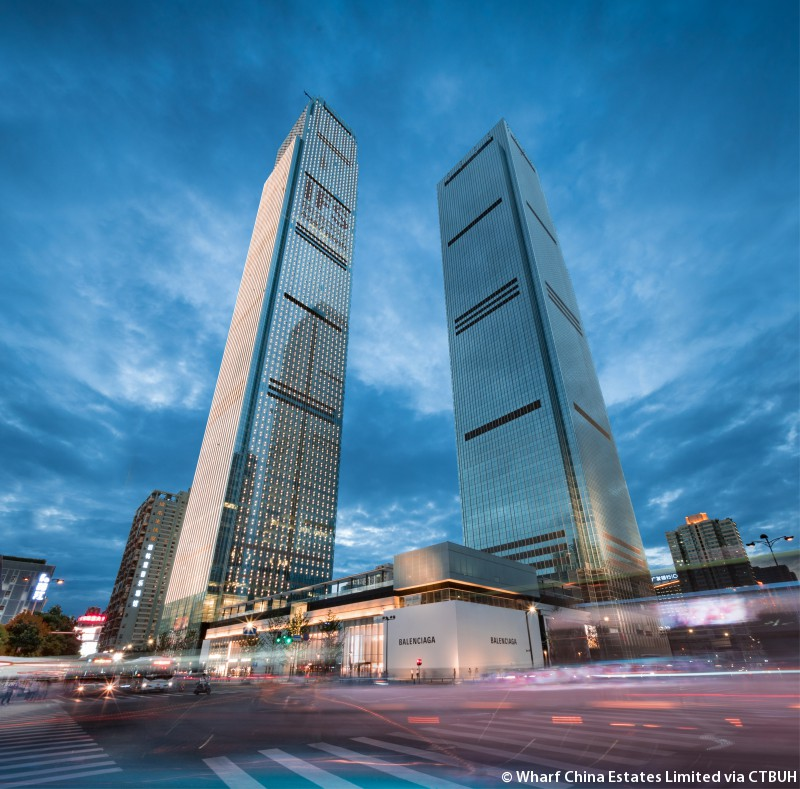
18. Changsha IFS Tower T1 (Changsha, China – 452 m)
Completed in 2018, the Changsha International Finance Square Tower T1 is the tallest building in Changsha, the capital of Hunan province. Rising to 452 meters, it is part of a twin-tower complex that includes offices, retail spaces, hotels, and cultural facilities. Its construction reflects the rapid modernization of China’s inland cities, beyond the traditional coastal hubs.
The tower’s sleek design combines practicality with elegance, featuring a reflective glass façade that gives it prominence on the skyline. Structurally, it incorporates a reinforced concrete core and high-strength materials to ensure resilience against wind and seismic forces. Its interior spaces are designed with flexibility in mind, catering to both business and hospitality needs.
As a landmark of Changsha, the building is a symbol of the city’s emergence as a financial and cultural hub in central China. It demonstrates how China’s skyscraper boom extends beyond megacities like Beijing and Shanghai, spreading development more evenly across the nation.
19. Petronas Towers (Kuala Lumpur, Malaysia – 452 m)
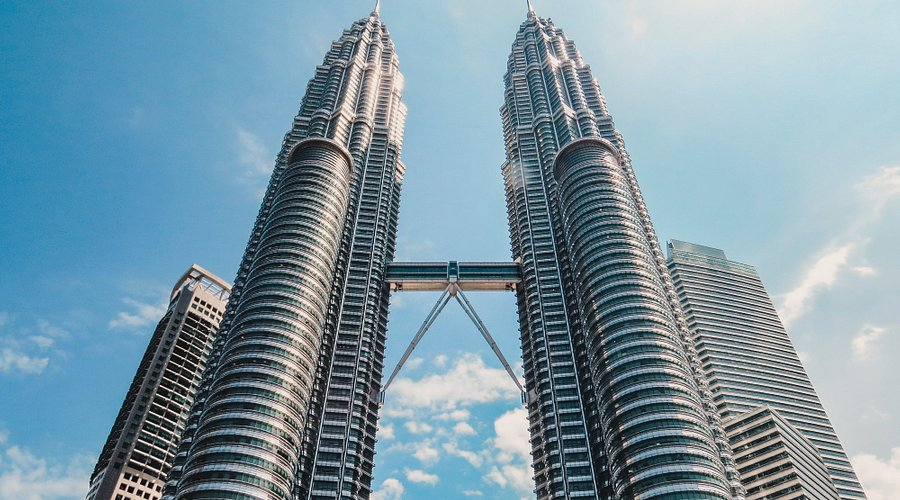
Completed in 1998, the Petronas Towers were the world’s tallest buildings until Taipei 101 surpassed them in 2004. Designed by Argentine architect César Pelli, the twin towers remain among the most iconic skyscrapers globally. Their design draws from Islamic art and architecture, with interlocking geometric shapes that symbolize harmony and unity.
Each tower is connected by the famous skybridge at levels 41 and 42, which also functions as an emergency evacuation route. Structurally, they are built of reinforced concrete and clad in stainless steel and glass, giving them a distinctive gleam under the Malaysian sun. The towers’ design integrates both cultural symbolism and modern engineering excellence.
The Petronas Towers continue to serve as a national symbol of Malaysia’s modernization and global presence. They house offices for Petronas, the state oil company, along with commercial and cultural spaces. For Malaysia, the towers are more than just buildings—they are enduring symbols of ambition and national pride.
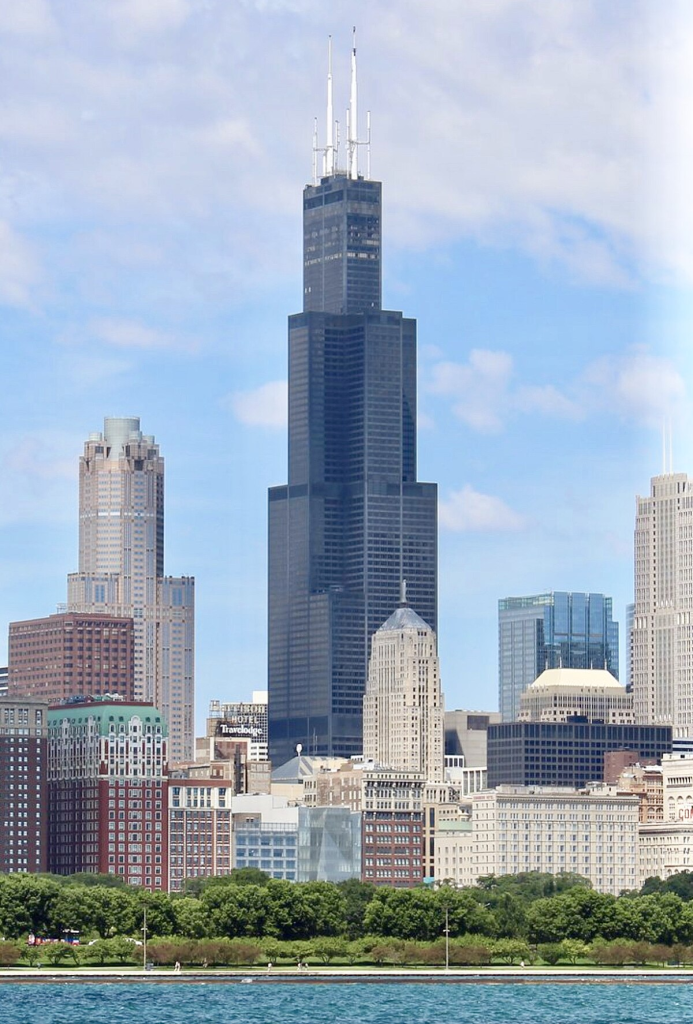
20. Willis Tower (Chicago, USA – 442 m)
Originally completed in 1973 as the Sears Tower, the Willis Tower held the title of the world’s tallest building for nearly 25 years. Designed by Bruce Graham and Fazlur Rahman Khan of Skidmore, Owings & Merrill, it was a groundbreaking achievement in structural engineering at the time. Its bundled-tube design set a new precedent for tall building construction.
The tower is clad in black aluminum and bronze-tinted glass, giving it a bold and distinctive appearance. Structurally, the bundled-tube system allows the building to withstand strong winds coming off Lake Michigan while maximizing usable floor space. It remains one of the most influential designs in skyscraper history.
Today, the Willis Tower is a symbol of Chicago’s architectural innovation and resilience. It continues to be one of the city’s top tourist attractions, particularly the Skydeck, which features glass boxes extending outward for vertigo-inducing views. It stands as a reminder of America’s leadership in the skyscraper era of the 20th century.
Conclusion
The tallest man-made structures in the world remind us of the limitless possibilities of human creativity and ambition. Each one stands as more than just a building or a tower — it is a landmark that embodies vision, resilience, and the pursuit of greatness. Whether used for communication, observation, or as architectural symbols of national pride, these towering creations continue to push the limits of what we believe can be achieved.
As technology advances and cities expand, even taller and more impressive structures are sure to rise in the future. Yet, the Top 20 Tallest Man-Made Structures in the World will remain significant benchmarks in history, representing an era when humanity dared to dream big and reach for the skies. These giants of steel, glass, and concrete stand as enduring monuments to human progress, inspiring generations to aim ever higher.
Other related articles
Top 25 Tallest Observation Towers in the World
Top 25 Tallest Clock Towers in the World
Top 15 Tallest Roller Coasters Ever Built
Top 25 Tallest Statues in the World
Top 20 Tallest Buildings in the World
