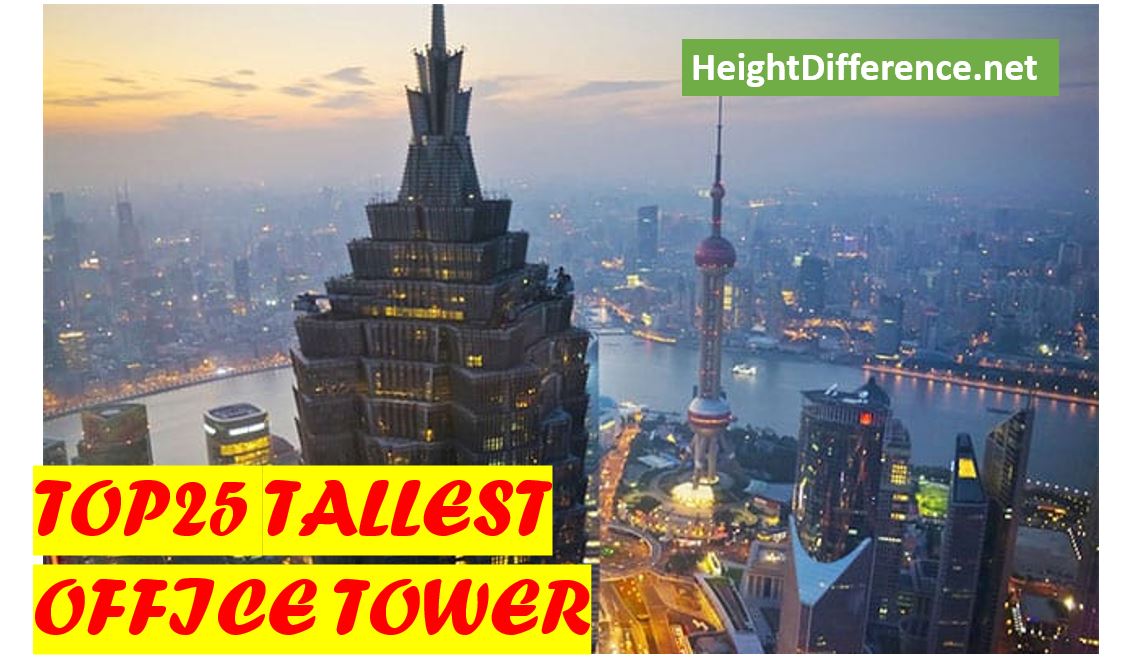
As global business expands and financial hubs compete on the world stage, office towers have evolved into more than just places of work—they are now monumental symbols of economic power, innovation, and architectural excellence. Modern office skyscrapers are designed to house multinational corporations, financial institutions, and leading tech companies while showcasing the latest advancements in engineering, sustainability, and urban space efficiency. From soaring glass facades to futuristic structural designs, these towers redefine business environments and city skylines alike.
Around the world, cities like Dubai, Shanghai, New York, and Hong Kong are home to record-breaking office towers that rise above the clouds, offering state-of-the-art facilities, high-speed connectivity, and breathtaking views. The race to build taller and more efficient commercial buildings has resulted in some of the world’s most iconic structures, each representing a blend of ambition, technology, and global influence. The Top 25 Tallest Office Towers in the World highlights these remarkable achievements, showcasing business-driven architecture at its highest level.
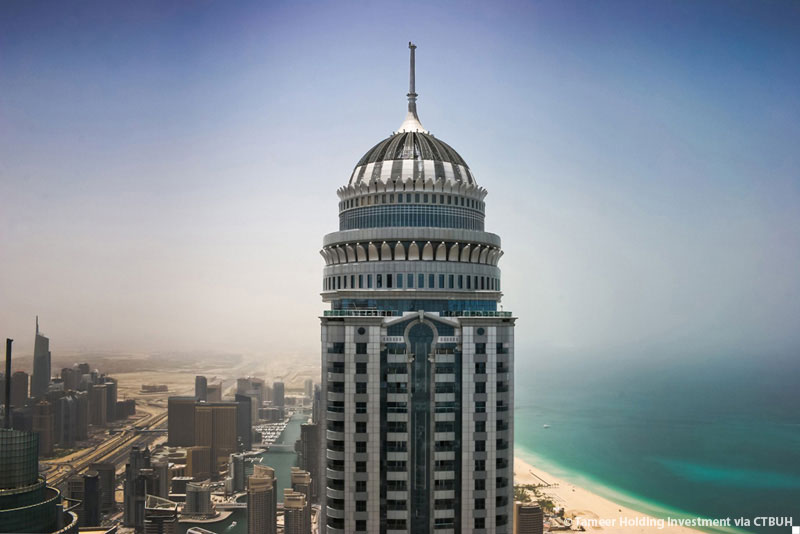
25. Princess Tower – Dubai, United Arab Emirates
The Princess Tower in Dubai, UAE, stands 413 meters (1,356 feet) tall and was completed in 2012. While best known as a residential skyscraper, it also provides premium office spaces, placing it among the tallest office towers in the world. Its height and mixed-use functions make it an important part of Dubai’s impressive skyline.
The design of the Princess Tower is neoclassical in style, featuring a crown-like top that distinguishes it from other skyscrapers in the city. Its office spaces are designed with high-quality finishes and modern facilities that support businesses seeking a prime location in Dubai Marina. With its combination of residential and business use, it offers a unique environment for professionals.
As an office destination, the Princess Tower reflects Dubai’s trend of combining lifestyle and work in vertical spaces. By offering offices within one of the tallest towers in the world, it contributes to the city’s reputation as a global hub for innovation and business development.
24. Jin Mao Tower – Shanghai, China
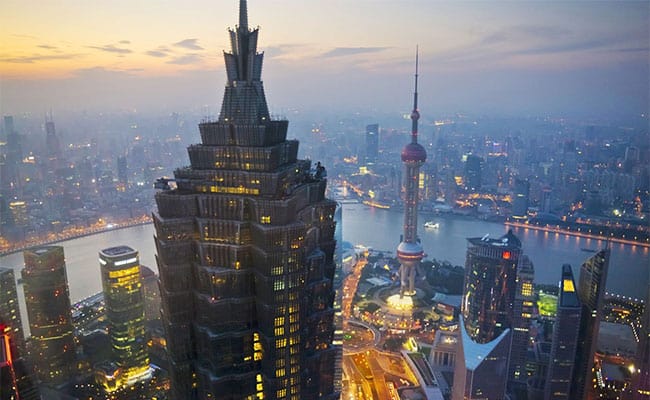
The Jin Mao Tower in Shanghai, China, stands 421 meters (1,380 feet) tall and has been a defining feature of the city’s skyline since its completion in 1999. As one of the tallest office towers in the world, it provides extensive office space for corporations alongside its hotel and observation areas. Its long-standing presence emphasizes its continuing role in the global office tower ranking.
The tower’s design blends modern skyscraper engineering with traditional Chinese architectural elements, giving it a unique cultural identity. Inside, its office spaces are equipped with modern amenities, high-speed elevators, and flexible layouts suitable for global enterprises. Its central location in the Lujiazui financial district makes it especially attractive for businesses.
As an office tower, the Jin Mao Tower symbolizes Shanghai’s rise as a world-class financial center. Though newer skyscrapers now share the skyline, it remains a prestigious address for corporations and a landmark of China’s early embrace of supertall office developments.
23. Guangzhou International Finance Center – Guangzhou, China
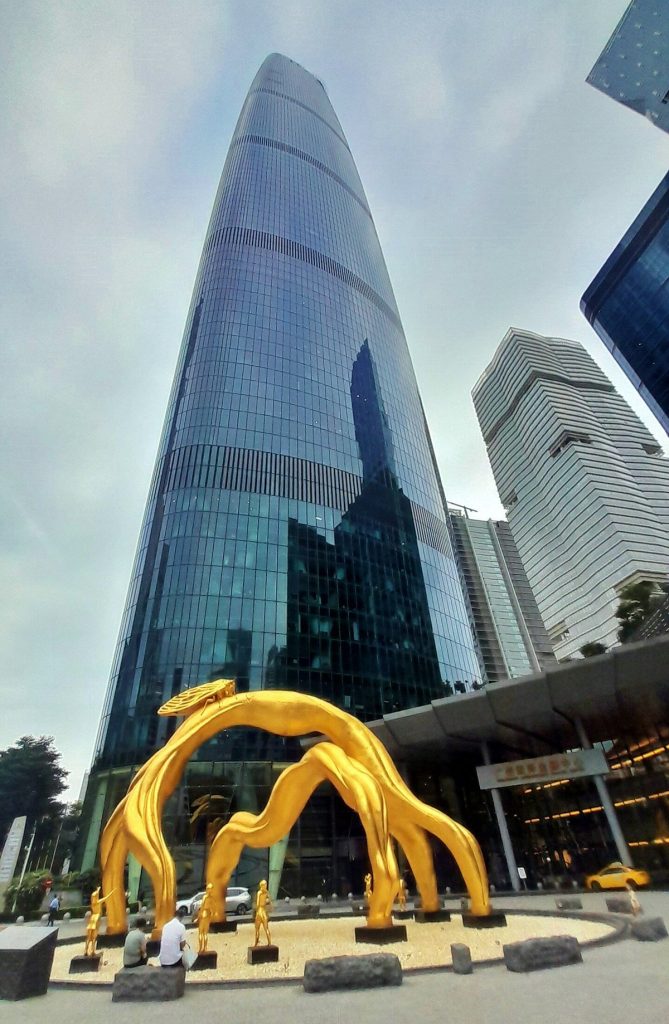
The Guangzhou International Finance Center, also known as the Guangzhou West Tower, stands 439 meters (1,439 feet) tall. Completed in 2010, it was designed to serve as a major office tower within Guangzhou’s financial district, providing extensive space for multinational corporations and financial institutions. Its position among the tallest office towers highlights its influence on the city’s business environment.
The tower’s triangular design and sleek glass façade give it a distinctive appearance, while also maximizing efficiency in space and energy use. Its office floors provide flexible layouts and advanced facilities to accommodate a wide range of business needs. In addition to office use, the tower also includes a hotel and retail spaces, creating a multifunctional complex.
As an office landmark, the Guangzhou International Finance Center strengthens the city’s global reputation as a financial hub in southern China. It has become a prestigious business address and a symbol of Guangzhou’s rapid economic development in the modern era.
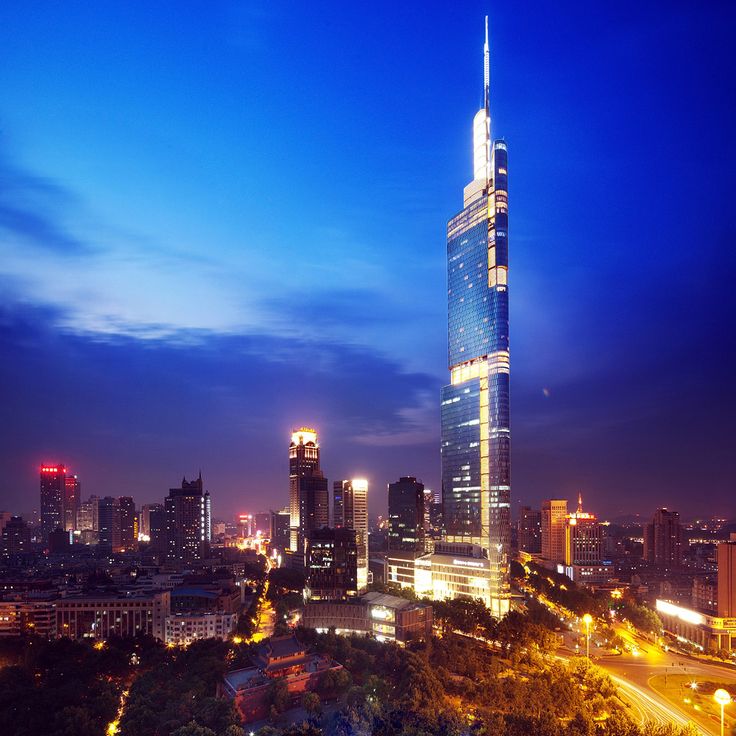
22. Zifeng Tower – Nanjing, China
The Zifeng Tower in Nanjing, China, reaches 450 meters (1,476 feet) and was completed in 2010. As one of the tallest office towers in the world, it provides a large share of its space for businesses, alongside hotels, restaurants, and observation decks. Its inclusion in the Top 25 underscores its importance as both a business landmark and an architectural symbol for Nanjing.
The tower features a sleek, tapering design that gives it a distinctive presence on the city skyline. Its office spaces are designed with modern layouts, high-speed elevators, and efficient systems that meet the needs of both domestic and international companies. This makes Zifeng Tower a valuable business hub within the region.
As an office tower, it enhances Nanjing’s identity as a center of commerce and culture. By combining modern architecture with practical business use, the Zifeng Tower plays a central role in linking the city’s historical legacy with its ambitions for future growth.
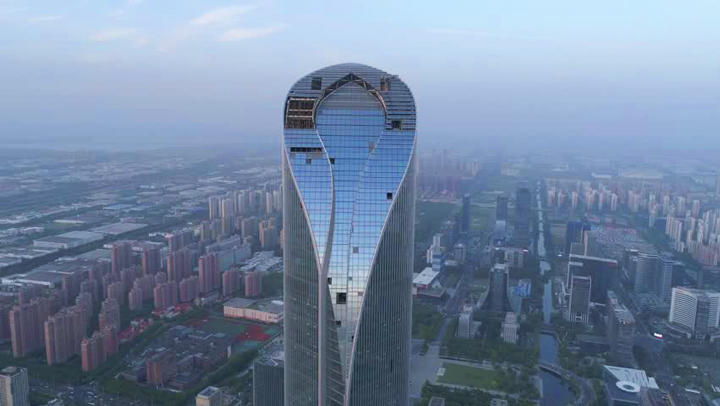
21. Suzhou IFS – Suzhou, China
Suzhou IFS stands 452 meters (1,483 feet) tall and is one of the tallest office towers in eastern China. Completed in 2019, the skyscraper was developed to provide international-grade office spaces in the city’s growing financial district. As one of the tallest office towers in the world, it plays a major role in enhancing Suzhou’s position as a modern business hub.
The tower’s design is sleek and modern, with a reflective glass façade that integrates seamlessly into Suzhou’s skyline. Its office floors feature large, column-free spaces, allowing flexibility for businesses to design layouts that meet their needs. The building also incorporates energy-efficient technologies, making it both visually striking and sustainable.
As an office tower, Suzhou IFS contributes to the city’s transformation into a destination for multinational corporations and local enterprises. By offering a world-class working environment, it supports Suzhou’s economic growth and strengthens its link to China’s broader financial network.
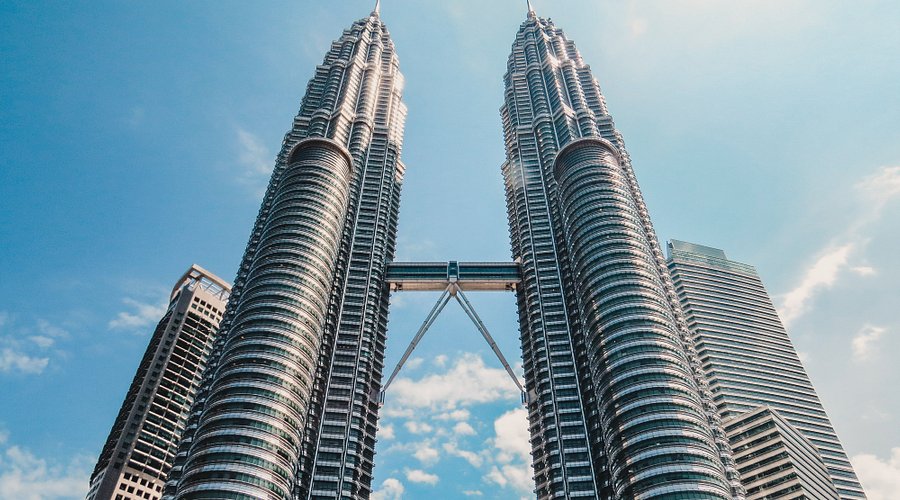
20. Petronas Towers – Kuala Lumpur, Malaysia
The Petronas Towers in Kuala Lumpur, Malaysia, each stand 452 meters (1,483 feet) tall and are among the most iconic office skyscrapers in the world. Completed in 1998, the twin towers served as the headquarters of Petronas, Malaysia’s national oil and gas company, while also providing additional office space for global corporations. Their completion made Kuala Lumpur an international center for commerce and architecture.
The design of the towers incorporates Islamic geometric patterns, reflecting Malaysia’s cultural identity. Each tower features extensive office floors equipped with modern facilities, high-speed elevators, and open layouts. The skybridge connecting the two towers is not only a visual highlight but also a functional link between different office areas.
As office towers, the Petronas Towers are landmarks of both architecture and business. They symbolize Malaysia’s economic growth and remain highly prestigious business addresses in Southeast Asia. Their enduring status shows how office skyscrapers can define a city’s global identity while continuing to serve thousands of professionals daily.
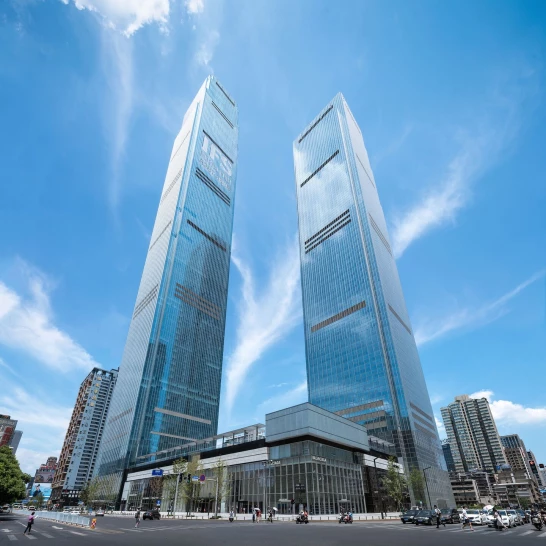
19. Changsha IFS Tower T1 – Changsha, China
The Changsha IFS Tower T1, completed in 2018, stands 452 meters (1,483 feet) tall and is the tallest building in central China. It was developed as part of the International Finance Square project and provides extensive office space for companies seeking a presence in Changsha’s growing business district. Its design and purpose firmly establish it as one of the tallest office towers in the world.
The tower’s modern design features sleek lines and a glass façade that reflect both sunlight and the vibrancy of the city. Its office floors are built to international standards, providing businesses with open, flexible layouts and high-quality facilities. Alongside its office spaces, the tower also includes retail and hotel components, creating a multifunctional complex.
As an office tower, the Changsha IFS Tower T1 demonstrates how skyscrapers are reshaping the business identity of China’s regional cities. By attracting corporations and creating a modern working environment, it helps strengthen Changsha’s role as a commercial and financial hub within the country.
18. The Exchange 106 – Kuala Lumpur, Malaysia
The Exchange 106 in Kuala Lumpur, Malaysia, is 454 meters (1,488 feet) tall and serves as one of the tallest office towers in Southeast Asia. Completed in 2019, the skyscraper was built specifically to provide premium-grade office spaces within the Tun Razak Exchange, Malaysia’s new financial district. Its primary function as a business hub makes it an essential part of the Top 25 Office Towers.
The design of The Exchange 106 is sleek and contemporary, featuring a crystalline glass façade that reflects light across the city skyline. The interiors provide column-free office floors, allowing flexible and efficient use of space for corporations. With advanced infrastructure and high sustainability standards, it offers one of the most modern office environments in the region.
As a landmark office building, The Exchange 106 demonstrates Malaysia’s commitment to developing Kuala Lumpur into a global financial center. By attracting multinational corporations and financial institutions, it boosts the country’s competitiveness and reinforces its role in Southeast Asia’s business landscape.
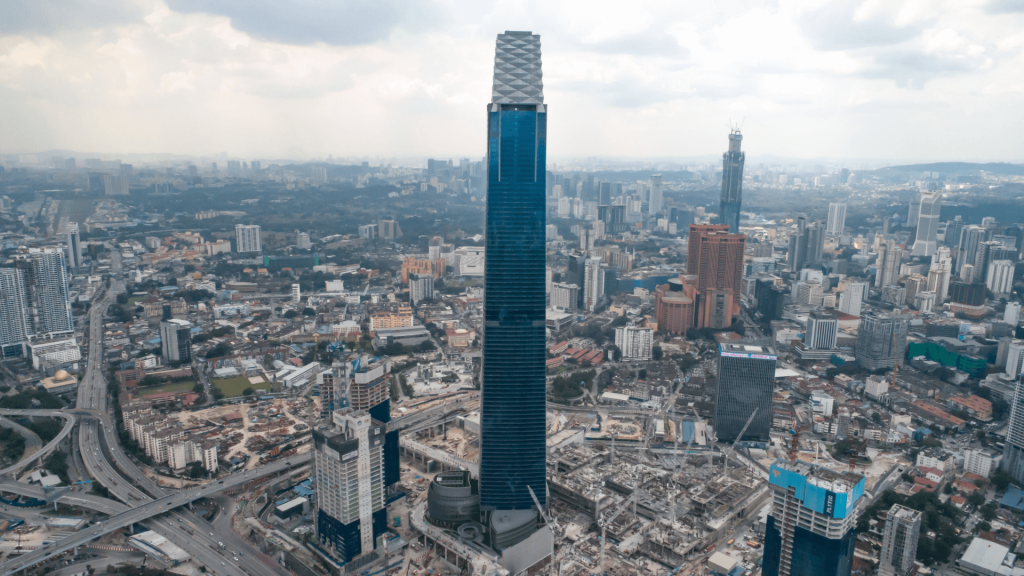
17. Landmark 81 – Ho Chi Minh City, Vietnam
Landmark 81 in Ho Chi Minh City, Vietnam, rises 461 meters (1,513 feet) and is the tallest building in the country. Completed in 2018, the tower was developed as part of the Vinhomes Central Park project and features significant office space alongside hotels, retail, and residences. Its office floors make it one of Southeast Asia’s most important business towers.
The tower’s sleek glass façade and tiered structure reflect modern architectural trends while offering panoramic views of the city. Inside, the office areas are designed to international standards, with open floor plans and state-of-the-art facilities that appeal to multinational corporations. This makes Landmark 81 an attractive workplace for global and regional businesses.
As one of the tallest office towers in the world, Landmark 81 highlights Vietnam’s growing role in the global economy. By providing modern office environments, it helps attract investment and strengthens Ho Chi Minh City’s identity as a rising financial hub in Southeast Asia.
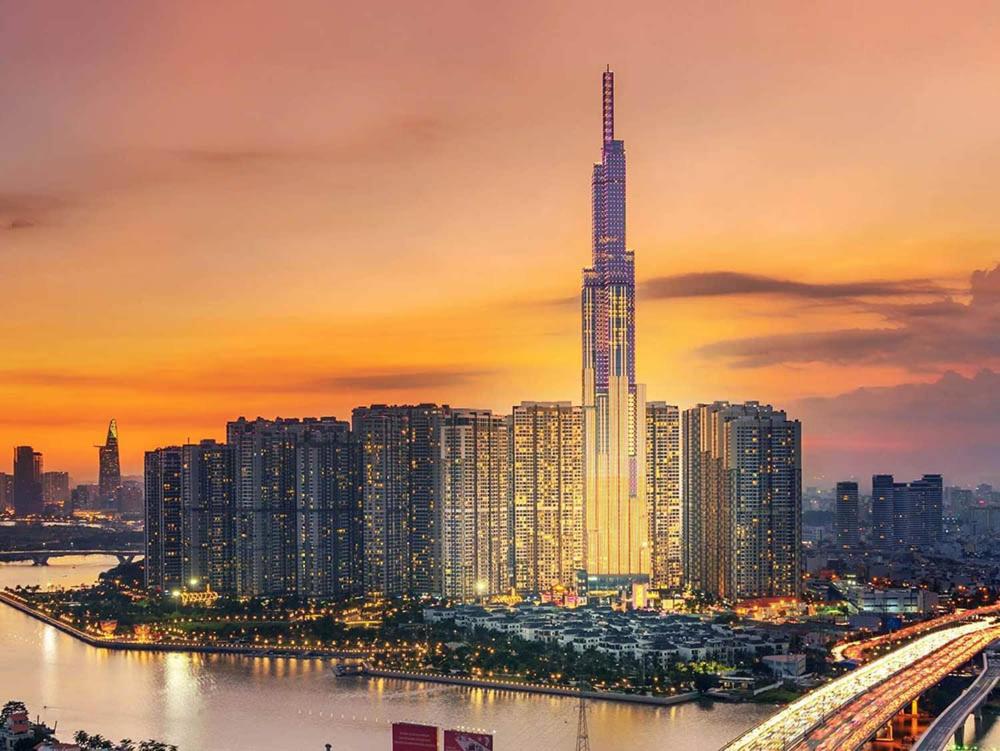
16. Lakhta Center – Saint Petersburg, Russia
The Lakhta Center in Saint Petersburg, Russia, stands 462 meters (1,516 feet) tall and is the tallest building in Europe. Completed in 2019, it was designed as the headquarters of Gazprom, one of Russia’s largest energy companies, while also offering additional office space for other businesses. Its completion marked a milestone in bringing world-class office facilities to Russia’s second-largest city.
The building’s design resembles a twisting flame, symbolizing energy and innovation. Its office floors are equipped with modern layouts, energy-efficient systems, and advanced digital infrastructure that make it one of the most technologically sophisticated workplaces in Europe. The tower also incorporates public facilities, retail, and observation areas, but its primary role remains that of an office hub.
As an office tower, the Lakhta Center strengthens Saint Petersburg’s economic identity and represents Russia’s efforts to showcase itself as a leader in both energy and architecture. By combining symbolic design with practical corporate use, it stands as a landmark of modern business in Europe.
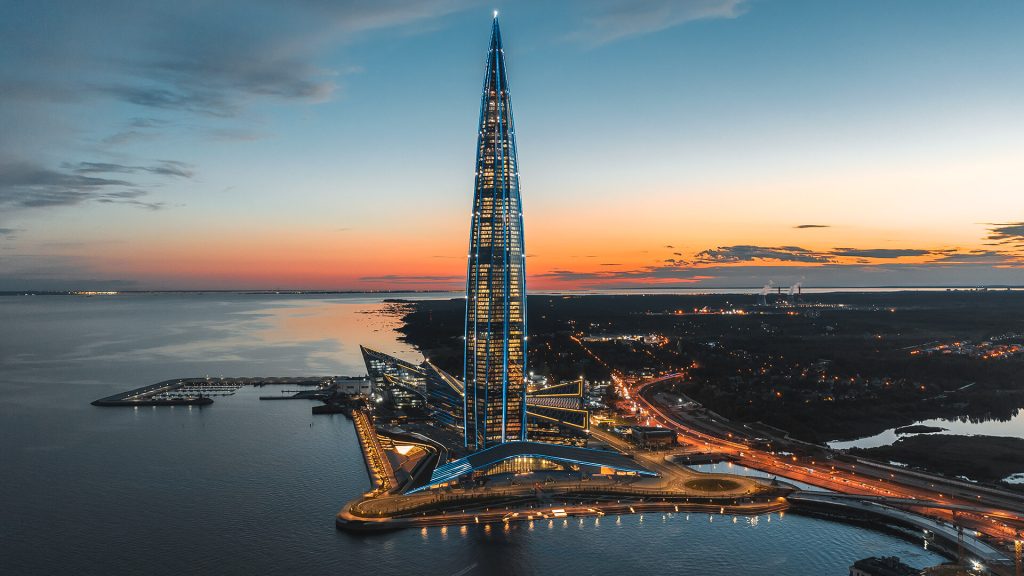
15. Central Park Tower – New York City, USA
Central Park Tower in New York City, also known as the Nordstrom Tower, stands at 472 meters (1,550 feet). Completed in 2020, it is recognized as the tallest residential building in the world, but it also features significant office and commercial spaces, contributing to its status as one of the tallest office towers globally. Located on Manhattan’s Billionaires’ Row, it provides a unique mix of business and luxury.
The tower’s sleek glass façade and modern design make it a striking addition to the New York skyline. While much of the building is devoted to residences, its commercial spaces include offices and high-end retail environments that support the city’s role as a financial and cultural capital. Its integration of business, luxury living, and retail reflects the multifunctional trend in modern skyscraper design.
As part of the Top 25 Office Towers, Central Park Tower demonstrates how business spaces can coexist with residential and retail functions in one of the world’s most competitive real estate markets. Its inclusion underscores New York’s continued influence in defining global standards for skyscraper development and office prestige.
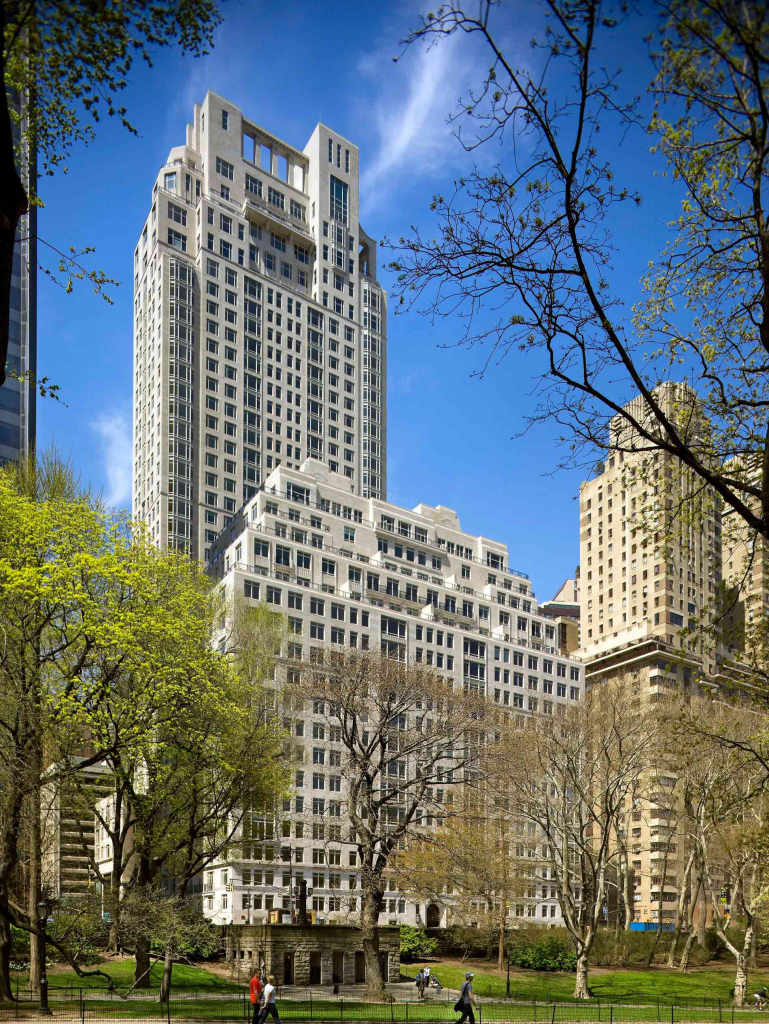
14. Wuhan Greenland Center – Wuhan, China
The Wuhan Greenland Center, reaching 476 meters (1,560 feet), was designed to be one of the tallest office towers in central China. Though its final height was reduced during construction, it still stands as a significant skyscraper that provides extensive office space in the rapidly developing city of Wuhan. Its role as a business hub highlights Wuhan’s growing importance in China’s economic landscape.
The tower’s sleek, tapered design allows for aerodynamic stability while offering expansive office floors with natural light and modern layouts. Incorporating sustainable technologies, the building aims to provide efficient workplaces that meet the standards of international corporations. Its architectural form gives Wuhan a striking addition to its skyline while serving practical business functions.
As part of the world’s tallest office towers, the Wuhan Greenland Center plays a role in decentralizing China’s business landscape. By offering world-class office facilities outside of Beijing, Shanghai, and Shenzhen, it attracts companies and investors to Wuhan, supporting the city’s development as a regional commercial powerhouse.
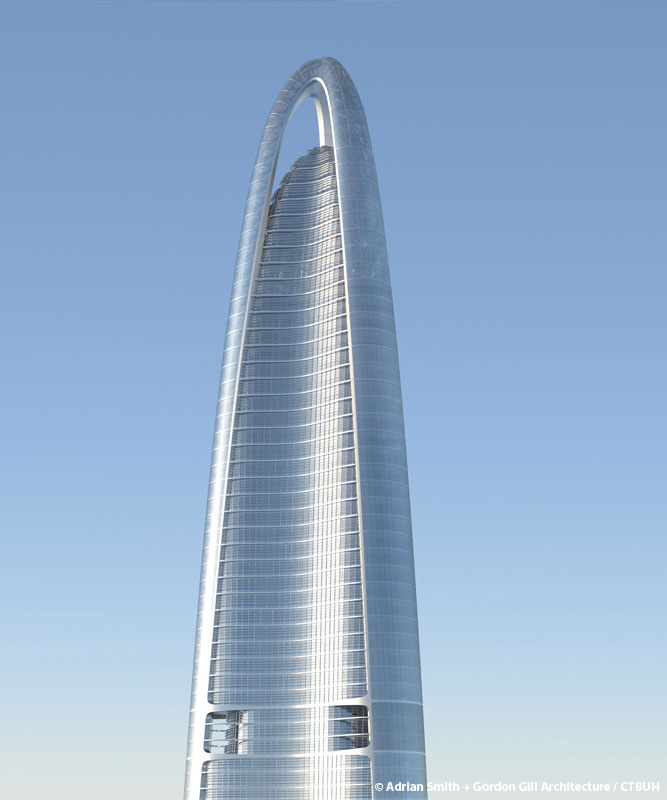
13. International Commerce Centre – Hong Kong, China
The International Commerce Centre (ICC) in Hong Kong stands at 484 meters (1,588 feet) and is the tallest building in the city. Completed in 2010, it serves as a major office tower within the Union Square development, offering premium workspace for international companies and financial institutions. Positioned in Kowloon, it provides a commanding presence over Victoria Harbour and enhances Hong Kong’s role as a global business hub.
The design of the ICC emphasizes modern simplicity, with sleek glass façades that maximize natural light and offer panoramic views of the city. Its office floors are equipped with advanced facilities, flexible layouts, and energy-efficient systems that meet the needs of corporate tenants. The tower is also connected to retail, hotel, and transport networks, making it highly convenient for business operations.
As one of the tallest office towers in the world, the ICC symbolizes Hong Kong’s continued dominance in international trade and finance. By providing premium office environments in a prime location, it reinforces the city’s identity as a leading financial center in Asia and the world.
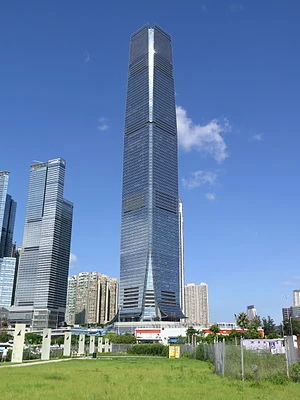
12. Shanghai World Financial Center – Shanghai, China
The Shanghai World Financial Center, completed in 2008, stands at 492 meters (1,614 feet) and is one of the most important office towers in China’s financial capital. Located in the Lujiazui district, the building was designed to provide premium office space for global corporations, banks, and financial institutions. Its location within a cluster of other supertalls makes it part of Shanghai’s powerful business image.
Its most recognizable feature is the trapezoid-shaped opening at the top, often referred to as the “bottle opener.” This design choice reduces wind pressure while giving the building a distinctive identity. Inside, the tower offers world-class office floors with advanced infrastructure and open layouts that support international businesses.
As an office hub, the Shanghai World Financial Center strengthens Shanghai’s position as a global financial powerhouse. It provides companies with an address that represents both prestige and functionality, making it a key component of China’s international economic presence.
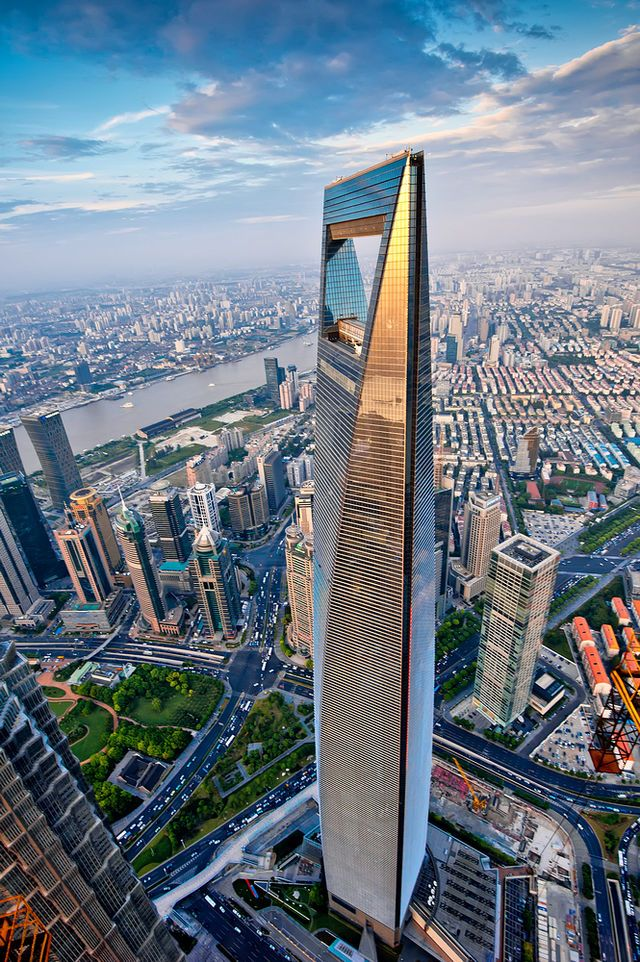
11. Taipei 101 – Taipei, Taiwan
Taipei 101 in Taipei, Taiwan, was once the tallest building in the world and remains one of the most iconic office towers globally. Standing at 508 meters (1,667 feet) and completed in 2004, it was designed to be the heart of Taipei’s business district. The majority of the building is dedicated to office spaces, serving multinational corporations and local enterprises that benefit from its prestige and prime location.
Its design combines traditional Asian symbolism with modern engineering. Shaped like a bamboo stalk, the tower reflects strength, growth, and resilience. The structure incorporates advanced dampening technology to withstand earthquakes and typhoons, making it one of the safest and most reliable office environments in the region.
As a leading office tower, Taipei 101 plays a central role in Taiwan’s economy. Companies that operate within the building are associated with innovation and stability, while the tower itself has become a symbol of Taiwan’s global business connections. It remains a prestigious workplace that links Asian heritage with international commerce.
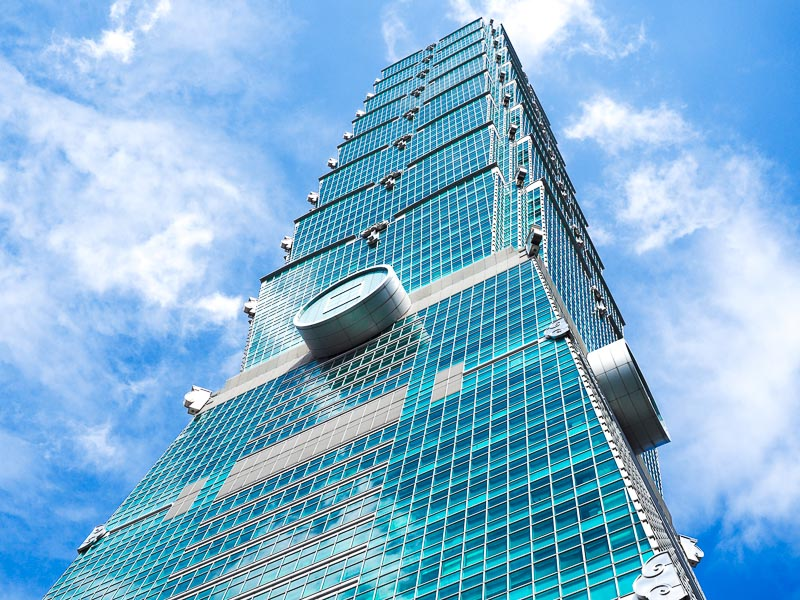
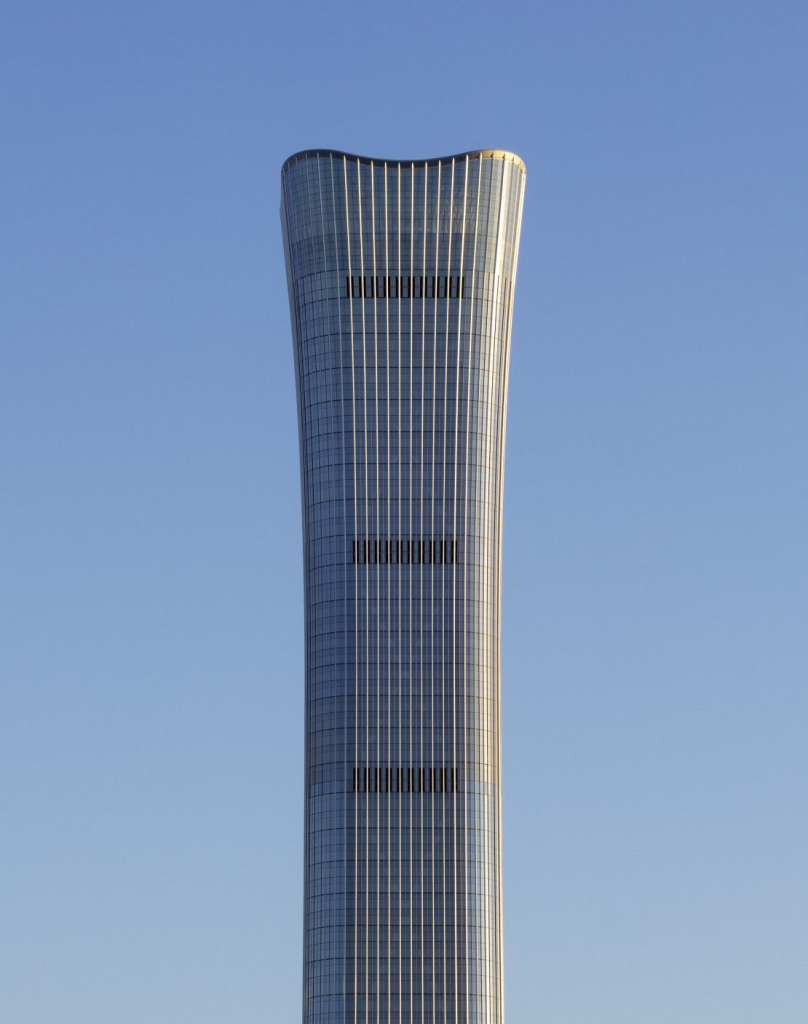
10. CITIC Tower (China Zun) – Beijing, China
The CITIC Tower, also known as China Zun, is Beijing’s tallest building at 528 meters (1,731 feet). Completed in 2018, it serves as the headquarters for CITIC Group, one of China’s largest state-owned conglomerates, and provides additional office space for multinational corporations. Its presence in Beijing’s central business district solidifies its role as one of the most important office towers in the country.
The tower’s design is based on the shape of an ancient Chinese ceremonial vessel called a zun, giving it a graceful, hourglass form. This design allows for expansive office floors at the base and top, with sleek, efficient spaces for corporate use throughout its 109 floors. Its infrastructure includes smart technology, high-speed elevators, and energy-saving systems that make it ideal for modern businesses.
As an office tower, the CITIC Tower is a symbol of Beijing’s status as a global political and economic capital. It provides companies with a powerful and symbolic address, highlighting how skyscrapers function not only as architectural icons but also as essential spaces for commerce and administration.
9. Tianjin CTF Finance Centre – Tianjin, China
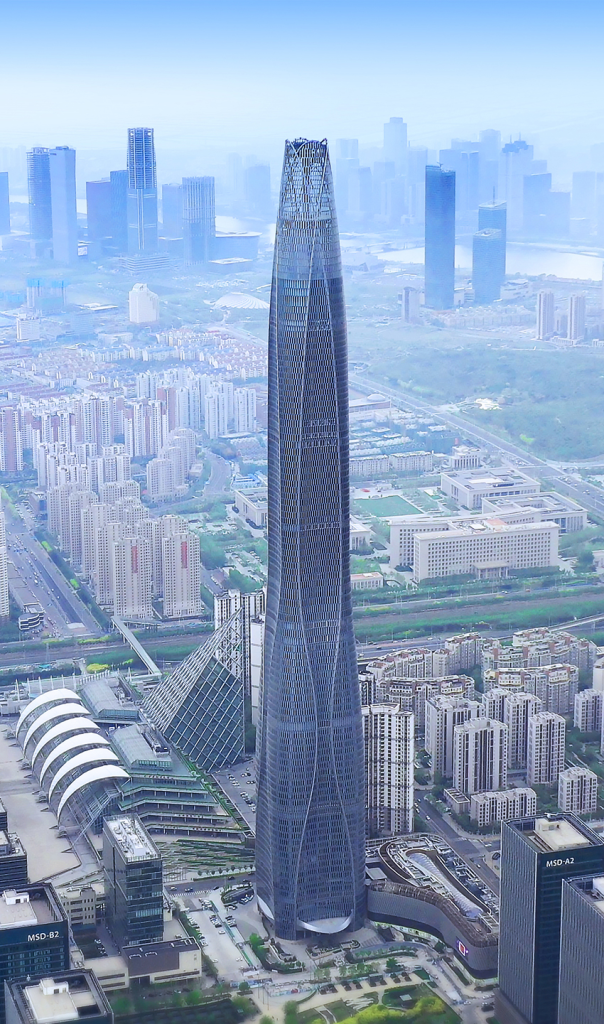
The Tianjin CTF Finance Centre, completed in 2019, rises to 530 meters (1,739 feet) and is one of the tallest office towers in the world. Located in the city of Tianjin, it was designed to provide world-class office facilities for corporations and financial institutions seeking to establish themselves in northern China. The building is part of Tianjin’s effort to develop a modern skyline that reflects its economic growth.
Its curved, flowing form gives the tower a futuristic appearance while also serving structural purposes. Inside, the building houses high-grade office spaces designed with efficiency, comfort, and sustainability in mind. The inclusion of hotels and residences makes it multifunctional, but the core of the tower is devoted to providing flexible workplaces for major companies.
As a towering office center, the Tianjin CTF Finance Centre demonstrates how Chinese cities are using skyscrapers to establish global business credentials. It offers professionals a modern and prestigious work environment, strengthening Tianjin’s presence as a growing financial and commercial hub.
8. Guangzhou CTF Finance Centre – Guangzhou, China
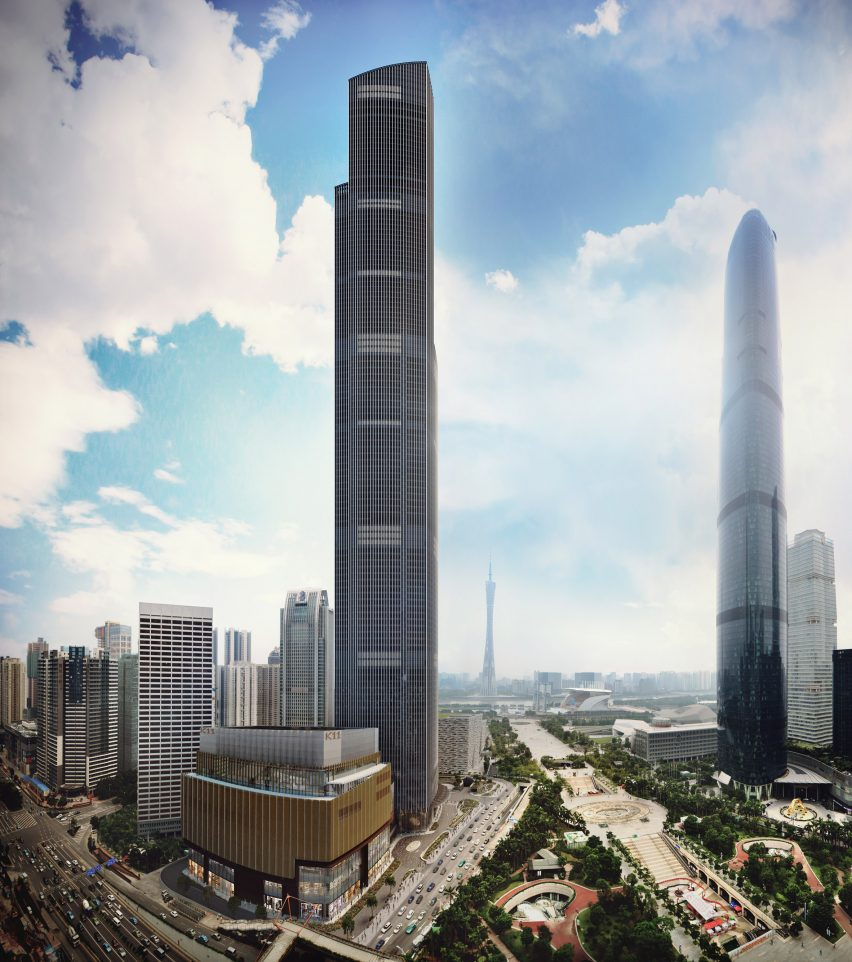
The Guangzhou CTF Finance Centre, located in Guangzhou, China, is 530 meters (1,739 feet) tall and ranks among the tallest office towers worldwide. Completed in 2016, it provides a large number of office floors that accommodate global corporations and domestic enterprises in one of China’s fastest-growing cities. It stands as a key landmark in Guangzhou’s financial district.
The tower’s design emphasizes both elegance and practicality, with a slender form clad in white glazed terracotta and glass. Its offices are designed with sustainability in mind, offering energy-efficient lighting, high-speed elevators, and modern layouts that encourage collaboration. These office spaces make the building a desirable business address in southern China.
As part of the Top 25 Tallest Office Towers, Guangzhou CTF Finance Centre reinforces Guangzhou’s role as a hub for trade and commerce. Its office functions not only provide space for businesses but also symbolize the city’s ambition to compete with China’s other major financial centers like Shanghai and Shenzhen.
7. One World Trade Center – New York City, USA
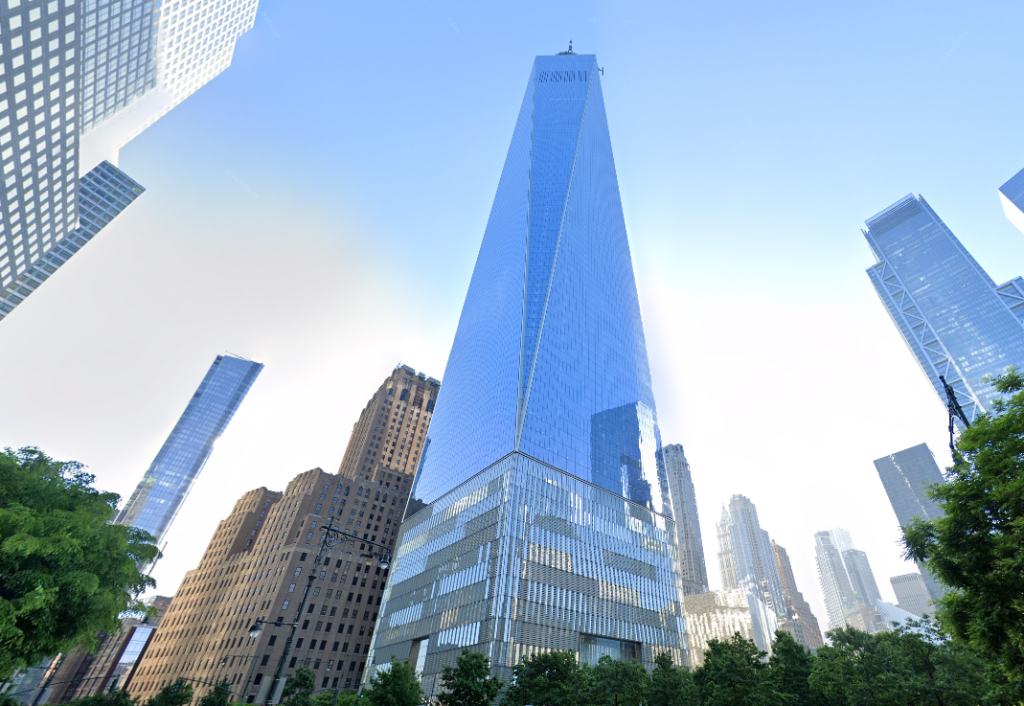
One World Trade Center in New York City, USA, is the tallest building in the Western Hemisphere at 541 meters (1,776 feet). Completed in 2014, it was built as part of the reconstruction of the World Trade Center site and serves as both a memorial and a center for business. Its main purpose is to provide office spaces for corporations, government agencies, and organizations seeking a secure and iconic workplace in Manhattan.
Architecturally, the tower has a simple yet powerful design that reflects strength and resilience. Its office floors feature large, open layouts with advanced security systems and sustainable energy solutions. The building was designed with state-of-the-art safety features, making it one of the most technologically advanced office environments in the world.
As an office tower, One World Trade Center holds deep symbolic meaning while also functioning as a vital workplace for thousands of professionals. It represents both remembrance and renewal, reminding the world of New York’s strength while continuing its legacy as a financial and business powerhouse.
6. Lotte World Tower – Seoul, South Korea
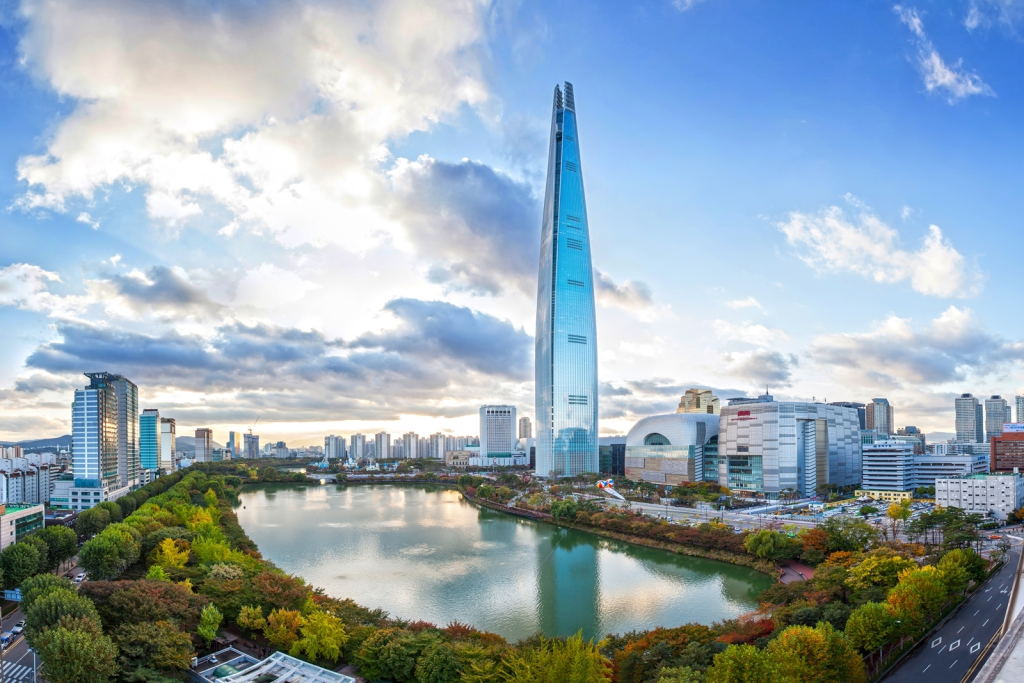
The Lotte World Tower in Seoul, South Korea, stands 555 meters (1,819 feet) tall and is the country’s tallest building. Completed in 2016, it is a mixed-use skyscraper, but a large portion of its space is dedicated to offices, making it a vital hub for commerce in South Korea’s capital. Its location in Jamsil positions it at the center of one of Seoul’s busiest business and entertainment districts.
The design of the tower was inspired by Korean ceramics and calligraphy, blending traditional cultural motifs with cutting-edge engineering. It houses “Prime Office Floors,” which provide flexible, high-tech office environments for global and domestic companies. These office spaces are complemented by luxury hotels, retail areas, and observation decks, creating a multifunctional vertical community.
As one of the tallest office towers in the world, Lotte World Tower demonstrates South Korea’s rise as a leader in both business and architecture. The tower gives multinational corporations a prestigious address while strengthening Seoul’s reputation as a global economic and cultural hub.
5. Ping An International Finance Centre – Shenzhen, China
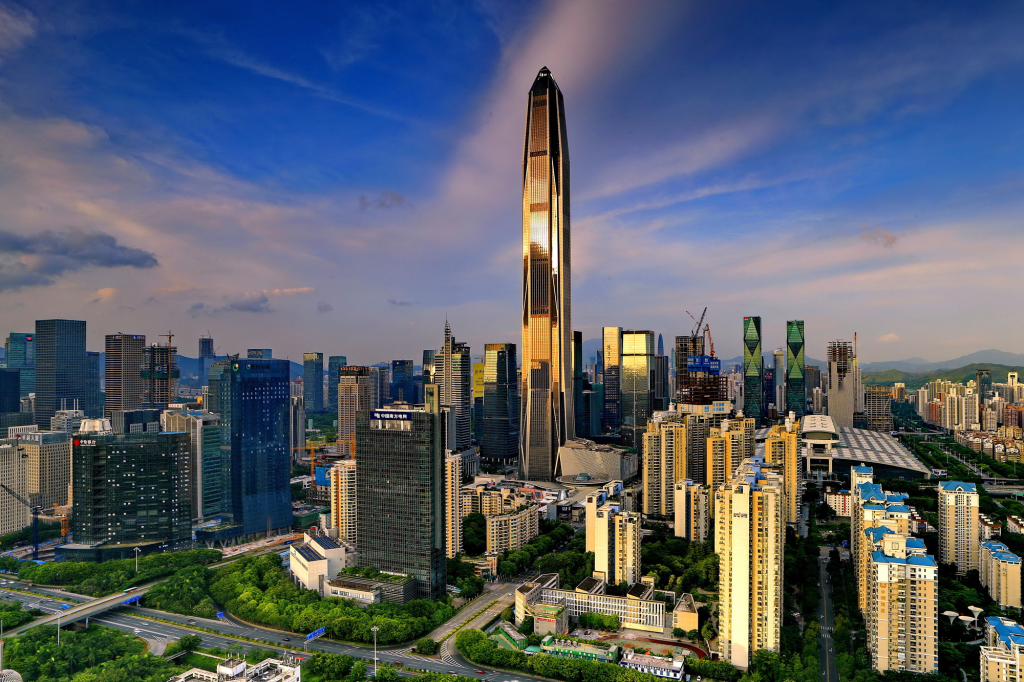
The Ping An International Finance Centre in Shenzhen, China, rises to 599 meters (1,965 feet) and serves as one of the most significant office towers in Asia. Completed in 2017, it was built as the headquarters for Ping An Insurance, one of China’s leading financial firms, and houses offices for various multinational corporations. Its prime location in Shenzhen’s Futian District places it at the heart of the city’s growing financial hub.
Designed with sleek, tapering lines and clad in stainless steel, the tower combines elegance with strength, providing over 100 floors of functional office space. The structure includes modern features such as high-speed elevators, sustainable building systems, and flexible office layouts that cater to the needs of international business.
The Ping An Finance Centre highlights how office towers can be both architectural icons and practical centers of commerce. By hosting a variety of global companies, it contributes to Shenzhen’s status as one of China’s most important business cities. As part of the Top 25 Office Towers, it stands as a landmark of innovation, finance, and economic power.
4. Makkah Royal Clock Tower – Mecca, Saudi Arabia
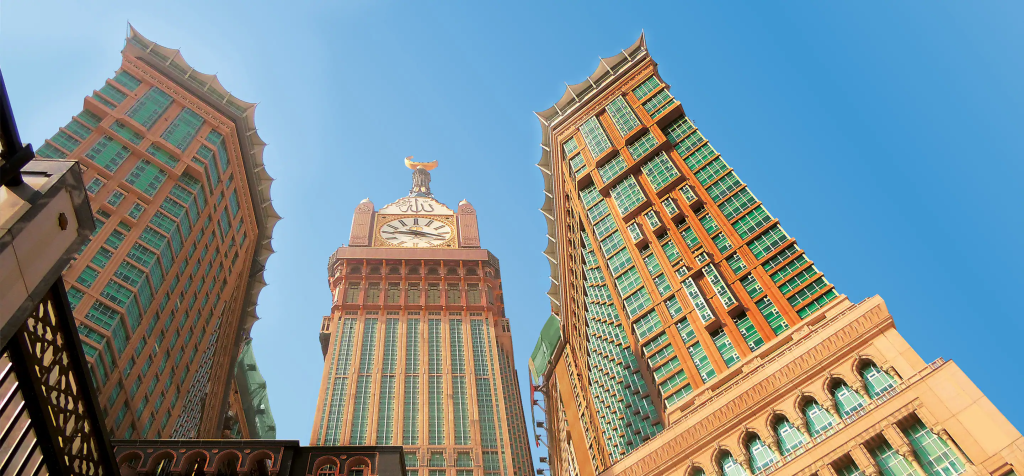
The Makkah Royal Clock Tower in Saudi Arabia, standing at 601 meters (1,972 feet), is best known for its proximity to the Grand Mosque and its iconic clock face. Yet, beyond its cultural and religious importance, it also functions as one of the world’s tallest office towers. Completed in 2012, it provides office and administrative spaces that support the operations of one of the busiest pilgrimage destinations in the world.
The tower’s design reflects both Islamic tradition and modern architectural achievement, with the clock face acting as a defining feature visible from miles away. Inside, the building contains hotels, residences, and commercial areas, but it also provides structured office spaces for managing large-scale religious, business, and hospitality operations in the city of Mecca.
As part of the Top 25 Office Towers, the Makkah Royal Clock Tower demonstrates that office buildings can serve purposes beyond conventional commerce. In this case, its office functions are vital in supporting the logistical, cultural, and economic activities of one of the world’s most visited cities.
3. Shanghai Tower – Shanghai, China
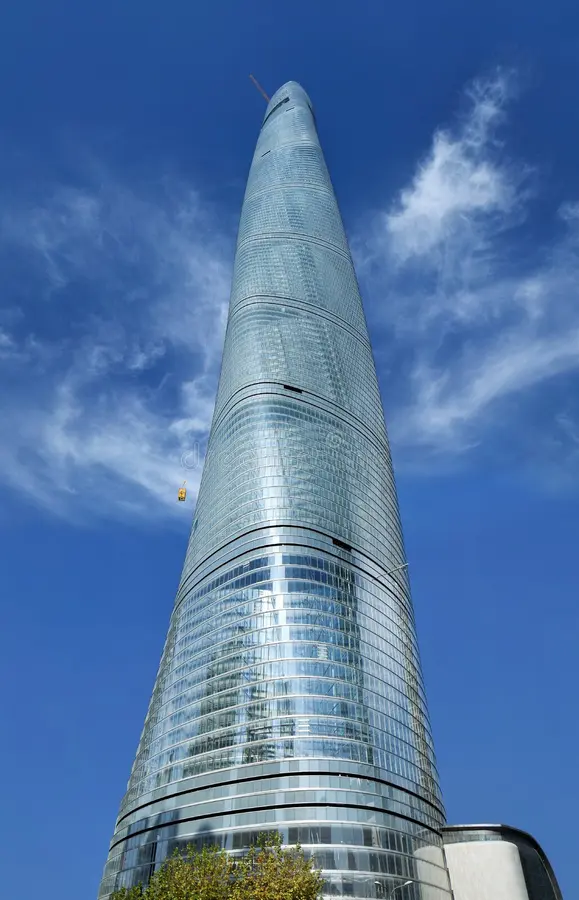
Shanghai Tower, standing at 632 meters (2,073 feet), is China’s tallest building and one of the tallest office towers worldwide. Completed in 2015, it was built as a vertical business hub in the heart of Shanghai’s Lujiazui financial district. Its office floors are designed to host global corporations, banking institutions, and technology firms, all within one of the world’s most advanced skyscrapers.
The tower’s spiraling design reduces wind pressure and allows for sustainable use of energy, making it an environmentally friendly office environment. Its double-layered glass façade helps regulate internal temperatures, ensuring comfortable workplaces while lowering energy consumption. Divided into nine functional zones, the tower creates “communities in the sky” with office clusters, meeting areas, and commercial facilities.
As an office tower, Shanghai Tower is more than a workplace—it is a showcase of how architecture and sustainability can merge in the corporate world. By housing leading companies in finance and technology, it strengthens Shanghai’s role as a global economic powerhouse while offering professionals a modern, eco-friendly business environment.
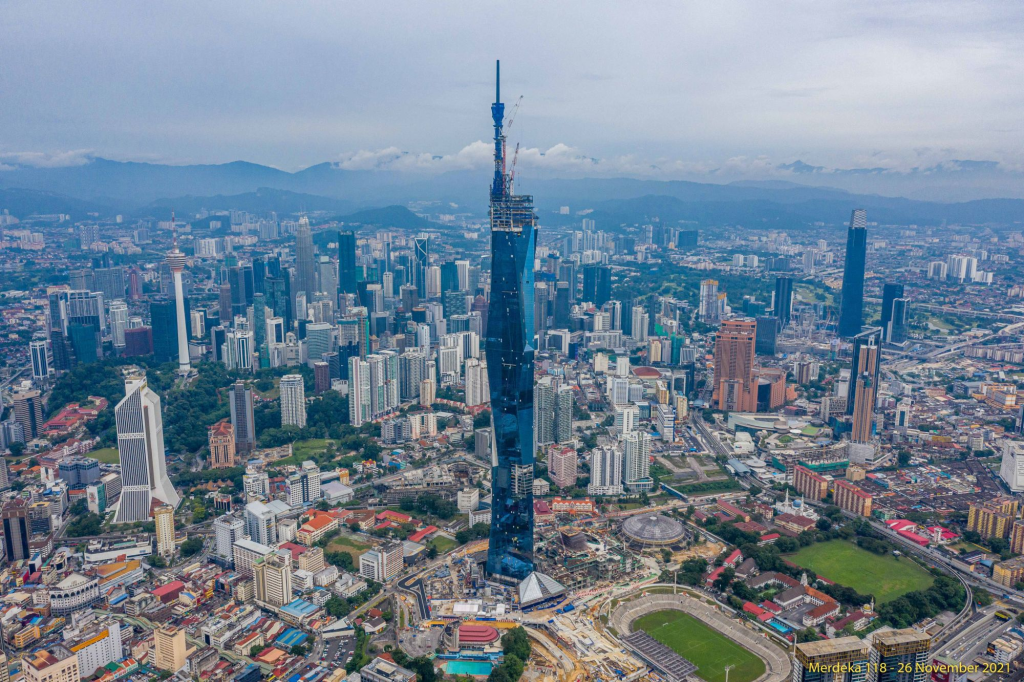
2. Merdeka 118 – Kuala Lumpur, Malaysia
Merdeka 118 in Kuala Lumpur, Malaysia, rises to 679 meters (2,227 feet) and is recognized as the world’s second tallest building. Opened in 2023, the skyscraper was designed to provide expansive office spaces for both multinational corporations and local enterprises. As one of Southeast Asia’s tallest office towers, it serves as a symbol of Malaysia’s growing economic and business strength.
The building’s sharp, glass-clad design points skyward, representing ambition and forward growth. Inside, Merdeka 118 dedicates more than half of its total floor area to offices, providing modern work environments supported by advanced infrastructure. With state-of-the-art facilities, it has quickly become a prime location for companies seeking a prestigious business address in Kuala Lumpur.
Beyond being a record-breaking structure, Merdeka 118 emphasizes the importance of office towers as symbols of commerce and development. It is not just a landmark but also a workplace for thousands of professionals, linking Malaysia’s heritage of independence with its future as a center of innovation and enterprise.
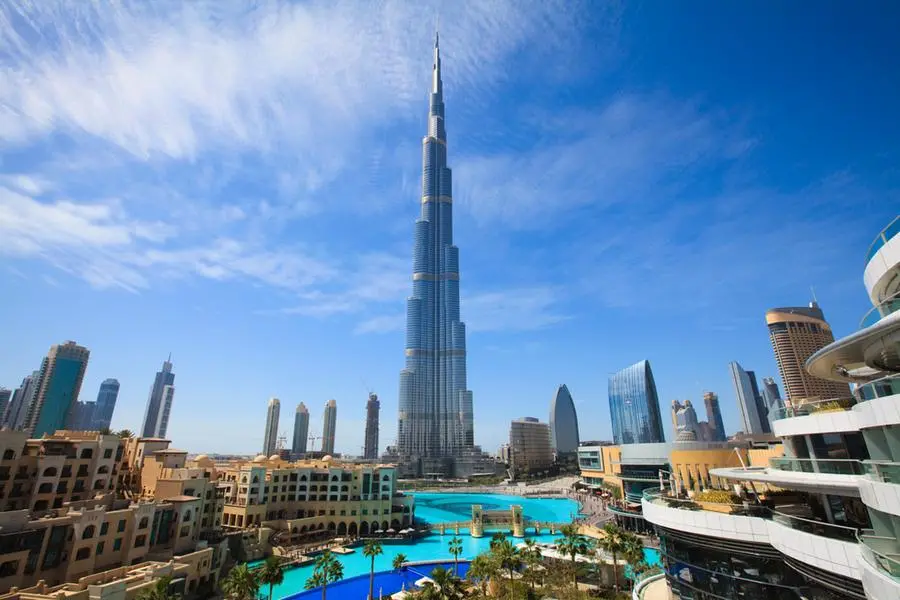
1. Burj Khalifa – Dubai, UAE
The Burj Khalifa in Dubai, United Arab Emirates, is not only the tallest building in the world at 828 meters (2,717 feet) but also a global office destination. Completed in 2010, it was designed to anchor Dubai’s Downtown district as a center for business, commerce, and tourism. While it houses luxury residences and hotels, a significant portion of its floors is devoted to offices that attract leading companies and international firms.
Its architectural design, inspired by Islamic patterns and desert flowers, creates a structure that is both visually stunning and highly functional. The Y-shaped floor plan allows for expansive office spaces with panoramic city views, while its modern materials reflect Dubai’s vision of progress. With over 160 floors, the Burj Khalifa combines practicality and prestige, offering companies a workspace inside the world’s most famous skyscraper.
As an office tower, the Burj Khalifa represents more than just height—it is a business address that carries global prestige. Occupying office space in the building symbolizes status and international reach, reinforcing Dubai’s position as a hub for global trade and finance. Its presence cements the city’s reputation for combining architectural innovation with business excellence.
Conclusion
The world’s tallest office towers are not only engineering masterpieces but also vibrant centers of global commerce, innovation, and collaboration. Each building serves as a reflection of the economic strength and vision of the cities they stand in, attracting top-tier corporations and contributing significantly to urban development. These towering workspaces set new standards for sustainability, smart building technology, and premium corporate environments.
As cities continue to grow upward in response to limited land and increasing commercial demand, future office towers will likely reach even greater heights while embracing eco-friendly features and cutting-edge technologies. Yet, the Top 25 Tallest Office Towers in the World remain iconic milestones in architectural history—bold expressions of human ambition and the enduring influence of global business on modern skylines.
Other related articles
Top 25 Tallest Clock Towers in the World
Top 15 Tallest Roller Coasters Ever Built
Top 25 Tallest Statues in the World
Top 20 Tallest Buildings in the World
